
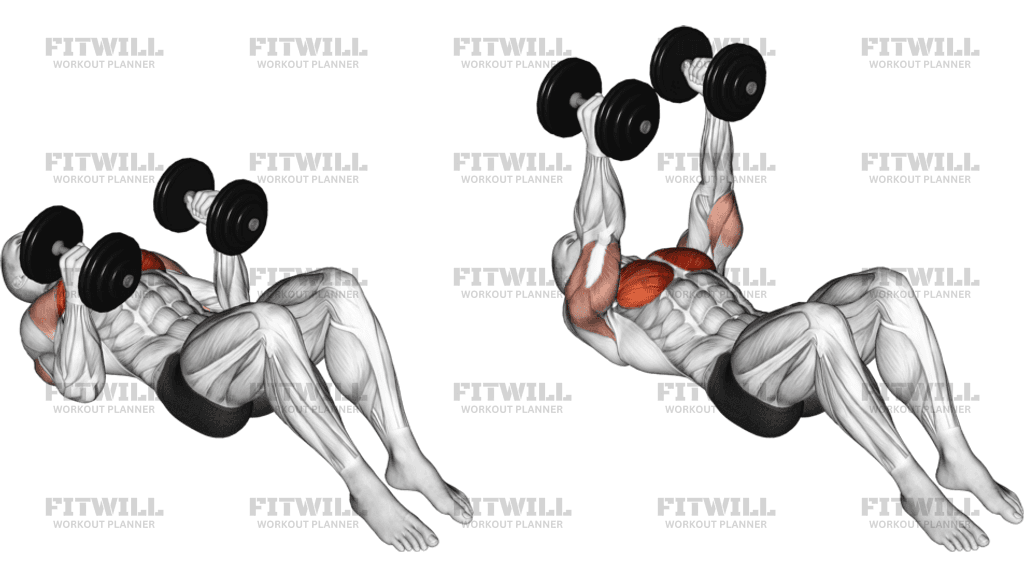
Are you looking to build stronger, more defined muscles with your workout? The dumbbell press is a powerful exercise that can help you do just that.
But do you know exactly which muscles it targets and how it benefits your body? Understanding what muscles the dumbbell press works will help you maximize your results and avoid injury. Keep reading to discover how this simple move can transform your strength and shape your upper body like never before.
Primary Muscles Targeted
The dumbbell press is a popular exercise. It helps build upper body strength. This exercise targets several key muscles.
Understanding which muscles are worked can improve your workout. Let’s explore the primary muscles targeted by the dumbbell press.
Chest Muscles
The chest muscles are the main focus of the dumbbell press. This includes the pectoralis major. It helps push the weights upward.
As you press the dumbbells, the chest muscles contract. This builds strength and size in your chest.
Shoulder Muscles
The shoulder muscles assist during the dumbbell press. The deltoids, especially the anterior part, are engaged.
Strong shoulders help stabilize the movement. This ensures a smooth and controlled press.
Triceps
The triceps are also worked in the dumbbell press. They are located at the back of your upper arms.
As you extend your arms, the triceps help push the weights up. This strengthens the back of your arms.

Credit: fitwill.app
Secondary Muscles Engaged
The dumbbell press mainly works the chest muscles. It also involves other muscles to help with the movement. These secondary muscles help keep the body stable and control the weights.
Understanding these muscles can improve your form and strength. This guide covers the stabilizer muscles, core activation, and forearm involvement during the dumbbell press.
Stabilizer Muscles
Stabilizer muscles keep your joints steady during the dumbbell press. They stop your arms and shoulders from shaking or moving the wrong way. These muscles work hard to keep your body balanced.
Important stabilizers include the rotator cuff muscles. They support the shoulder joint and help with arm control. The trapezius and rhomboids also help by holding your shoulder blades in place.
- Rotator cuff muscles
- Trapezius
- Rhomboids
- Deltoids (rear part)
Core Activation
The core muscles work to keep your body stable during the dumbbell press. A strong core stops your lower back from arching too much. It also helps you keep good posture while lifting.
Muscles like the abs and lower back contract to hold your torso steady. This makes sure your power moves from your upper body to the dumbbells smoothly.
- Rectus abdominis (abs)
- Obliques
- Erector spinae (lower back)
- Transverse abdominis
Forearm Involvement
The forearm muscles help you grip the dumbbells tightly. They keep the weights steady as you press. Strong forearms reduce the chance of dropping the dumbbells.
These muscles work hard to control wrist position and support the hand. This improves your lift and prevents injury to your wrists.
- Wrist flexors
- Wrist extensors
- Finger flexors
- Forearm pronators and supinators
Muscle Variations By Dumbbell Press Type
Dumbbell presses target different chest muscles depending on the angle. Each type works specific parts of the chest and other muscles.
Understanding these variations helps you focus on the muscles you want to develop. It also improves your workout balance.
Flat Dumbbell Press
The flat dumbbell press mainly works the middle part of the chest. It also activates the front shoulders and triceps.
This press builds overall chest strength and size. It is a good exercise for general chest development.
- Primary muscles: Middle pectoralis major
- Secondary muscles: Anterior deltoids, triceps brachii
Incline Dumbbell Press
The incline dumbbell press focuses on the upper chest muscles. It also works the front shoulders more than the flat press.
This exercise helps create a fuller upper chest look. It improves shoulder strength and stability as well.
- Primary muscles: Upper pectoralis major
- Secondary muscles: Anterior deltoids, triceps brachii
Decline Dumbbell Press
The decline dumbbell press targets the lower chest muscles. It reduces shoulder involvement compared to other presses.
This press helps define the lower chest area. It also works the triceps and stabilizer muscles.
- Primary muscles: Lower pectoralis major
- Secondary muscles: Triceps brachii, anterior deltoids
Benefits For Muscle Growth
The dumbbell press targets many muscles in your upper body. It mainly works the chest, shoulders, and triceps. This exercise helps you build strong, larger muscles.
Using dumbbells improves muscle growth by allowing better control and balance. It also helps prevent muscle imbalances and increases muscle activation.
Improved Muscle Symmetry
Dumbbell press forces each side of your body to work equally. This reduces muscle imbalances between your left and right sides. Balanced muscles look better and reduce injury risk.
Free weights allow each arm to move independently. This helps fix weak side muscles and creates a symmetrical appearance.
- Equal load on both arms
- Fixes muscle imbalances
- Improves body symmetry
Increased Range Of Motion
Dumbbells let your arms move more freely than barbells. This wider movement range stretches muscles more. It leads to better muscle growth.
Greater range of motion helps target muscles deeper. It also improves flexibility and joint health over time.
- Allows deeper muscle stretch
- Targets more muscle fibers
- Improves joint flexibility
Enhanced Muscle Activation
Dumbbell press activates stabilizer muscles around your shoulders and chest. These small muscles help keep you steady during the lift. More muscle activation means faster growth.
Using dumbbells requires more control and coordination. This engages more muscle fibers than machines or barbells.
- Activates stabilizer muscles
- Improves muscle coordination
- Engages more muscle fibers
Common Mistakes Affecting Muscle Engagement
The dumbbell press targets chest, shoulders, and triceps muscles. Many people make mistakes that reduce muscle work.
Correct technique helps you get the most from the exercise. Avoid these common errors to improve results.
Incorrect Form
Using wrong form lowers muscle activation and risks injury. Common issues include flaring elbows and arching the back.
Keep your elbows at about 45 degrees and your back flat on the bench. Control the dumbbells smoothly during the movement.
- Do not let elbows flare out too wide
- Avoid lifting hips off the bench
- Keep wrists straight and aligned with forearms
- Lower dumbbells to chest level slowly
Improper Weight Selection
Choosing dumbbells that are too heavy causes poor form and less muscle focus. Too light weights limit muscle growth.
Pick weights that challenge you but allow full control. You should complete sets with good technique, not struggle badly.
- Start with moderate weights to practice form
- Increase weight gradually as strength improves
- Stop if form breaks down during a set
- Focus on muscle feeling, not just moving weights
Lack Of Muscle Focus
Not focusing on the working muscles reduces exercise benefits. Mindless lifting shifts work to other body parts.
Concentrate on squeezing your chest and engaging triceps during each press. This helps maximize muscle activation.
- Visualize muscles contracting with each lift
- Control the dumbbells on both lift and descent
- Breathe steadily to support muscle effort
- Slow down the movement to feel muscles better
Credit: fitwill.app
Tips To Maximize Muscle Activation
The dumbbell press targets chest, shoulders, and triceps muscles. You can improve muscle activation with simple techniques. These tips help you get the most from your workout.
Focus on how you move, breathe, and connect with your muscles. This will increase strength and muscle growth over time.
Controlled Movement
Move the dumbbells slowly and steadily. Avoid using momentum or swinging the weights. Control each part of the lift for better muscle work.
Lower the dumbbells with care and press up with power. This keeps tension on the muscles during the whole exercise.
- Use a steady tempo, about 2-3 seconds down and 1-2 seconds up
- Pause briefly at the bottom and top of the movement
- Keep your body stable and avoid arching your back
Proper Breathing
Breathing correctly helps you lift more and stay safe. Inhale deeply before pressing the dumbbells up. Exhale as you push the weights away.
This breathing pattern increases your strength and supports your core. It also prevents dizziness and fatigue during the set.
- Inhale on the way down to prepare your muscles
- Exhale when you press the dumbbells up
- Keep your breathing steady and avoid holding your breath
Mind-muscle Connection
Focus on the muscles you want to work. Think about your chest, shoulders, and arms as you lift the dumbbells. This helps you activate those muscles more.
Using your mind to control the movement improves muscle engagement. It also reduces the chance of using other muscles to cheat the lift.
- Visualize the muscles contracting during each press
- Focus on the feeling of the muscle working
- Slow down to enhance muscle control and feedback
Credit: fitwill.app
Frequently Asked Questions
What Primary Muscles Does The Dumbbell Press Target?
The dumbbell press primarily targets the pectoralis major, or chest muscles. It also engages the anterior deltoids in the shoulders and triceps brachii in the arms, providing a comprehensive upper body workout.
How Does Dumbbell Press Activate Shoulder Muscles?
Dumbbell press activates the anterior deltoids by requiring shoulder stabilization and movement. The pressing motion lifts the weights, engaging these front shoulder muscles effectively.
Are Triceps Worked During Dumbbell Press?
Yes, triceps brachii are worked during the dumbbell press. They assist in extending the elbows as you push the weights upward.
Does Dumbbell Press Improve Muscle Symmetry?
Yes, dumbbell press helps improve muscle symmetry. Each arm works independently, reducing muscle imbalances and promoting balanced upper body strength.
Conclusion
The dumbbell press works many upper body muscles well. It mainly targets the chest, shoulders, and triceps. These muscles grow stronger with regular practice. Using dumbbells also helps improve balance and coordination. You can change angles to work muscles in different ways.
This makes the exercise very versatile and effective. Keep your form correct to avoid injuries. Adding dumbbell presses to your routine builds strength and muscle. Try it often for better results. Simple, steady effort leads to steady progress.


