

If you want broader, stronger shoulders, the standing dumbbell lateral raise is a move you need to know. But what does this exercise really target?
Understanding which muscles you’re working helps you train smarter and get better results faster. You’ll discover exactly how this simple move shapes your body and why it should be a key part of your workout routine. Ready to unlock the secret behind those sculpted shoulders?
Keep reading to find out.
Muscle Groups Engaged
The standing dumbbell lateral raise is a popular exercise. It targets specific muscles in the shoulders and upper back.
This exercise helps in building and strengthening key muscle groups. Let’s explore which muscles are engaged.
Deltoid Muscle Focus
The deltoid muscles are the main focus of the lateral raise. They are located on the upper arm and shoulder.
The lateral raise primarily works the lateral part of the deltoid. This part helps in lifting the arm to the side.
- Front deltoid: Helps in moving the arm forward
- Lateral deltoid: Main target during the exercise
- Rear deltoid: Assists with arm movement
Role Of The Supraspinatus
The supraspinatus is a small muscle in the shoulder. It plays a vital role in the lateral raise.
This muscle helps in lifting the arm away from the body. It stabilizes the shoulder joint during movement.
- Located above the shoulder joint
- Works with the deltoid for arm lifting
- Prevents shoulder dislocation
Involvement Of The Trapezius
The trapezius muscle is also involved in this exercise. It is found in the upper back and neck.
The trapezius supports the shoulder blade movement. It assists in stabilizing the shoulder during the raise.
- Supports arm and shoulder movement
- Helps maintain posture
- Prevents neck strain during exercise
Deltoid Muscle Breakdown
The standing dumbbell lateral raise mainly works the shoulder muscles. These muscles are called the deltoids. The deltoid has three parts or heads. Each head has a different job during the exercise.
Understanding these heads helps you see why this exercise shapes your shoulders. It also shows how each part helps with arm movement and strength.
Lateral Head Activation
The lateral head is the middle part of the deltoid. It lifts your arm out to the side. This action is the main movement in the dumbbell lateral raise.
Strong activation of the lateral head gives your shoulders a wider look. It also helps with many daily activities that need arm lifting to the side.
- Raises arm sideways
- Adds width to shoulders
- Supports arm stability
Anterior And Posterior Heads Role
The anterior head is the front part of the deltoid. It helps lift the arm forward. The posterior head is the back part. It helps move the arm backward and rotate it.
During the lateral raise, these heads work to keep the shoulder stable. They support the lateral head but do not do most of the lifting.
- Anterior head lifts arm forward
- Posterior head moves arm backward
- Both stabilize shoulder during the raise
Importance Of The Middle Deltoid
The middle deltoid is key for shoulder strength. It controls side arm movements. This makes it important for balance and posture.
Training the middle deltoid improves shoulder shape and function. It also helps protect the joint from injuries.
- Controls arm lifting to the side
- Improves shoulder stability
- Enhances overall shoulder shape
- Protects shoulder joint
Supporting Muscles
The standing dumbbell lateral raise mainly works the shoulder muscles. Some other muscles also help during the movement. These supporting muscles keep the shoulder stable and assist the lift.
Understanding these muscles helps you do the exercise safely. It also improves your workout results by targeting the right areas.
Upper Trapezius Contribution
The upper trapezius helps raise the shoulder blade during the lateral raise. It works with the deltoids to lift the arm out to the side. This muscle also supports neck and shoulder stability.
Strong upper traps reduce strain on the shoulders. They improve posture and control during the lift.
Serratus Anterior Assistance
The serratus anterior keeps the shoulder blade flat against the rib cage. It helps the scapula move smoothly as you lift the dumbbell. This muscle prevents winging of the shoulder blade.
Good serratus anterior function allows better arm movement. It supports shoulder health and reduces injury risk.
Rotator Cuff Stabilization
The rotator cuff muscles stabilize the shoulder joint during the lateral raise. They keep the upper arm bone in place as you lift the weight. This helps maintain smooth and safe motion.
Strong rotator cuff muscles reduce shoulder pain. They improve control and prevent injuries during lifting.
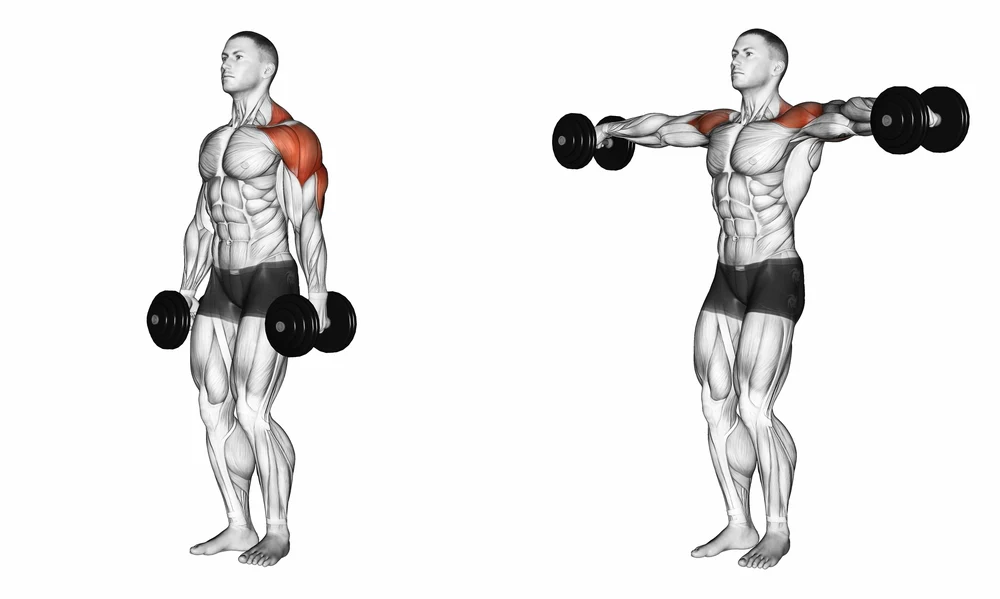
Credit: www.trainwithkiwi.com
Movement Mechanics
The standing dumbbell lateral raise targets the shoulder muscles. It mainly works the middle part of the deltoid muscle. This exercise helps build shoulder width and strength.
Understanding the movement mechanics can improve your form. Proper technique reduces injury risk and increases muscle activation.
Arm Position And Range Of Motion
Start with your arms by your sides holding dumbbells. Keep a slight bend in the elbows. Raise your arms out to the sides until they are parallel to the floor.
Do not lift the dumbbells higher than shoulder level. Going too high can stress the shoulder joint. Controlled motion ensures the right muscles work.
- Arms slightly bent at the elbows
- Lift to shoulder height, not above
- Slow and controlled lifting and lowering
Joint Actions During The Raise
The main joint action is shoulder abduction. This means moving the arms away from the body sideways. The shoulder joint moves the arm upward and outward.
The elbow joint stays mostly stable with a slight bend. The shoulder muscles, especially the middle deltoid, do most of the work during the raise.
- Shoulder abduction is the main movement
- Elbows remain slightly bent and stable
- Deltoid muscles contract to lift the arms
Common Technique Variations
Some people change their arm or wrist positions to target muscles differently. You can also adjust your body stance or use cables instead of dumbbells.
Variations can help reduce strain or focus on different shoulder parts. It is important to keep good form to avoid injury.
- Raising arms with thumbs pointing up for more front deltoid
- Bending forward slightly to target rear deltoid
- Using cables for constant tension
- Performing seated lateral raises to reduce momentum
Benefits For Shoulder Development
The standing dumbbell lateral raise mainly targets the shoulder muscles. It helps build strength and shape in the shoulders.
This exercise improves muscle tone and supports better shoulder movement. It is useful for anyone wanting well-developed shoulders.
Muscle Isolation Advantages
The standing dumbbell lateral raise isolates the middle part of the deltoid muscle. This focus helps the shoulder grow evenly.
Isolating this muscle reduces help from other muscles. This makes the workout more effective for shoulder shaping.
Improving Shoulder Width
This exercise adds size to the side shoulder muscles. This increase makes the shoulders look wider.
Wider shoulders create a stronger, balanced upper body appearance. It helps clothes fit better and improves posture.
Enhancing Muscle Symmetry
Using dumbbells lets you work each shoulder separately. This helps fix muscle imbalances on each side.
Balanced muscles reduce injury risk and improve overall shoulder strength. Symmetry also adds to a neat and strong look.
Common Mistakes To Avoid
The standing dumbbell lateral raise mainly targets the shoulder muscles. Many people make mistakes that reduce its effectiveness. Avoiding these errors helps you get better results.
Focus on proper form and control. This keeps your shoulders safe and works the muscles right. Below are common mistakes to watch out for.
Using Momentum Instead Of Muscle
Some lifters swing their bodies to lift the dumbbells. This uses momentum, not the shoulder muscles. Swinging can cause injury and reduces muscle work.
Lift the weights slowly and with control. Keep your body still and use your shoulders to raise the dumbbells.
- Stand firm with feet shoulder-width apart
- Raise dumbbells slowly to shoulder height
- Lower weights with control, avoiding fast drops
Incorrect Arm Positioning
Raising your arms too far forward or backward shifts the focus from the shoulders. Keep your arms slightly bent and lifted at your sides.
Wrong arm position can strain joints and lower muscle activation. Keep your wrists neutral and elbows slightly bent during the movement.
- Keep arms at your sides, not in front or behind
- Bend elbows about 10-15 degrees
- Keep wrists straight and aligned with forearms
Overloading With Excessive Weight
Using weights that are too heavy causes poor form. You may cheat by swinging or not lifting fully. Heavy weights increase injury risk.
Choose a weight that allows 10 to 15 slow, controlled reps. Focus on feeling your shoulder muscles work.
- Start with light dumbbells
- Increase weight gradually
- Stop if your form breaks down
Training Tips For Maximum Effect
The standing dumbbell lateral raise mainly works your shoulder muscles. It targets the side delts to help widen your shoulders.
To get the best results, you need good form and smart training habits. These tips will help you train safely and effectively.
Proper Weight Selection
Choose a weight that challenges your muscles but lets you keep control. Too heavy weights can cause bad form and injury.
Start with lighter weights and increase slowly as your strength improves. The right weight lets you do all reps with good form.
- Pick a weight you can lift for 10-15 reps.
- Stop if you feel pain or lose form.
- Increase weight in small steps over time.
Controlled Movement Speed
Raise and lower the dumbbells slowly. Fast movements reduce muscle activation and increase injury risk.
A controlled pace keeps constant tension on the muscles. It also helps you focus on proper form and muscle engagement.
- Lift the weights in about 2 seconds.
- Pause briefly at the top of the movement.
- Lower the weights in 3 seconds with control.
Incorporating Variations
Changing the exercise can target your muscles in new ways. Variations also prevent boredom and improve overall shoulder strength.
Try different grips, angles, or positions to work the side delts differently. This can help you build balanced shoulder muscles.
- Use a neutral grip (palms facing each other).
- Perform seated lateral raises to reduce momentum.
- Try cable lateral raises for constant resistance.
Credit: row.gymshark.com

Credit: fitwill.app
Frequently Asked Questions
What Muscles Do Standing Dumbbell Lateral Raises Work?
Standing dumbbell lateral raises primarily target the deltoid muscles, especially the lateral or middle head. They also engage the trapezius and supraspinatus muscles as secondary stabilizers, helping to improve shoulder strength and definition.
How Do Lateral Raises Improve Shoulder Strength?
Lateral raises isolate the shoulder muscles, increasing muscle endurance and strength. This exercise enhances shoulder stability and mobility, which aids in better performance in other upper body workouts and daily activities.
Can Standing Dumbbell Lateral Raises Prevent Shoulder Injuries?
Yes, lateral raises strengthen the deltoids and rotator cuff muscles, improving shoulder joint stability. This reduces the risk of strains and injuries during physical activities and weightlifting.
How Many Reps Are Ideal For Lateral Raises?
For muscle toning and endurance, 12-15 reps per set are ideal. For strength building, 8-12 reps with heavier weights work best. Always focus on form to prevent injury.
Conclusion
The standing dumbbell lateral raise mainly works your shoulder muscles. It helps build strength and shape in the side delts. This move also improves shoulder stability and posture. Doing it regularly can make your shoulders look wider and more defined.
Remember to use light weights to avoid injury. Keep your movements slow and controlled for best results. This exercise fits well in any upper-body workout plan. Simple, effective, and easy to do at home or gym. Try it and see your shoulder strength grow over time.


