

Are you looking to build stronger, more defined arms? Incline dumbbell curls could be the secret weapon you’ve been missing.
But what exactly do incline dumbbell curls work, and how can they help you get the results you want? Understanding which muscles this exercise targets will not only boost your workout efficiency but also prevent injury and frustration. Keep reading to discover how this simple move can transform your arm training and take your strength to the next level.
Credit: powerliftingtechnique.com
Muscles Engaged By Incline Dumbbell Curls
Incline dumbbell curls are a popular exercise in strength training. They target several muscles in your arms. Let’s explore which muscles they engage.
This exercise helps build strength and muscle definition. It mainly focuses on the upper arm muscles.
Biceps Brachii Activation
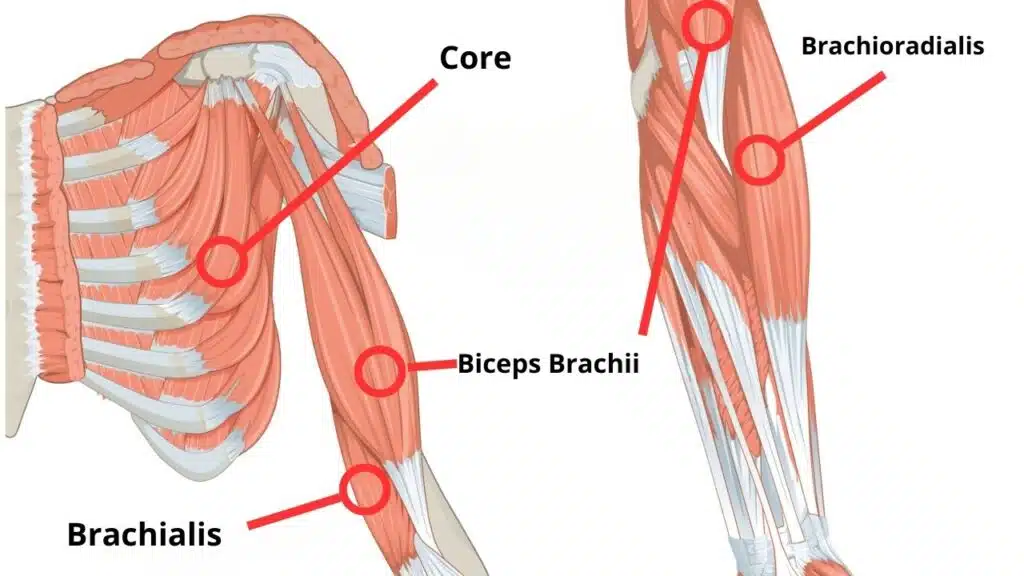
The biceps brachii is the main muscle worked during incline dumbbell curls. This muscle runs along the front of your upper arm.
It is responsible for lifting and bending the arm at the elbow. This makes it essential for many daily activities.
Role Of Brachialis And Brachioradialis
The brachialis lies underneath the biceps brachii. It also plays a significant role in arm flexion.
The brachioradialis is located in the forearm. It assists in arm flexion, especially when the palm faces down.
- Brachialis is crucial for elbow flexion
- Brachioradialis helps stabilize the forearm
Secondary Muscle Involvement
Other muscles are engaged during incline dumbbell curls. These muscles provide support and stability.
They include the deltoids and the forearm muscles. These muscles ensure the movement is smooth and controlled.
| Deltoids | Assist in shoulder movement |
| Forearm Muscles | Help grip the dumbbells |
Benefits Of Incline Dumbbell Curls
Incline dumbbell curls are a popular exercise for building strong biceps. This move targets the muscles in a unique way. It helps improve strength and muscle shape.
Using the incline bench changes the angle of the exercise. This creates different benefits than regular curls. Here are the main advantages of incline dumbbell curls.
Enhanced Bicep Stretch
The incline position stretches your biceps more than normal curls. This stretch helps activate more muscle fibers. It also improves muscle growth over time.
The longer stretch in the starting position increases tension on the biceps. This tension is important for muscle development and strength gains.
Improved Muscle Isolation
Incline dumbbell curls reduce help from other muscles. This means your biceps do more work. It helps you focus on building the biceps only.
- Less shoulder movement
- Less momentum used
- More focus on biceps contraction
Increased Range Of Motion
The incline bench allows your arms to move through a larger path. This increased range helps train the muscles fully. It can improve flexibility and strength.
Greater motion means you work your biceps in all parts of the lift. This leads to more balanced muscle growth and better muscle shape.
Proper Form And Technique
Incline dumbbell curls target your biceps with a unique angle. Using the right form helps you work the muscles well.
Good technique keeps you safe and makes your workout effective. Focus on slow, controlled movements.
Setting Up On The Incline Bench
Set the bench at a 45 to 60-degree angle. Sit back with your chest against the pad.
Hold a dumbbell in each hand. Let your arms hang straight down with palms facing forward.
- Keep your back flat against the bench
- Keep your feet flat on the floor
- Relax your shoulders to avoid tension
Controlling The Movement
Lift the dumbbells slowly by bending your elbows. Bring the weights toward your shoulders.
Pause briefly at the top to feel the biceps contract. Lower the dumbbells slowly back to the start.
- Move in a smooth, steady motion
- Do not use your back or shoulders to lift
- Breathe out while lifting and breathe in when lowering
Common Mistakes To Avoid
Do not swing the dumbbells or use momentum. This reduces the exercise’s effectiveness.
Avoid lifting your elbows or moving your upper arms. Keep them still to target the biceps well.
- Do not arch your back during the curl
- Do not let your wrists bend backward
- Avoid fast, jerky movements

Credit: fitwill.app
Variations To Target Biceps Differently
Incline dumbbell curls are great for building biceps strength. Changing how you do them can work your muscles in new ways. This helps your biceps grow evenly and stay strong.
Different curl variations focus on parts of the biceps and forearms. Adjusting grip or movement changes muscle activation. Try these variations to find what works best for you.
Alternating Incline Dumbbell Curls
Alternating incline dumbbell curls mean curling one arm at a time. This helps you focus on each bicep separately. It also allows better control and form during the exercise.
This variation reduces the chance of using momentum. You can lift with good technique and feel the muscle working more. It also helps fix strength differences between arms.
Incline Hammer Curls
Incline hammer curls use a neutral grip, with palms facing each other. This targets the brachialis muscle under the biceps. It also works the brachioradialis in the forearm.
This curl variation helps increase arm thickness. It changes how your biceps and forearms share the load. It is good for balanced arm strength and size.
Supinated Vs. Neutral Grip
A supinated grip means palms face up during the curl. This grip mainly targets the biceps brachii. It helps build the peak of the bicep muscle.
A neutral grip means palms face each other. It works the brachialis and forearm muscles more. Changing grips lets you train all parts of your arms well.
- Supinated grip: focuses on biceps peak
- Neutral grip: targets brachialis and forearms
- Switch grips for balanced arm development
Programming Incline Dumbbell Curls
Incline dumbbell curls target your biceps with a strong stretch. They work the long head of the biceps muscle effectively.
Using proper programming helps you build strength and size over time. You can add these curls to your workout plan easily.
Rep And Set Recommendations
For muscle growth, aim for moderate reps with controlled motion. Use enough weight to challenge your muscles.
Try these general rep and set ranges for incline dumbbell curls:
- 3 to 4 sets per session
- 8 to 12 repetitions per set
- Rest 60 to 90 seconds between sets
Incorporating Into Workout Routines
Include incline dumbbell curls in your arm or upper body days. They fit well after compound lifts like rows or pull-ups.
You can add these curls twice a week for balanced arm development. Make sure to vary the exercises to avoid plateaus.
- Use as a follow-up exercise after heavier lifts
- Combine with other bicep movements like hammer curls
- Allow at least 48 hours rest before repeating
Progressive Overload Tips
Increase the challenge gradually to keep gaining strength. You can raise weight, reps, or sets over time.
Track your progress to know when to increase the load. Avoid rushing to prevent injury and maintain good form.
- Add 2.5 to 5 pounds when reps feel easy
- Increase reps by 1 or 2 before adding weight
- Try an extra set if you can’t add weight or reps
Comparing Incline Dumbbell Curls With Other Bicep Exercises
Incline dumbbell curls target the biceps in a unique way. This exercise stretches the muscle more than other curls. It helps build strength and size effectively.
We will compare incline dumbbell curls with standard dumbbell curls, barbell curls, and machine curls. This helps understand their benefits and differences.
Versus Standard Dumbbell Curls
Standard dumbbell curls are done standing or sitting with your arms at your sides. Incline dumbbell curls use a bench set at an incline. This changes the angle and muscle stretch.
Incline curls put more stretch on the long head of the biceps. This can lead to better muscle growth. Standard curls work both heads but with less stretch.
- Incline curls give a deeper stretch to the biceps.
- Standard curls allow more control and stability.
- Incline curls may reduce swinging and cheating.
- Standard curls are easier to learn and perform.
Incline Curls Vs. Barbell Curls
Barbell curls use both arms together with a straight or EZ bar. Incline dumbbell curls work one arm at a time with dumbbells. This changes muscle activation and balance requirements.
Incline curls isolate each bicep better. Barbell curls allow you to lift heavier weights. Barbell curls engage muscles that help stabilize the bar.
- Incline curls improve muscle isolation and balance.
- Barbell curls help build overall arm strength.
- Incline curls reduce momentum and cheating.
- Barbell curls may allow heavier loads.
Machine Curls Comparison
Machine curls use a fixed path and often provide constant tension. Incline dumbbell curls require more control and stabilize the movement. Machines can be easier for beginners.
Incline curls activate stabilizer muscles more. Machines reduce the risk of poor form but limit natural movement. Both methods can build biceps effectively.
- Machine curls offer guided motion and constant tension.
- Incline curls require more muscle control and balance.
- Machine curls are safer for some users.
- Incline curls allow a natural range of motion.

Credit: www.menshealth.com
Frequently Asked Questions
What Muscles Do Incline Dumbbell Curls Target?
Incline dumbbell curls primarily target the biceps brachii. They also engage the brachialis and brachioradialis muscles. This exercise emphasizes the long head of the biceps, enhancing arm size and strength.
How Do Incline Dumbbell Curls Improve Arm Shape?
By stretching the biceps fully during incline curls, you stimulate muscle growth. This helps develop peak biceps definition and better arm contour. The exercise promotes balanced muscle development for a sculpted look.
Are Incline Dumbbell Curls Better Than Standard Curls?
Incline curls offer a greater range of motion compared to standard curls. They reduce momentum, increasing muscle activation. This makes them more effective for targeting the long head of the biceps.
Can Incline Dumbbell Curls Prevent Elbow Strain?
Yes, incline curls reduce elbow joint stress by limiting body sway. Proper form keeps tension on muscles, not joints. This lowers the risk of strain during bicep workouts.
Conclusion
Incline dumbbell curls target the biceps effectively. They focus on the long head of the biceps muscle. This helps create a fuller, more defined arm shape. The exercise also improves arm strength and endurance. Using an incline bench changes the angle for better muscle stretch.
This makes the workout more effective than standard curls. Including incline dumbbell curls can enhance your arm routine. Try to keep good form for best results. Consistency will help you see muscle growth and strength gains. Simple, focused exercises like this build stronger, healthier arms.


