

If you want to get the most out of your workouts, learning how to hold dumbbells correctly is a game-changer. The way you grip and position them can make a huge difference in your strength, safety, and results.
Imagine avoiding common mistakes that slow your progress or cause injury—all by mastering a simple skill. You’ll discover easy tips to hold dumbbells the right way, so every lift feels strong and controlled. Ready to boost your confidence and power with every rep?
Keep reading, because your best workout starts with the way you hold your dumbbells.
Credit: www.menshealth.com
Choosing The Right Dumbbells
Holding dumbbells correctly helps you exercise safely. Picking the right dumbbells is important for your fitness goals.
The type and weight of dumbbells you choose can affect your workout experience. Selecting wisely ensures effectiveness and prevents injuries.
Types Of Dumbbells
There are several types of dumbbells available for your workouts. Each type has its own benefits.
- Fixed-weight dumbbells are simple and easy to use.
- Adjustable dumbbells let you change the weight easily.
- Selectorized dumbbells save space and are quick to adjust.
Weight Selection Tips
Choosing the right weight is crucial for effective workouts. Start with lighter weights if you are a beginner.
Increase the weight as you gain strength. Always choose a weight that lets you maintain good form.
- Light weights are good for endurance and toning.
- Medium weights help build muscle and strength.
- Heavy weights are for advanced strength training.
Credit: www.nourishmovelove.com
Basic Dumbbell Grip Techniques
Holding dumbbells correctly helps you lift safely and effectively. Different grips work for different exercises.
Learn these basic grip styles to improve your workout and reduce injury risk.
Standard Grip
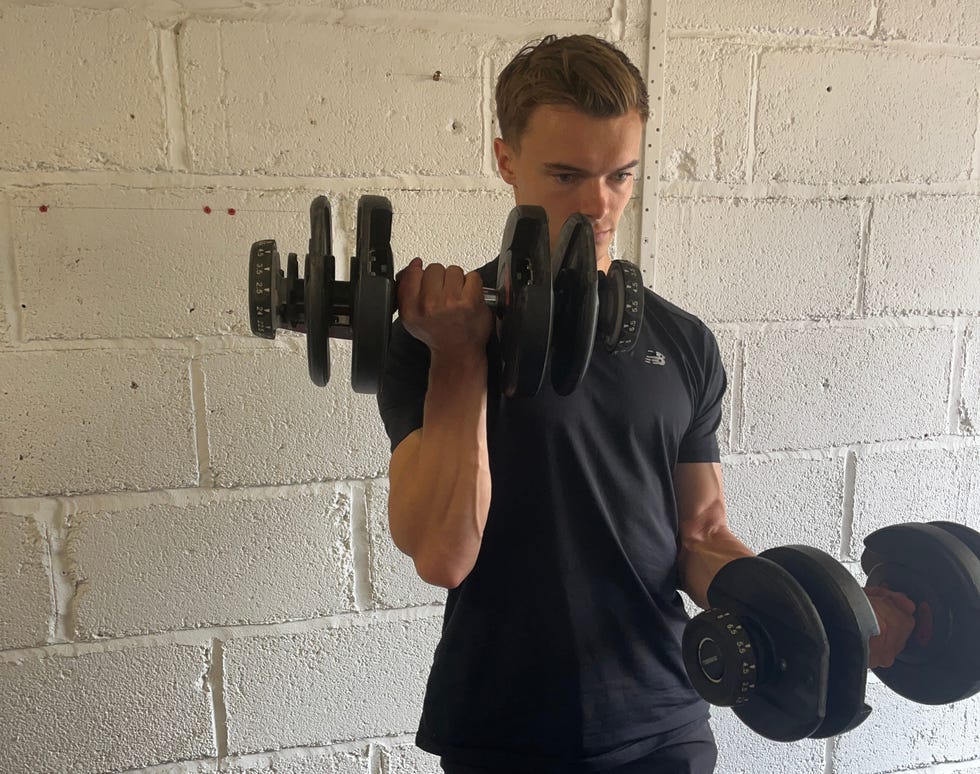
The standard grip is the most common way to hold dumbbells. Wrap your fingers and thumb around the handle firmly.
Keep your wrist straight and avoid squeezing too hard. This grip works for curls, presses, and rows.
- Hold the dumbbell handle in the palm.
- Wrap fingers and thumb fully around the handle.
- Keep wrists neutral, not bent.
- Apply steady but not excessive pressure.
Neutral Grip
The neutral grip has your palms facing each other. It feels natural and reduces wrist strain.
This grip is great for hammer curls and some pressing movements. It activates different muscles than the standard grip.
- Hold dumbbells with palms facing each other.
- Keep thumbs pointing up along the handle.
- Maintain a firm but relaxed hold.
- Keep wrists straight to avoid injury.
Overhand Grip
The overhand grip means your palms face down towards the floor. This grip targets different muscles in your arms and back.
Use this grip for exercises like reverse curls and bent-over rows. It can be harder on your grip strength.
- Hold the dumbbell with palms facing down.
- Wrap fingers and thumb around the handle securely.
- Keep wrists straight and firm.
- Use this grip to work forearms and upper back.
Common Grip Mistakes
Holding dumbbells correctly is important for safety and effectiveness. Many people make simple grip mistakes that cause pain or reduce workout benefits.
Learning the right way to hold dumbbells helps you avoid injury and get better results from your exercises.
Too Tight Vs Too Loose
Gripping dumbbells too tightly can cause tension in your hands and forearms. It also wastes energy and tires you faster.
Holding dumbbells too loosely makes the weights unstable. This can lead to dropping them or losing control during lifts.
- Too tight grip causes muscle fatigue
- Too loose grip risks dropping the dumbbell
- Find a firm but relaxed hold for control
Incorrect Wrist Position
Many people bend their wrists while holding dumbbells. This puts extra strain on the wrist joints and can cause pain.
Keep your wrists straight and aligned with your forearms. This helps protect your wrists and improves your lifting power.
- Bent wrists increase injury risk
- Straight wrists transfer force better
- Use wrist supports if needed
Uneven Grip Pressure
Applying different pressure on each hand causes imbalanced lifts. This can lead to muscle imbalances over time.
Try to hold the dumbbells with equal pressure in both hands. This helps maintain proper form and balance.
- Uneven grip reduces exercise effectiveness
- Equal pressure improves muscle symmetry
- Check your grip before each set
Advanced Grip Variations
Holding dumbbells correctly helps improve your workout and safety. Advanced grip styles target different muscles. They also add variety to your routine.
Try these grips to challenge your hands and forearms. Each grip changes how you lift and hold the weight.
Hook Grip
The hook grip wraps your thumb around the dumbbell bar. Then your fingers hold the thumb in place. This grip gives a secure hold on heavy weights.
This grip reduces the chance of the dumbbell slipping. It also helps your wrists stay strong and steady.
- Wrap thumb around the bar
- Cover thumb with your fingers
- Keep the grip tight but not painful
False Grip
The false grip places the thumb on the same side as your fingers. It does not wrap around the dumbbell. This grip changes wrist position and muscle use.
This grip helps improve wrist flexibility. It also shifts focus to your forearm muscles during lifts.
- Place thumb next to fingers on the bar
- Do not wrap thumb around the bar
- Hold the dumbbell firmly with fingers
Pinch Grip
The pinch grip uses your fingers and thumb to squeeze the dumbbell plates. You do not hold the handle. This grip works your hand strength and grip endurance.
Try this grip to build stronger fingers and improve control over the dumbbell.
- Hold the dumbbell by its plates
- Pinch plates between thumb and fingers
- Keep your hand tight and steady
Improving Grip Strength
Holding dumbbells correctly helps improve your grip strength. A strong grip supports better control during exercises.
Improving grip strength also reduces hand fatigue and lowers injury risk. It makes lifting weights easier and safer.
Grip Exercises
Grip exercises target the muscles in your hands and forearms. These exercises build strength and endurance for better dumbbell control.
Common grip exercises include wrist curls, finger extensions, and squeezing stress balls. Regular practice improves your hold on dumbbells.
- Wrist curls help strengthen forearm muscles
- Finger extensions improve finger strength
- Squeezing stress balls builds hand endurance
Using Grip Trainers
Grip trainers are tools designed to improve hand strength. They add resistance to your grip, making muscles work harder.
Using grip trainers regularly increases your grip power. This helps you hold dumbbells firmly during workouts.
- Hand grippers improve finger and palm strength
- Grip rings help with finger flexibility
- Grip balls increase overall hand endurance
Incorporating Static Holds
Static holds mean holding a dumbbell in place without moving it. This builds grip strength by forcing your hands to stay tight.
Try holding dumbbells at the top of a curl or deadlift. Hold for 10 to 30 seconds to improve your grip endurance.
- Hold dumbbells after lifting for 20 seconds
- Use heavier weights to challenge your grip
- Increase hold time gradually to build strength
Grip Tips For Different Exercises
Holding dumbbells correctly helps you lift safely and effectively. Your grip changes based on the exercise you do.
Using the right grip reduces injury risk and improves your strength gains.
Pressing Movements
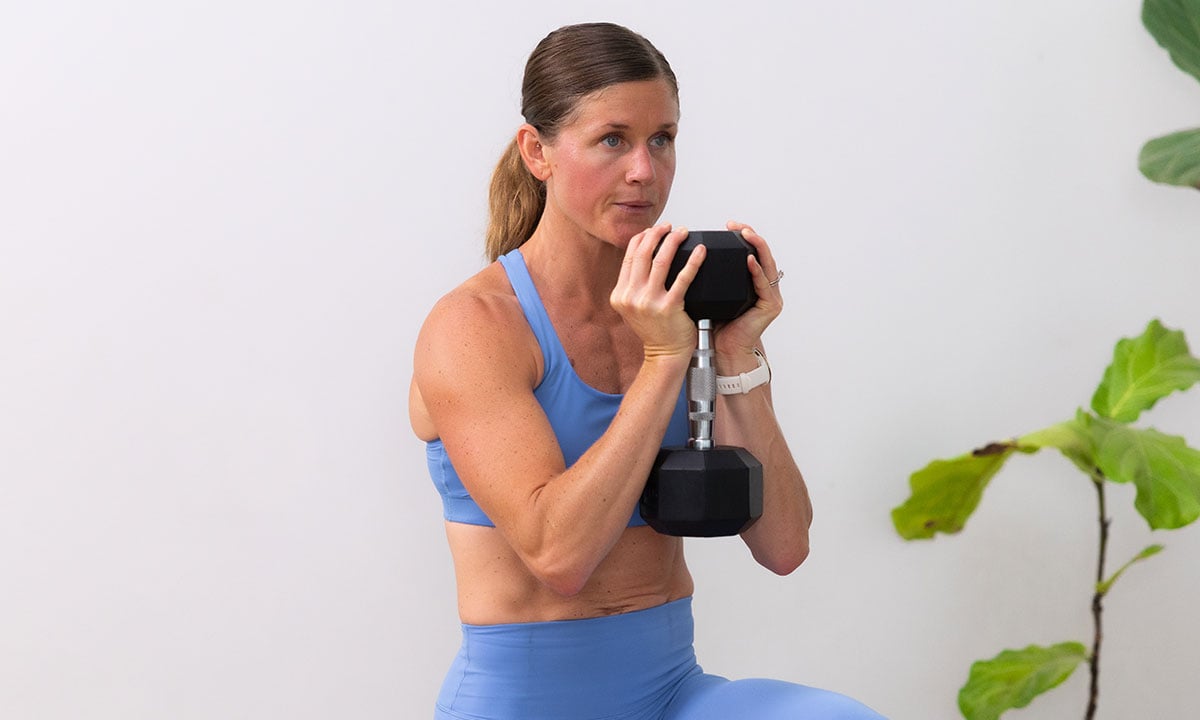
Pressing exercises include movements like dumbbell presses and overhead presses. Hold the dumbbells firmly but avoid gripping too tight.
Keep your wrists straight and wrap your thumbs around the handle. This grip gives you control and helps push weight smoothly.
- Hold dumbbells at shoulder height with palms facing forward or slightly inward
- Wrap thumbs fully around the handle for a secure grip
- Keep wrists aligned with your forearms to avoid strain
Pulling Movements
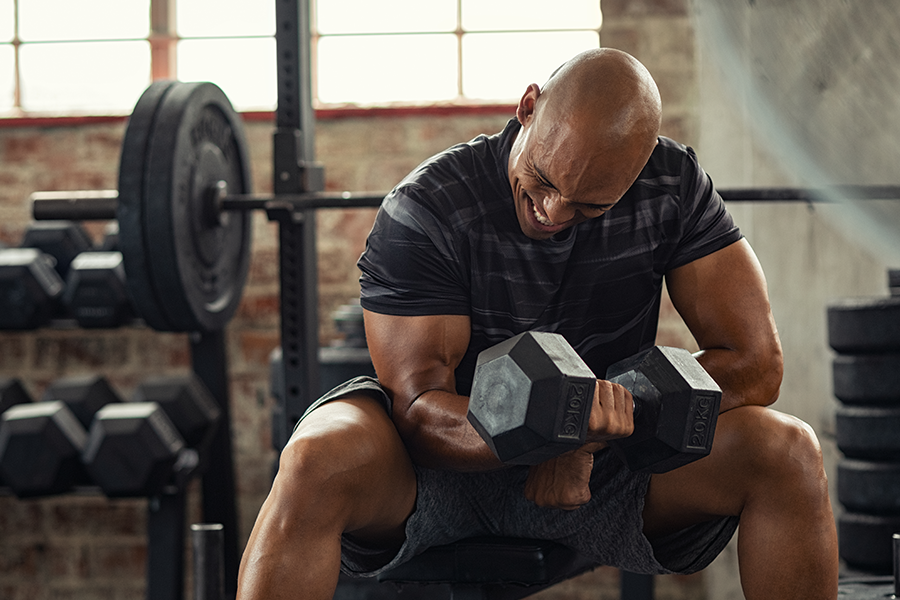
Pulling exercises include rows and curls. Use a firm grip, but keep your hands relaxed to avoid early fatigue.
Hold the dumbbells with palms facing your body or outward, depending on the exercise. Your grip should allow smooth movement.
- Use a neutral grip (palms facing each other) for rows
- For curls, hold dumbbells with palms facing up or inward
- Keep a firm but not overly tight grip to maintain endurance
Isolation Exercises
Isolation exercises target one muscle. Examples include lateral raises and tricep extensions. Hold dumbbells lightly but steady.
Use a controlled grip to allow full range of motion. Avoid gripping too hard to prevent tension in other muscles.
- Use a relaxed grip for lateral raises to focus on shoulder muscles
- Hold the dumbbell handle firmly but gently during tricep extensions
- Keep your wrist stable but not locked to avoid strain
Avoiding Grip Fatigue
Holding dumbbells properly helps you avoid grip fatigue during workouts. Grip fatigue can stop you from finishing your exercise.
Strong grip support lets your hands last longer. This helps you focus on your muscles, not your hands.
Proper Rest And Recovery
Resting your hands is key to avoid grip fatigue. Give your hands time to recover between sessions.
Try these tips for better hand recovery:
- Take breaks between sets to relax your grip
- Stretch your fingers and wrists after workouts
- Use warm water or massage to ease muscle tension
- Allow at least 48 hours before heavy grip work again
Using Chalk Or Gloves
Chalk helps keep your hands dry and improves grip. It reduces slipping and finger strain.
Gloves add padding and support. They also protect your skin from blisters and calluses.
- Use chalk if your hands sweat a lot
- Choose gloves with good grip and fit
- Clean gloves often to avoid bacteria
- Try both to see what feels best for you
Adjusting Workout Volume
Lowering workout volume can reduce grip fatigue. Use fewer sets or lighter weights if your hands tire fast.
Change your routine to balance grip work with other exercises. This helps build strength without overworking your hands.
- Start with 3 sets and increase slowly
- Rest more between sets for better recovery
- Use dumbbells with thicker handles for easier grip
- Mix exercises that do not require strong grip
Credit: www.dmoose.com
Frequently Asked Questions
How Do I Properly Grip Dumbbells For Safety?
Hold dumbbells firmly with your fingers wrapped around the handle. Keep your wrist straight and avoid bending it. A secure grip prevents slipping and reduces injury risk during workouts. Use chalk or gloves if hands sweat for extra grip.
What Is The Best Wrist Position When Holding Dumbbells?
Keep your wrists neutral and aligned with your forearms. Avoid bending wrists forward or backward. This position minimizes strain and improves control during lifts. Proper wrist alignment helps maintain form and prevents joint pain.
How Should I Hold Dumbbells For Different Exercises?
Adjust your grip based on the exercise. Use a neutral grip for rows, palms facing each other. For curls, keep palms facing upward. For presses, palms face forward. Correct grip enhances muscle targeting and exercise effectiveness.
Can Improper Dumbbell Holding Cause Injuries?
Yes, improper grip can lead to wrist sprains, strains, or drops. It may cause muscle imbalances or joint stress. Always maintain a firm, correct hold and avoid excessive wrist bending to reduce injury risks during workouts.
Conclusion
Holding dumbbells correctly keeps your workouts safe and effective. Grip the weights firmly but without strain. Keep your wrists straight to avoid injury. Start with light weights and focus on form. Practice regularly to build strength and confidence. Small changes can make a big difference.
Remember, good habits lead to better results. Keep your body steady and controlled during exercises. Enjoy your fitness journey and stay consistent.


