

If you want to build stronger legs, tone your muscles, and boost your overall fitness, mastering the dumbbell squat is a game changer. This simple exercise can transform your workouts and bring noticeable results fast.
But doing it the right way is key to avoiding injury and getting the most from every rep. In this guide, you’ll discover clear, easy steps to perfect your dumbbell squat. Ready to take your strength to the next level?
Keep reading—you’re about to learn everything you need to know.

Credit: www.youtube.com
Benefits Of Dumbbell Squats
Dumbbell squats are a popular exercise for building strength. They offer several benefits for the body.
These squats improve muscle strength and enhance overall fitness. Let’s explore the benefits in detail.
Muscle Groups Targeted
Dumbbell squats target multiple muscle groups. They focus on the lower body primarily.
- Quadriceps
- Hamstrings
- Glutes
- Calves
Improved Stability And Balance
This exercise enhances stability and balance. Holding dumbbells activates core muscles for better support.
Better balance reduces the risk of falls. It also helps in everyday movements.
Versatility In Workouts
Dumbbell squats are versatile. They can fit into various workout routines.
You can adjust the weight for different fitness levels. This makes them suitable for beginners and advanced users alike.
- Easy to modify intensity
- Can be done at home or gym
- Suitable for all fitness levels
Choosing The Right Dumbbells
Picking the right dumbbells is key for a safe and effective dumbbell squat. The right weight helps you build strength without risking injury.
Consider your fitness level and goals before choosing dumbbells. Comfort and control matter too.
Weight Selection Tips
Start with lighter weights to learn proper form. Increase weight slowly as you get stronger.
Choose weights that let you do 8 to 12 reps with good form. If you can do more, the weight may be too light.
- Test different weights before starting your set
- Use weights that challenge you but don’t cause pain
- Increase weight in small steps for steady progress
Grip Options
You can hold dumbbells in different ways during squats. Choose a grip that feels secure and stable.
Common grips include holding dumbbells at your sides or resting them on your shoulders. Each grip works different muscles.
- At sides:Easy to control and good for beginners
- On shoulders:Increases upper body engagement
- Front rack:Challenges core and balance
Adjustable Vs Fixed Dumbbells
Adjustable dumbbells let you change the weight by adding or removing plates. Fixed dumbbells have a set weight.
Adjustable dumbbells save space and money. Fixed dumbbells are simple and quick to use.
- Adjustable:Flexible weight options, but take time to adjust
- Fixed:Ready to use, no setup needed
- Pick what fits your workout style and space
Setting Up For The Squat
Before you start the dumbbell squat, proper setup is important. This helps you stay safe and get the most from your workout.
Focus on foot placement, dumbbell positioning, and your posture. These steps prepare your body to squat correctly.
Foot Placement And Stance
Place your feet shoulder-width apart. This stance gives you balance and control during the squat.
Point your toes slightly outward. This helps your knees track naturally as you squat down.
- Feet shoulder-width apart
- Toes angled about 15 degrees outward
- Weight evenly on your heels and midfoot
Dumbbell Positioning
Hold a dumbbell in each hand with your arms at your sides. Keep your grip firm but relaxed.
Make sure the dumbbells hang naturally. This keeps your shoulders down and your chest open.
- Dumbbells in each hand
- Arms straight down
- Keep dumbbells close to your body
Posture And Alignment
Stand tall with your chest up and shoulders back. Keep your spine straight throughout the squat.
Look straight ahead. This helps keep your neck aligned with your spine and improves balance.
- Chest lifted
- Shoulders relaxed and back
- Neutral spine, no rounding or arching
- Eyes looking forward
Step-by-step Squat Technique
The dumbbell squat is a simple exercise to build leg strength. It works your thighs, hips, and glutes.
Follow these steps to do the squat with good form and avoid injury.
Lowering Phase
Hold a dumbbell in each hand by your sides. Stand tall with feet shoulder-width apart.
Begin to bend your knees and hips. Push your hips back like sitting in a chair. Keep your chest up and back straight.
- Keep your weight on your heels
- Lower slowly and controlled
- Keep dumbbells steady by your sides
Depth And Knee Tracking
Lower down until your thighs are parallel to the floor. You can go a bit lower if comfortable.
Make sure your knees stay in line with your toes. Do not let them cave inward or move too far forward.
- Thighs parallel or slightly below parallel
- Knees follow same direction as toes
- Keep feet flat on the ground
Rising Phase
Push through your heels to stand back up. Straighten your hips and knees to return to standing.
Keep your chest lifted and core tight during the rise. Avoid leaning forward or rounding your back.
- Drive upward with your legs
- Keep dumbbells close to your body
- Finish standing tall with hips and knees locked
Common Form Mistakes
Doing dumbbell squats with the wrong form can cause injuries. It also lowers the exercise’s effectiveness.
Knowing common mistakes helps you squat safely and get better results.
Knee Position Errors
Knees moving too far forward or inward can strain joints. Keep your knees aligned with your toes during the squat.
Do not let your knees collapse inward as you squat down.
- Keep knees tracking over your second toe
- Avoid letting knees go past your toes
- Press knees outward slightly to engage muscles
Back Rounding
Rounding your back puts stress on your spine. Keep your back straight and chest up throughout the movement.
Engage your core muscles to support your lower back during the squat.
- Keep your spine neutral, not curved
- Lift your chest and look forward
- Tighten your abdominal muscles
Uneven Weight Distribution
Leaning more on one leg causes imbalance and may lead to injuries. Distribute weight evenly on both feet.
Hold the dumbbells steady and avoid shifting your body to one side.
- Keep feet flat on the ground
- Push evenly through both heels
- Hold dumbbells close to your sides

Credit: www.rockstaracademy.com
Tips To Increase Strength Safely
Doing dumbbell squats is a great way to build leg strength. It is important to increase strength safely to avoid injuries.
Use smart techniques and give your body time to adjust. This helps you get stronger step by step.
Progressive Overload Strategies
Progressive overload means slowly increasing the weight or reps. This makes your muscles work harder over time.
Start with lighter dumbbells and add small weight increases. Do more sets or reps as you get stronger.
- Increase dumbbell weight by 2-5 pounds every week or two
- Add 1-2 more reps per set when possible
- Try more sets if you can keep good form
- Track your progress to stay consistent
Breathing Techniques
Breathing right helps you lift safely and keep control. Hold your breath too long and you may feel dizzy.
Inhale before you squat down. Exhale as you push up to stand. This keeps your core tight and supports your back.
- Take a deep breath before lowering your body
- Exhale steadily while standing back up
- Keep breathing even during rest between reps
- Avoid holding your breath for too long
Rest And Recovery
Muscles grow stronger when you rest. Do not train the same muscle group every day.
Give your legs 48 hours to recover after heavy squats. Sleep and good nutrition also help strength gain.
- Rest at least one day between dumbbell squat sessions
- Get 7-9 hours of sleep each night
- Eat protein to support muscle repair
- Use light stretching to reduce soreness
Incorporating Dumbbell Squats Into Routines
Dumbbell squats are great for building leg strength. You can add them to many workout plans.
They help improve balance and work your core muscles too. Try adding them regularly.
Warm-up Exercises
Warming up before dumbbell squats reduces injury risk. Do light cardio to get your blood flowing.
Include dynamic stretches that target your legs and hips. This helps your muscles get ready.
- Jumping jacks for 2 minutes
- Leg swings forward and sideways
- Hip circles to loosen joints
- Bodyweight squats to practice form
Combining With Other Moves
Dumbbell squats work well with upper body exercises. Combine them to create full-body workouts.
Add moves like dumbbell presses or rows. This balances muscle use and keeps workouts fun.
- Dumbbell squat with shoulder press
- Squat to bicep curl
- Squat followed by bent-over rows
- Alternate squats and push-ups
Sample Workout Plans
Here are simple workout plans with dumbbell squats. Follow them to build strength and endurance.
| Workout | Exercises | Sets | Reps |
|---|---|---|---|
| Beginner | Dumbbell squats, push-ups, planks | 3 | 10-12 |
| Intermediate | Squat to press, bent-over rows, lunges | 4 | 12-15 |
| Advanced | Squat jumps, dumbbell thrusters, burpees | 5 | 15-20 |
Equipment And Safety Considerations
Doing dumbbell squats needs the right equipment and safety steps. This helps you exercise safely and get better results.
Using proper gear and knowing how to stay safe lowers the risk of injury. It also makes your workout more effective.
Choosing Supportive Footwear
Wear shoes that support your feet well during squats. Good shoes help keep your balance and protect your ankles.
Look for shoes with a flat, firm sole. This type of sole gives you a strong base to stand on.
- Shoes with good grip prevent slipping
- Flat soles help keep your weight balanced
- Supportive shoes reduce foot and ankle strain
Using Mirrors And Spotters
Mirrors help you check your form while doing dumbbell squats. Good form lowers the chance of injury.
A spotter can help you stay safe, especially with heavier weights. They watch your movements and assist if you lose balance.
- Use mirrors to keep your back straight
- Spotters help when lifting heavy dumbbells
- Ask a friend or trainer to spot you
Preventing Injury
Warm up before squatting to prepare your muscles. Stretch your legs and hips gently to avoid strains.
Start with light dumbbells and increase weight slowly. Stop if you feel pain or discomfort during the exercise.
- Do a proper warm-up before squats
- Use light weights at first
- Keep your knees aligned with your toes
- Stop if you feel sharp pain
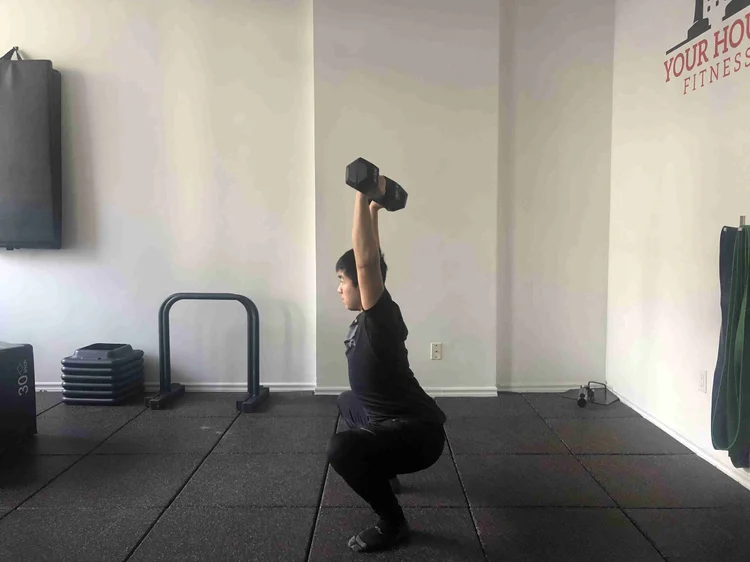
Credit: www.yourhousefitness.com
Frequently Asked Questions
What Muscles Does A Dumbbell Squat Target?
A dumbbell squat primarily targets the quadriceps, hamstrings, glutes, and calves. It also engages the core for stability and strengthens the lower body effectively.
How Do I Maintain Proper Form In A Dumbbell Squat?
Keep your back straight, chest up, and feet shoulder-width apart. Hold dumbbells by your sides and squat down by bending knees and hips.
Can Dumbbell Squats Help With Weight Loss?
Yes, dumbbell squats boost metabolism and burn calories. They build muscle, which increases overall calorie burn, aiding in weight loss.
How Much Weight Should I Use For Dumbbell Squats?
Start with light weights to master form. Gradually increase weight as you gain strength and confidence to avoid injury.
Conclusion
Dumbbell squats build strength in your legs and core. They help improve balance and posture too. Start with light weights and focus on form. Gradually increase weight as you get stronger. Remember to keep your back straight and feet shoulder-width apart.
Practice regularly to see good results. This exercise suits beginners and advanced lifters alike. Keep your movements slow and controlled for safety. Stay consistent, and you will feel stronger every day. Try adding dumbbell squats to your workout routine now.


