

Are you looking to build a stronger chest and back with just one simple move? The dumbbell pullover might be exactly what you need.
It’s a powerful exercise that targets multiple muscles, helping you get more out of your workout in less time. But doing it the right way is key to avoiding injury and maximizing your results. In this guide, you’ll learn step-by-step how to do the dumbbell pullover correctly, so you can boost your strength and see real progress.
Ready to take your training to the next level? Let’s dive in.

Credit: swolverine.com
Benefits Of Dumbbell Pullover
The dumbbell pullover is a versatile exercise. It strengthens multiple muscles in one movement. This exercise can improve your overall fitness.
Performing the dumbbell pullover regularly can enhance strength and stability. It targets essential muscle groups in your body.
Muscle Groups Targeted
The dumbbell pullover engages several muscles. It mainly works your chest and upper back. Secondary muscles include the triceps and shoulders.
- Chest muscles (pectoralis major)
- Upper back muscles (latissimus dorsi)
- Triceps and shoulders
Improved Chest And Back Strength
This exercise builds your chest and back muscles. Stronger muscles help with daily activities. They also improve your posture and appearance.
Consistent training increases muscle endurance. It makes lifting and pulling tasks easier. You feel more confident in physical tasks.
Enhanced Core Stability
The dumbbell pullover also strengthens your core. A strong core supports your spine and balance. It reduces the risk of injuries.
Core stability is vital for athletic performance. It helps in various sports and physical activities. A stable core enhances movement efficiency.
Choosing The Right Dumbbell
Choosing the right dumbbell is important for doing dumbbell pullovers safely. The right weight and grip help you perform the exercise correctly.
Using the wrong dumbbell can cause strain or reduce the workout’s effectiveness. Focus on weight and handle to find the best fit.
Weight Selection Tips
Pick a dumbbell weight that challenges your muscles but lets you keep good form. Start light to avoid injury.
Increase the weight gradually as you get stronger. Choose a weight that allows 8 to 12 slow, controlled reps.
- Begin with a light weight to learn the movement
- Use a weight that tires you by the last reps
- Do not use a weight that causes pain or poor form
- Increase weight in small steps over time
Grip And Handle Types
Dumbbells come with different grips and handles. Choose one that feels comfortable and secure in your hands.
Knurled handles offer a textured grip to prevent slipping. Smooth handles may feel nicer but can be harder to hold.
- Knurled grip: rough texture for better hold
- Rubber-coated handles: softer and less slippery
- Adjustable dumbbells: change weight with one handle
- Fixed dumbbells: simple and sturdy design
Proper Setup And Positioning
Doing the dumbbell pullover correctly helps you stay safe and get better results. You need to set up the bench and your body the right way before starting.
This guide explains how to place the bench and position your body, hands, and arms for a proper dumbbell pullover.
Bench Placement And Body Alignment
Place the bench in a flat position on a stable surface. Make sure it does not move during the exercise.
Lie down so your upper back rests on the bench. Keep your feet flat on the floor for balance.
- Your head, neck, and spine should form a straight line.
- Your hips should be lower than your shoulders.
- Keep your chest open and lifted slightly.
Hand And Arm Positioning
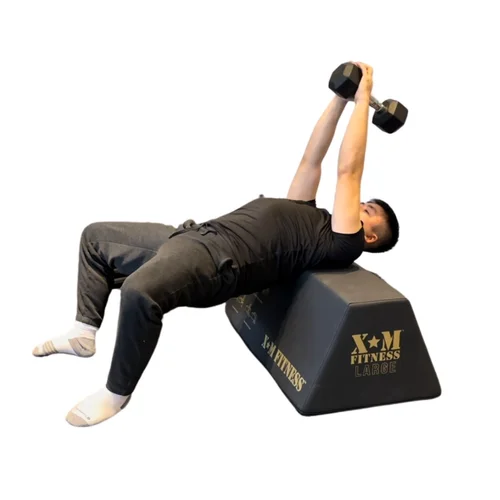
Hold the dumbbell with both hands above your chest. Grip it firmly to avoid slipping.
Keep your elbows slightly bent throughout the movement. Do not lock your arms straight.
- Hands should support the dumbbell on the inside ends.
- Arms move slowly behind your head in a controlled way.
- Return arms to the start position without dropping the dumbbell.
Credit: www.yourhousefitness.com
Step-by-step Pullover Technique
The dumbbell pullover is a great exercise for your chest and back. It helps improve shoulder flexibility and strength. Doing it right is important to avoid injury.
This guide shows you how to do the dumbbell pullover with clear steps. Follow each part carefully for the best results.
Starting Position
Lie flat on a bench with your feet on the floor. Hold one dumbbell with both hands above your chest. Keep your arms slightly bent but firm.
Make sure your back is flat on the bench. Your head, shoulders, and hips should stay in contact with the bench during the exercise.
Controlled Movement Path
Slowly lower the dumbbell backward over your head. Keep your arms steady and slightly bent. Lower until you feel a stretch in your chest and shoulders.
Do not let the dumbbell drop too far. Bring the weight back to the starting position in a controlled way.
- Keep your core tight to protect your lower back
- Move only your arms, keep your body still
- Use slow and smooth motions to avoid injury
Breathing And Timing
Inhale deeply as you lower the dumbbell behind your head. This helps you control the movement and keep your muscles engaged.
Exhale slowly as you bring the dumbbell back over your chest. Keep a steady pace, taking about two to three seconds each way.
- Inhale during the downward motion
- Exhale during the upward return
- Maintain a slow and steady rhythm
Common Form Mistakes
The dumbbell pullover is a great exercise for your chest and back. It is important to use the right form to avoid injury.
Many people make common mistakes that reduce the exercise’s benefits. Fixing these helps you get better results safely.
Overarching The Lower Back
One mistake is arching the lower back too much during the pullover. This puts strain on your spine and can cause pain.
Keep your lower back in a neutral position. Use your core muscles to support your spine and avoid overextension.
Using Momentum Instead Of Control
Some people swing the dumbbell fast using momentum. This reduces muscle engagement and increases injury risk.
Move the dumbbell slowly and with control. Focus on the muscles working, not on how fast you can lift the weight.
Incorrect Elbow Position
Bending or flaring your elbows too much changes the exercise and can hurt your shoulders. Keep a slight bend in your elbows.
Maintain your elbows close to a fixed angle. This keeps tension on the chest and back muscles and protects your joints.
Tips To Maximize Gains
The dumbbell pullover is a great exercise for your chest and back. Doing it right helps you build strength and muscle. Use these tips to get better results.
Focus on your form and keep improving step by step. Small changes can lead to big gains over time.
Progressive Overload Strategies
To grow muscles, increase the challenge regularly. Add more weight or do more reps each week. This makes your muscles work harder and grow stronger.
Keep track of your weights and reps. Try to improve a little bit every workout to avoid plateaus.
- Increase dumbbell weight gradually
- Add more repetitions per set
- Slow down the movement for more muscle tension
- Use more sets to boost volume
Incorporating Variations
Changing how you do the pullover keeps your muscles guessing. It also helps target different parts of your chest and back.
Try different grips, angles, and equipment to keep the exercise fresh and effective.
- Use a flat or incline bench
- Try a neutral or pronated grip
- Switch between single-arm and two-arm pullovers
- Use a cable or resistance band for variation
Combining With Other Exercises
The pullover works well with other chest and back exercises. Combining them helps build balanced strength and muscle.
Pair pullovers with presses and rows to hit muscles from all sides.
- Bench press for chest strength
- Dumbbell rows for back thickness
- Push-ups for endurance
- Lat pulldowns for upper back
Safety Considerations
Doing dumbbell pullovers safely is very important. This exercise works your chest and back muscles.
Proper safety steps help avoid injuries and get better results.
Warm-up Recommendations
Always warm up before starting dumbbell pullovers. Warming up prepares your muscles and joints.
Try light cardio and stretching for 5-10 minutes to increase blood flow.
- Do arm circles to loosen shoulder joints
- Perform light push-ups or chest stretches
- Use a light dumbbell for practice reps
Avoiding Shoulder Strain
Keep your shoulders safe by using correct form. Avoid lifting too heavy at first.
Keep your elbows slightly bent and do not let your arms drop too low behind your head.
- Start with a light weight to learn the movement
- Do not overstretch your shoulders
- Keep smooth and controlled motions
- Stop if you feel sharp pain in your shoulders
When To Stop
Stop the exercise if you feel pain or discomfort. Pain is a signal your body needs rest.
Also stop if you feel dizzy or very tired. Rest before trying again.
- Stop if you feel sharp or sudden pain
- Stop if your shoulders feel unstable
- Rest if you feel dizzy or weak
- Consult a trainer if pain continues
Credit: www.mensjournal.com
Frequently Asked Questions
What Muscles Do Dumbbell Pullovers Target?
Dumbbell pullovers primarily work the chest, lats, and triceps. They also engage the core and shoulders for stability. This exercise improves upper body strength and enhances muscle definition effectively.
How Do You Perform A Dumbbell Pullover Correctly?
Lie on a bench with a dumbbell held over your chest. Slowly lower it behind your head, stretching your lats. Then, bring it back over your chest while keeping arms slightly bent. Maintain control throughout the movement.
Can Dumbbell Pullovers Help With Chest Expansion?
Yes, dumbbell pullovers stretch the rib cage and chest muscles. This can improve lung capacity and chest expansion over time. It’s a beneficial exercise for both strength and flexibility.
How Many Sets And Reps Are Ideal For Dumbbell Pullovers?
Start with 3 sets of 10-12 reps. Focus on controlled motion and proper form. Adjust weight as needed to avoid strain and maximize muscle engagement.
Conclusion
Dumbbell pullovers help build chest and back muscles well. Keep your movements slow and controlled for best results. Start with light weights to avoid injury and gain strength. Focus on breathing deeply as you lift and lower the dumbbell. Regular practice improves muscle tone and posture over time.
Remember, consistency is key to seeing real progress. Try adding this exercise to your routine today. Enjoy stronger muscles and better fitness soon.


