

If you want to build a stronger, more defined upper chest, the incline dumbbell press is a must-have move in your workout. But doing it right is key to getting the best results and avoiding injury.
In this guide, you’ll learn exactly how to perform the incline dumbbell press with perfect form. By the end, you’ll know how to target your muscles better, lift more confidently, and see faster progress. Ready to take your chest workout to the next level?
Let’s dive in.
Benefits Of Incline Dumbbell Press
The incline dumbbell press is a great exercise for building strength. It targets specific muscles and improves overall fitness. This exercise is popular in many workout routines.
It helps enhance upper body strength and stability. Let’s explore its benefits and the muscles it targets.
Targeted Muscle Groups
The incline dumbbell press mainly works the chest muscles. It also engages the shoulders and triceps.
This exercise is effective for upper chest development. It helps in building a balanced and strong physique.
- Pectoral muscles
- Deltoid muscles
- Triceps brachii
Improved Chest Definition
Incline dumbbell press improves chest appearance. It focuses on the upper part of the chest.
This exercise helps in creating a well-defined chest. Regular practice leads to better muscle tone.
Enhanced Shoulder Stability
Performing the incline dumbbell press increases shoulder stability. It strengthens the muscles around the shoulder joints.
Strong shoulders are essential for lifting and daily activities. This exercise supports shoulder health and function.
- Improves shoulder joint strength
- Reduces injury risk
- Supports better posture
Equipment And Setup
The incline dumbbell press is a great exercise for the upper chest. Setting up the right equipment helps you perform it safely and effectively.
This guide explains how to choose dumbbells, adjust the bench, and hold the weights correctly.
Choosing The Right Dumbbells
Select dumbbells that match your strength and experience. Start with lighter weights to learn proper form.
Use dumbbells with a secure grip to avoid slipping during the press.
- Choose weights you can lift 8-12 times with good form
- Pick dumbbells with textured handles for better grip
- Avoid dumbbells that are too heavy or too light
Adjusting The Bench Angle
Set the bench to an incline between 30 and 45 degrees. This angle targets the upper chest muscles well.
Too steep an angle shifts the work to your shoulders, while too flat reduces upper chest focus.
- Start at 30 degrees for beginners
- Use 45 degrees for more upper chest activation
- Adjust the angle to feel comfortable and stable
Proper Grip And Positioning
Hold the dumbbells with a firm grip. Keep your wrists straight to avoid strain.
Position the dumbbells just above your chest. Keep your elbows at about a 45-degree angle from your body.
- Grip dumbbells firmly with palms facing forward
- Keep wrists aligned with your forearms
- Lower dumbbells slowly to chest level
- Press dumbbells upward without locking elbows
Step-by-step Execution
The incline dumbbell press is a great exercise for the upper chest muscles. It helps build strength and shape your chest. Follow these steps to do it correctly.
Using the right form prevents injury and makes the exercise effective. Pay close attention to each part of the movement.
Starting Position
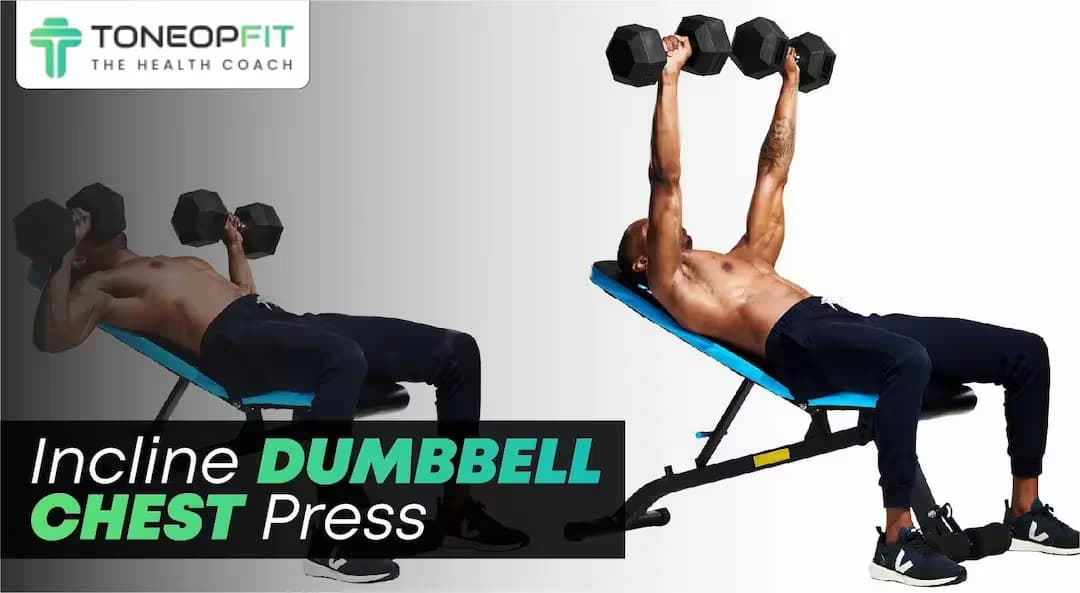
Set an adjustable bench to a 30 to 45-degree angle. Sit down and hold a dumbbell in each hand. Keep your feet flat on the floor.
Lie back on the bench with your back pressed firmly against it. Hold the dumbbells at shoulder height with your palms facing forward. Keep your elbows bent at about 90 degrees.
- Bench angle: 30-45 degrees
- Feet flat on the floor
- Dumbbells at shoulder height
- Palms facing forward
- Elbows bent at 90 degrees
Pressing Movement
Push the dumbbells upward by extending your arms. Press the weights until your arms are almost straight but not locked. Focus on squeezing your chest muscles.
Keep the dumbbells steady and move them in a controlled way. Avoid using momentum or letting your back arch too much.
- Press dumbbells up slowly
- Keep arms nearly straight
- Squeeze chest muscles
- Keep control, no fast moves
- Don’t arch your back
Lowering The Dumbbells
Slowly lower the dumbbells back to the starting position. Bend your elbows to about 90 degrees. Lower the weights until your upper arms are just below parallel to the floor.
Keep your movements smooth and controlled. Avoid dropping the weights quickly to protect your shoulders and joints.
- Lower dumbbells slowly
- Elbows bent at 90 degrees
- Upper arms just below parallel
- Control the movement
- Protect shoulders and joints

Credit: www.menshealth.com
Common Mistakes To Avoid
The incline dumbbell press is a great exercise for your upper chest. Doing it right helps you build strength safely. Avoiding common mistakes keeps your workout effective and injury-free.
Here are some common errors to watch for when performing the incline dumbbell press. Fixing these helps improve your form and results.
Arching The Back Too Much
Arching your back too much puts strain on your spine. It can cause pain and reduce workout benefits. Keep your back pressed lightly against the bench for support.
A small natural arch is fine, but avoid lifting your chest by pushing your hips up. This keeps your body stable and targets the chest muscles correctly.
Elbows Flaring Out
Letting your elbows flare out wide can stress your shoulder joints. This may lead to discomfort or injury over time. Keep your elbows at about a 45-degree angle from your body.
This position helps protect your shoulders and focuses the effort on your chest muscles. Control the movement to avoid letting elbows drift outward.
Using Excessive Weight
Using weights that are too heavy causes poor form and risk of injury. It also reduces the effectiveness of the exercise. Choose a weight you can lift with control and good technique.
- Start with lighter dumbbells to learn the movement
- Increase weight gradually as your strength improves
- Focus on smooth, steady reps instead of speed
- Stop if you feel pain or lose form
Tips For Maximum Gains
The incline dumbbell press targets your upper chest and shoulders. Doing it right helps you build strength and size fast.
Focus on key techniques to get the most from each set. Small changes improve your results greatly.
Controlled Tempo
Move the dumbbells slowly and with control. Avoid using momentum to lift the weights.
Lower the dumbbells in two to three seconds. Press them up in one to two seconds for full muscle tension.
- Slow down the lowering phase
- Keep steady speed during the press
- Pause briefly at the bottom
- Maintain tight core and form
Breathing Techniques
Breathe out as you push the dumbbells up. This helps you use more power during the lift.
Inhale deeply as you lower the weights. Controlled breathing supports stability and focus.
- Exhale during the pressing phase
- Inhale during the lowering phase
- Keep breathing steady and calm
- Avoid holding your breath
Progressive Overload
Gradually increase the weight or reps over time. This forces your muscles to grow stronger.
Track your progress to know when to add more challenge. Small steps lead to steady gains.
- Add more weight every 1-2 weeks
- Increase reps if weight stays the same
- Focus on good form with heavier loads
- Rest enough between sessions
Variations And Alternatives
The incline dumbbell press targets your upper chest and shoulders. You can try other exercises to work similar muscles.
These options can add variety and help you find what works best for you.
Incline Barbell Press
The incline barbell press uses a barbell instead of dumbbells. It lets you lift heavier weights and build strength.
Keep your feet flat and back pressed to the bench. Lower the bar slowly to your upper chest, then push up.
- Use a spotter for safety
- Control the bar to avoid bouncing
- Focus on a steady motion
Incline Machine Press
The incline machine press guides your movement on a set path. It is good for beginners and injury recovery.
Adjust the seat and handles to fit your body. Push the handles upward and slowly return to start.
- Machine stabilizes your motion
- Less balance needed than free weights
- Good for controlled muscle work
Push-up Variations
Push-ups can target your upper chest by changing hand position or body angle. No equipment is needed.
Try incline push-ups with your hands on a bench or decline push-ups with feet elevated.
- Incline push-ups make it easier to press up
- Decline push-ups increase upper chest work
- Wide hand placement targets chest more
Incorporating Into Your Workout
The incline dumbbell press is great for building upper chest strength. Adding it to your workout helps balance chest development.
You can use this exercise in many training programs. It fits well with both beginner and advanced routines.
Best Training Splits
Incline dumbbell press works best in upper body or chest-focused days. Pair it with other pressing and pulling movements.
Common splits that include this exercise are push/pull/legs and upper/lower splits. This helps target muscles properly without overtraining.
- Push day: chest, shoulders, triceps
- Upper body day: chest, back, arms
- Chest-focused day in a body part split
Frequency And Volume
Train the incline dumbbell press 1 to 3 times per week. This depends on your overall workout plan and goals.
Aim for 3 to 4 sets per session with 8 to 12 reps. This range builds muscle and strength effectively.
- 1-3 workouts per week
- 3-4 sets per workout
- 8-12 repetitions per set
Recovery And Rest
Give your muscles time to recover after working out. Rest is key for muscle growth and injury prevention.
Rest at least 48 hours before training the same muscle group again. Sleep and nutrition also help recovery.
- Rest chest muscles 48 hours between workouts
- Get 7-9 hours of sleep per night
- Eat enough protein and calories to support muscle repair
Credit: toneopfit.com

Credit: www.menshealth.com
Frequently Asked Questions
What Muscles Does The Incline Dumbbell Press Target?
The incline dumbbell press primarily targets the upper chest muscles. It also engages the shoulders and triceps for stability and pressing power. This exercise helps build a well-rounded, defined upper chest and improves overall pressing strength.
How Do I Set The Correct Bench Angle?
Set the bench angle between 30 to 45 degrees for optimal results. Too steep targets shoulders more, too flat hits the mid chest. Adjust based on comfort and muscle focus to maximize upper chest activation.
Can Beginners Safely Perform Incline Dumbbell Press?
Yes, beginners can perform incline dumbbell presses safely. Start with light weights to master form and control. Gradually increase weight while maintaining proper technique to avoid injury and build strength progressively.
How Many Reps And Sets Are Ideal?
For muscle growth, aim for 3 to 4 sets of 8 to 12 reps. Use a challenging weight that allows completing reps with good form. Rest for 60 to 90 seconds between sets to maintain intensity.
Conclusion
Doing the incline dumbbell press builds your upper chest muscles well. Keep your movements slow and controlled for best results. Use weights that challenge you but feel safe. Focus on your form to avoid injuries. Practice regularly to see steady strength gains.
This exercise fits well into any chest workout routine. Keep pushing yourself, and enjoy the progress you make. Simple steps lead to strong, healthy muscles. Give it time, and your upper chest will grow.


