

Are you tired of your dumbbells cluttering up your workout space? Building your own dumbbell rack might be the perfect solution for you.
Imagine having a neat, organized space where you can easily access your weights without the hassle of searching or tripping over them. Not only will it save you time, but it will also create a safer and more efficient workout environment.
In this guide, you’ll discover simple steps to construct a sturdy and functional dumbbell rack using materials you probably already have. With just a few tools and a bit of effort, you can transform your workout area into a tidy, professional-looking gym. Keep reading to learn how you can achieve this and elevate your fitness routine to the next level.
Materials And Tools Needed
Building a dumbbell rack needs the right materials and tools. This helps make the rack strong and safe.
Below are the basics you need before starting your project. Get these ready to work smoothly.
Choosing The Right Wood
Pick wood that holds heavy weight and lasts long. Hardwood like oak or maple works well for this.
- Oak: Very strong and durable
- Maple: Smooth finish and sturdy
- Pine: Affordable but less strong
- Birch: Hard and good for finishing
Essential Tools For The Job
| Tool | Purpose |
| Measuring Tape | Measure wood pieces accurately |
| Circular Saw | Cut wood to size |
| Drill | Make holes for screws |
| Screwdriver | Drive screws securely |
| Sandpaper | Smooth wood surfaces |
| Clamps | Hold wood steady while working |
Additional Hardware And Supplies
You need some extra parts to hold the rack together and finish it nicely.
- Screws: To fasten wood pieces
- Wood Glue: Adds extra strength
- Wood Stain or Paint: Protects wood from damage
- Brushes or Rags: For applying stain or paint
- Rubber Feet: Prevents rack from sliding
Designing Your Dumbbell Rack
Building a dumbbell rack starts with a good design. A well-planned rack holds your weights safely.
Designing helps you use space wisely and keep your gym tidy. It also protects your dumbbells.
Determining The Size And Capacity
Think about how many dumbbells you own. Count each weight you want to store on the rack.
Measure your dumbbells’ length and width. This helps decide how big the rack should be.
- Include space between dumbbells for easy access
- Make shelves wide enough for the largest dumbbells
- Consider future weight additions to your set
Sketching A Simple Plan
Draw a basic layout of your dumbbell rack on paper. Use simple shapes to show shelves and supports.
Label dimensions and note where each dumbbell will go. This helps during building and assembly.
- Use graph paper for accurate measurements
- Mark space for tools and hardware needed
- Plan how to assemble parts step-by-step
Safety And Stability Considerations
Make sure your rack can hold the dumbbells without tipping over. Use strong materials for support.
Check that shelves are level and fasten parts tightly. This prevents wobbling or accidents.
- Choose wood or metal that supports heavy weights
- Add rubber feet or pads to avoid slipping
- Keep the rack low or secure it to the wall for safety
Preparing The Wood
Building a dumbbell rack starts with preparing the wood carefully. Good preparation helps the rack last longer and stay strong.
Each step in preparing the wood is important. Take your time to measure, cut, and finish the pieces well.
Measuring And Marking
Measure the wood pieces according to your rack design. Use a tape measure to get exact lengths. Mark the wood clearly with a pencil.
- Double-check all measurements before marking
- Use a square tool for straight lines
- Mark both sides of the wood for accuracy
Cutting The Pieces
Cut the wood pieces along the marks using a saw. Keep your cuts straight and smooth. Wear safety gear to protect yourself.
| Wood Piece | Length (inches) | Cut Type |
| Base Frame | 36 | Straight |
| Vertical Supports | 24 | Straight |
| Horizontal Bars | 18 | Straight |
Sanding For A Smooth Finish
Sanding removes rough edges and splinters. Use medium grit sandpaper first, then fine grit for smoothness. Sand all surfaces evenly.
Tips for sanding:
- Sand along the grain of the wood
- Clean dust off before sanding finer
- Wear a mask to avoid breathing dust
Assembling The Frame
Building a dumbbell rack starts with making a strong frame. The frame holds the weight and keeps the rack steady.
This guide shows how to put together the base, uprights, and support beams for the frame.
Constructing The Base
The base supports the whole rack and keeps it from tipping. Use sturdy wood or metal for a solid foundation.
Cut the base pieces to size and join them firmly. Make sure the base is level and wide enough for stability.
- Measure and cut two long base pieces
- Cut two shorter crosspieces for width
- Attach the pieces with screws or bolts
- Check that the base is square and flat
Building The Uprights
Uprights hold the dumbbell shelves and give height to the rack. Use strong, straight pieces for the uprights.
Secure the uprights to the base with screws or bolts. Make sure they stand straight and are evenly spaced.
- Cut two tall upright pieces
- Position them on the base corners
- Use a level to keep them vertical
- Fasten them tightly to the base
Attaching Support Beams
Support beams connect the uprights and hold the shelves. They add strength and keep the rack stable.
Measure and attach the beams at even heights. Use screws or bolts to make sure they stay secure.
- Cut horizontal beams to fit between uprights
- Mark where shelves will sit on uprights
- Attach beams at these marks with fasteners
- Check for level and adjust if needed
Adding Dumbbell Holders
Adding holders to your dumbbell rack keeps your weights organized and easy to reach. Proper holders protect your dumbbells and extend the rack’s life.
Use sturdy materials for the holders to support the weight safely. Planning the design carefully ensures a strong and useful rack.
Creating Slots Or Racks
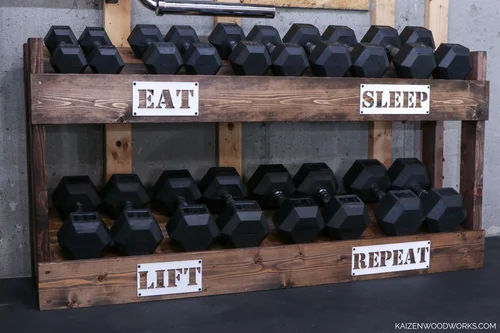
Create slots or racks where each dumbbell can sit securely. Slots help prevent dumbbells from rolling or falling off the rack.
- Measure the dumbbell handles to fit the slots correctly.
- Cut wood or metal strips to make the holders.
- Shape the holders to match the dumbbell size and shape.
- Sand edges to avoid splinters or sharp corners.
- Paint or seal the holders for durability.
Securing Holders To The Frame
Attach holders firmly to the rack frame. Loose holders can cause dumbbells to fall, risking injury or damage.
| Method | Description | Tools Needed |
| Screws | Use wood or metal screws to fasten holders. | Drill, screwdriver |
| Bolts | Bolts add extra strength and can be tightened as needed. | Wrench, drill |
| Brackets | Metal brackets can support the holder sides for stability. | Drill, screws |
Ensuring Proper Spacing
Space each holder to fit dumbbells of different sizes comfortably. Proper spacing avoids clutter and allows easy access.
- Measure the width of each dumbbell handle.
- Add extra space on each side for easy placement and removal.
- Consider different dumbbell weights and sizes when spacing holders.
- Keep the rack balanced by spacing holders evenly across the frame.
Credit: www.greensafaris.com
Finishing Touches
Finishing touches make your dumbbell rack look great and last longer. They also keep it safe to use every day.
These final steps include protecting the wood, adding grips, and checking for safety. Each helps improve your rack’s quality.
Applying Paint Or Stain
Painting or staining protects the wood from damage and wear. It also gives the rack a clean, finished look.
Choose paint or stain that suits the wood type and your style. Use a brush or cloth to apply it evenly.
- Sand the wood smooth before applying
- Apply thin coats for better coverage
- Let each coat dry fully before the next
- Use a clear sealant for extra protection
Adding Non-slip Feet
Non-slip feet stop your rack from moving or scratching the floor. They add stability and protect surfaces.
Attach rubber pads, felt pads, or silicone feet to each leg or base corner. Make sure they fit tightly.
- Measure the rack’s base before buying feet
- Clean the rack’s bottom before attaching
- Check that feet hold the rack firmly in place
- Replace worn feet to keep good grip
Inspecting For Safety
Safety checks prevent accidents and keep the rack strong. Look for sharp edges, loose parts, or weak spots.
Tighten screws and smooth rough areas. Make sure the rack can hold the dumbbells without wobbling.
- Check all joints and fasteners for tightness
- Sand down any splinters or rough wood
- Test the rack’s balance with weights on it
- Repair or replace damaged parts immediately
Maintenance Tips
Building a dumbbell rack is just the start. Keeping it in good shape makes it last long. Regular care helps avoid damage and keeps it safe to use.
Here are some easy maintenance tips to protect your dumbbell rack. Follow these steps to keep it strong and clean.
Regular Cleaning
Dust and sweat can build up on your dumbbell rack. Cleaning it often stops rust and keeps it looking good. Use a damp cloth to wipe all surfaces. Dry the rack well after cleaning to avoid moisture damage.
- Wipe down the rack after each workout
- Use mild soap and water for deep cleaning
- Dry completely to prevent rust
Tightening Loose Screws
Loose screws can make the rack unstable. Check all screws every month. Use the right screwdriver to tighten any loose parts. This keeps your rack safe and steady during use.
- Inspect all screws and bolts
- Tighten screws that feel loose
- Replace any damaged screws immediately
Checking For Wear And Tear
Look for signs of wear like cracks or splinters. Early detection stops small problems from getting worse. Check the rack frame and shelves carefully. Fix or replace damaged parts quickly.
| Area to Check | Signs of Damage | Action Needed |
| Wood Frame | Cracks, Splinters | Smooth rough areas or replace damaged parts |
| Metal Parts | Rust, Bent Pieces | Clean rust or replace bent pieces |
| Screws and Bolts | Loose or Missing | Tighten or replace immediately |

Credit: m.youtube.com

Credit: www.reddit.com
Frequently Asked Questions
What Materials Are Needed To Build A Dumbbell Rack?
You need wood or metal, screws, brackets, and tools like a drill and saw. Choose sturdy materials for safety and durability.
How Much Space Is Required For A Dumbbell Rack?
Allow enough space for the rack and easy access to dumbbells. Typically, 3-4 feet width and 2 feet depth works well.
What Is The Best Design For A Homemade Dumbbell Rack?
A tiered or angled shelf design keeps dumbbells secure and visible. This design maximizes space and ensures easy access.
How Can I Ensure The Dumbbell Rack Is Stable?
Use strong materials, secure joints with screws, and attach the rack to a wall if possible. Stability prevents accidents.
Conclusion
Building a dumbbell rack is simple and useful. It keeps your weights organized and safe. You save space and protect your floor. Using basic tools and materials makes the project easy. Take your time and follow the steps carefully. Soon, you will have a strong rack ready to hold your dumbbells.
Enjoy a tidy workout area that helps you stay focused. This small effort brings big benefits to your fitness routine.


