

If you want to build a strong, sculpted chest, understanding the right exercises is key. Dumbbell flyes are a popular move, but do you know exactly what muscles they target?
Knowing this can help you maximize your workout and avoid injury. You’ll discover which muscles dumbbell flyes work and how to use this exercise to shape your upper body effectively. Keep reading to unlock the secrets to a powerful chest and better results in the gym.
Primary Muscles Targeted
Dumbbell flyes are a great exercise for building upper body strength. They mainly target the chest and shoulder muscles.
This exercise helps in enhancing muscle definition and promoting muscle growth in these areas.
Chest Muscles
The primary chest muscle worked is the pectoralis major. This muscle gives the chest its bulk and shape.
Strong pectoralis muscles improve your overall upper body strength and appearance.
- Pectoralis Major: Main focus of the exercise
- Pectoralis Minor: Also activated during the movement
Shoulder Muscles
Dumbbell flyes also engage the shoulder muscles. The anterior deltoids are particularly involved.
These muscles aid in the movement and stabilization of the shoulders during the exercise.
- Anterior Deltoids: Help lift and control the weights
- Rotator Cuff: Provides stability to the shoulder joint
Secondary Muscles Engaged
Dumbbell flyes mainly work the chest muscles. They also involve other muscles to help with the movement. These secondary muscles support the exercise and improve stability.
Understanding these muscles can help you perform the exercise better and avoid injuries. Let’s look at the role of the biceps and the stabilizing muscles.
Biceps Role
The biceps assist during dumbbell flyes by controlling the arm’s movement. They help keep the elbows slightly bent and steady. This support reduces stress on the shoulder joints.
While the biceps do not do most of the work, they play a key role in smooth motion and safety. They act as helpers to the chest muscles during the flyes.
Stabilizing Muscles
Several stabilizing muscles work hard during dumbbell flyes. These muscles keep your body balanced and steady. They stop you from wobbling as you move the weights.
- Deltoids: Help support and stabilize the shoulder joint.
- Rotator Cuff: Keeps the shoulder steady throughout the exercise.
- Core Muscles: Maintain posture and balance on the bench.
- Trapezius: Assists in controlling shoulder blade movement.
Muscle Activation During Dumbbell Flyes
Dumbbell flyes mainly target the chest muscles. This exercise helps build strength and shape in the chest area.
It also activates muscles in the shoulders and arms to support the movement. Understanding muscle activation improves your workout.
Muscle Movement Patterns
Dumbbell flyes use a wide arm movement that opens and closes the chest. This pattern stretches the chest muscles and then contracts them.
The main muscle working is the pectoralis major. The front shoulders and biceps also help move the arms during the flyes.
- Pectoralis major: main chest muscle
- Anterior deltoids: front shoulder muscles
- Biceps brachii: arm muscles supporting movement
Range Of Motion Impact
The range of motion in dumbbell flyes stretches the chest muscles fully. A bigger range increases muscle activation and flexibility.
Keeping control during the full motion helps protect joints. Avoid going too low to reduce shoulder stress.
- Wide range of motion stretches chest muscles
- Controlled movement protects shoulder joints
- Limit depth to avoid injury

Credit: fitwill.app
Benefits For Muscle Development
Dumbbell flyes help build muscles in the upper body. They focus on the chest and nearby muscles.
This exercise stretches and contracts muscles. It helps improve strength and muscle size.
Chest Definition
Dumbbell flyes target the pectoral muscles. They work the chest by opening and closing the arms.
This movement helps shape and define the chest. It separates the muscles for a clearer look.
- Focuses on the pectoralis major muscle
- Improves muscle stretch and contraction
- Enhances the chest’s shape and size
Shoulder Stability
Dumbbell flyes also engage the shoulder muscles. They improve control and support around the shoulder joint.
Stronger shoulder muscles help prevent injuries. They make the shoulders more stable during other exercises.
- Activates the anterior deltoids
- Strengthens the rotator cuff muscles
- Improves shoulder control and balance
Common Mistakes Affecting Muscle Focus
Dumbbell flyes mainly work your chest muscles. They also use shoulder and arm muscles. Mistakes in form can reduce the chest workout.
Some common errors shift the effort away from the chest. This lowers exercise benefits and may cause injury.
Incorrect Arm Position
Keeping your arms too straight or too bent can change the muscle focus. Arms that are too straight put stress on the shoulder joints.
Bent arms help target the chest better. Aim for a slight bend at the elbows. This keeps tension on chest muscles throughout.
- Do not lock your elbows
- Keep a small bend in your arms
- Move arms in a smooth arc
Overextension Risks
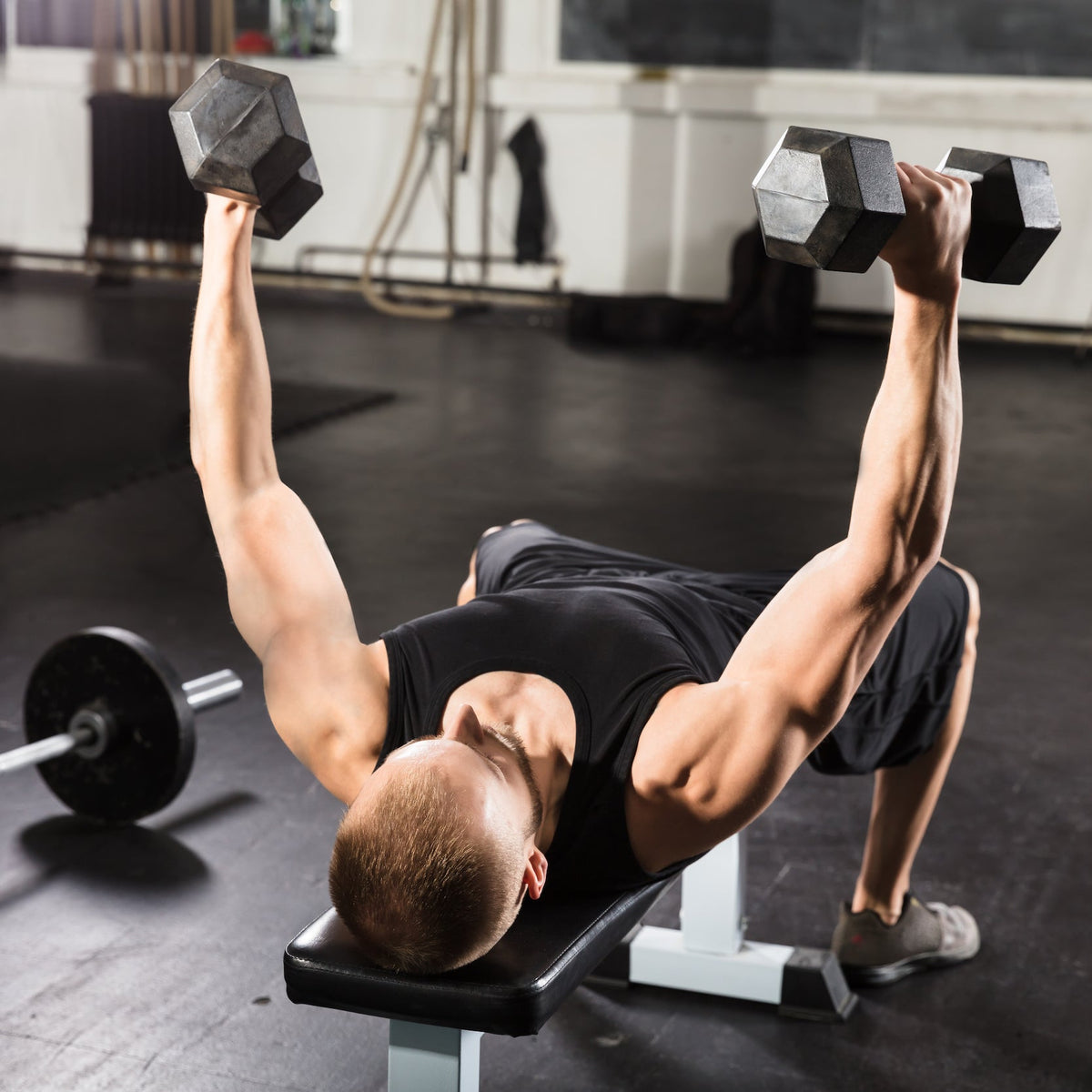
Lowering dumbbells too far behind your chest can cause overextension. This puts strain on shoulder joints and muscles.
Stop when your upper arms are level with the bench. This keeps the chest muscles working safely and reduces injury risk.
- Avoid dropping dumbbells below bench level
- Keep control during the full motion
- Listen to your body’s limits
Credit: swolverine.com
Variations To Target Muscles Differently
Dumbbell flyes work your chest muscles. Changing the angle changes which parts get the most work.
Using different variations helps balance muscle growth and strength across your chest.
Incline Dumbbell Flyes
Incline dumbbell flyes target the upper chest muscles more. The bench is set at an angle between 30 to 45 degrees.
This variation also works your shoulders slightly. It helps build a fuller look on the top of your chest.
- Set bench at 30-45 degrees incline
- Hold dumbbells above chest with slight bend in elbows
- Lower weights out to sides slowly
- Bring dumbbells back up with control
Decline Dumbbell Flyes
Decline dumbbell flyes target the lower chest muscles. The bench is set at a decline angle, usually 15 to 30 degrees down.
This move helps build strength and size in the lower chest area. It also reduces stress on the shoulders.
- Set bench at 15-30 degrees decline
- Hold dumbbells above chest with elbows slightly bent
- Lower dumbbells wide to the sides
- Raise weights back up carefully
Tips To Maximize Muscle Engagement
Dumbbell flyes mainly target the chest muscles. They also work the shoulders and arms. Using the right techniques helps you get the most from this exercise.
Focus on form and control to increase muscle activation. This approach reduces injury risk and improves strength.
Proper Form Techniques
Keep your back flat on the bench and feet planted firmly on the floor. Hold dumbbells with a slight bend in your elbows.
Lower the weights slowly until your arms are level with your chest. Avoid dropping the dumbbells too far down.
- Keep elbows slightly bent throughout
- Do not arch your back
- Maintain a steady grip on dumbbells
- Keep shoulders down and back
Controlled Movement
Move the dumbbells slowly during both lowering and lifting phases. Control helps activate muscles more fully.
Pause briefly at the bottom of the movement. Then, bring the weights back up using your chest muscles.
- Lower weights in 2-3 seconds
- Pause for 1 second at the stretch
- Lift weights in 2 seconds
- Avoid using momentum

Credit: strengthwarehouseusa.com
Frequently Asked Questions
What Primary Muscles Do Dumbbell Flyes Target?
Dumbbell flyes primarily target the pectoralis major muscles. They also engage the anterior deltoids and triceps to assist during the movement. This exercise effectively isolates the chest muscles, promoting muscle growth and definition.
How Do Dumbbell Flyes Benefit Chest Development?
Dumbbell flyes stretch and contract the chest muscles through a wide range of motion. This action improves muscle flexibility and promotes hypertrophy. They help enhance the chest’s shape and strength, complementing pressing exercises for balanced development.
Are Dumbbell Flyes Effective For Muscle Isolation?
Yes, dumbbell flyes effectively isolate the chest muscles. The movement minimizes involvement of secondary muscles like shoulders and triceps. This isolation helps focus tension on the pectorals, making it ideal for targeted chest workouts.
Which Muscles Stabilize During Dumbbell Flyes?
During dumbbell flyes, the rotator cuff muscles stabilize the shoulder joint. The core and back muscles also engage to maintain posture and balance. These stabilizers ensure safe and controlled execution of the exercise.
Conclusion
Dumbbell flyes target your chest muscles mainly. They also help your shoulders and arms work better. This exercise improves muscle shape and strength. Using proper form keeps your body safe. Add dumbbell flyes to your workout routine often. Small steps lead to big muscle gains.
Keep practicing for steady progress and better results.


