

If you want stronger, more defined arms, mastering the seated dumbbell curl is a must. This simple exercise targets your biceps, helping you build muscle and improve arm strength.
But are you doing it the right way? Small mistakes can limit your results or even cause injury. In this guide, you’ll learn exactly how to perform seated dumbbell curls with perfect form. By the end, you’ll know how to maximize every rep and get the best results in less time.
Ready to take your arm workout to the next level? Let’s dive in.
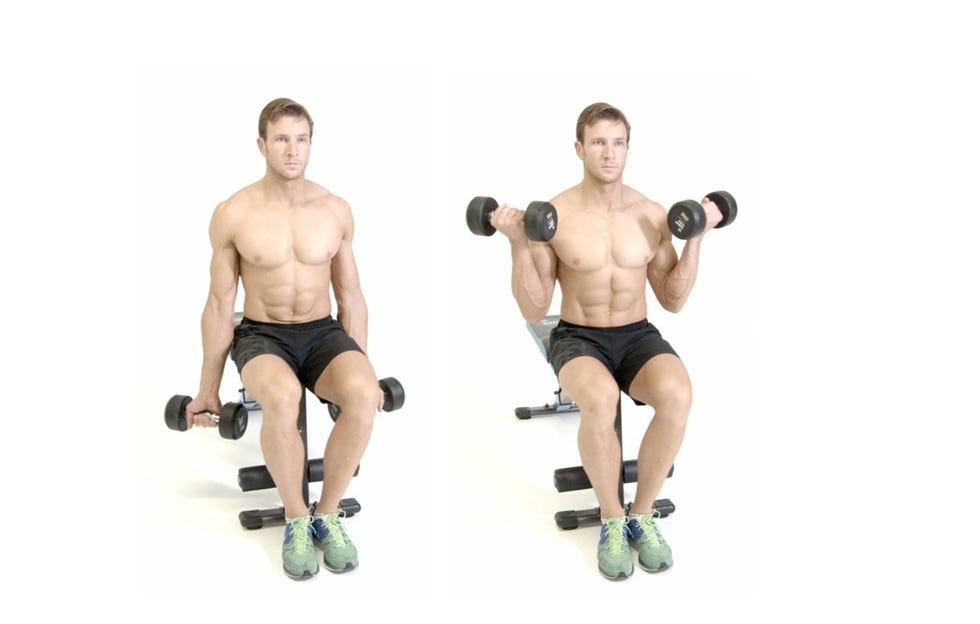
Credit: www.menshealth.com
Benefits Of Seated Dumbbell Curls
Seated dumbbell curls are a great exercise for your arms. They help build strength and improve muscle tone.
This exercise targets the biceps and can be done at home or in the gym. It is simple and effective for everyone.
Improves Bicep Strength
Seated dumbbell curls focus on your biceps. They help increase the strength in this area, which is important for many daily tasks.
Stronger biceps make it easier to lift objects and perform upper body exercises. This can improve your overall fitness level.
Enhances Muscle Tone
Doing seated dumbbell curls regularly can enhance muscle tone in your arms. This makes them look more defined and fit.
Muscle tone is not just about appearance. It can also indicate improved muscle health and endurance.
Reduces Risk Of Injury
Seated dumbbell curls can help reduce injury risk. They strengthen muscles and support joints, making them more resilient.
Strong muscles are less likely to strain or tear. This is especially important for people who lift weights regularly.
Easy To Perform
Seated dumbbell curls are easy to perform. They do not require complex equipment or a lot of space.
This exercise can be done with a pair of dumbbells and a chair. It is ideal for beginners and experienced lifters alike.
Supports Other Exercises
Building bicep strength with seated dumbbell curls supports other exercises. It helps in activities like pull-ups and rows.
Having strong biceps can make these exercises easier and more effective, enhancing your overall workout routine.
Equipment Needed
Seated dumbbell curls require a few simple pieces of equipment. These tools help you perform the exercise safely and effectively.
Using the right equipment supports good form and improves your workout results.
Adjustable Dumbbells
Adjustable dumbbells let you change the weight easily. This is useful as you gain strength over time.
Start with a weight you can lift comfortably for 8 to 12 repetitions. Increase the weight gradually as you get stronger.
Flat Weight Bench
A flat weight bench helps you sit with good posture. It supports your back and keeps you stable during the curls.
Choose a bench with firm padding. This ensures comfort and prevents slipping while you exercise.
Workout Gloves (optional)
Workout gloves protect your hands from blisters and calluses. They also improve your grip on the dumbbells.
Gloves are not required but can make your workout more comfortable, especially if you lift heavier weights.
Preparing For The Exercise
Before doing seated dumbbell curls, it is important to prepare well. Proper preparation helps you avoid injury and get better results.
Focus on setting up your equipment and choosing the right weights. This makes your workout safe and effective.
Choosing The Right Dumbbells
Pick dumbbells that fit your strength level. Start with lighter weights to learn proper form.
Using weights that are too heavy can cause strain. Choose dumbbells that let you do 8 to 12 curls easily.
- Test weights by lifting them once or twice
- Choose a weight that feels challenging but doable
- Increase weight gradually as you get stronger
Setting Up Your Seat
Use a sturdy bench or chair with back support. Sit with your feet flat on the floor for balance.
Adjust your seat height so your arms hang naturally at your sides. Keep your back straight and shoulders relaxed.
- Find a seat that does not wobble
- Keep your spine upright during the exercise
- Place your feet shoulder-width apart on the ground

Credit: www.youtube.com
Step-by-step Guide
Seated dumbbell curls are a great exercise to build your arm muscles. This guide will help you perform the exercise correctly.
Follow each step carefully to avoid injury and get the best results from your workout.
Starting Position
Sit on a bench with your back straight and feet flat on the floor. Hold a dumbbell in each hand with your arms fully extended down by your sides.
Keep your palms facing forward and your elbows close to your torso. This is the starting position.
Curling The Dumbbells
Slowly lift the dumbbells by bending your elbows. Keep your upper arms still and only move your forearms.
Raise the weights until your biceps are fully contracted and the dumbbells are near your shoulders. Hold this position for a moment.
Lowering The Weights
Slowly lower the dumbbells back to the starting position. Keep control of the weights as you lower them.
Make sure your arms are fully extended before starting the next repetition.
Common Mistakes To Avoid
Seated dumbbell curls are great for building arm strength. But many people make mistakes that reduce their workout’s effect.
Knowing what to avoid helps you get better results and stay safe. Here are some common mistakes to watch out for.
Using Momentum
Using your body to swing the weights takes tension off your biceps. This reduces the exercise’s benefits.
Try to lift the dumbbells slowly and with control. Keep your back and shoulders still during each curl.
- Do not jerk or swing your body forward.
- Move only your forearms while curling.
- Lift and lower weights in a smooth motion.
Elbow Positioning
Letting your elbows move away from your sides can reduce bicep work. Your elbows should stay close to your body.
Keep your elbows fixed in place. This helps isolate the biceps and improves muscle growth.
- Do not let elbows drift forward or backward.
- Keep elbows tucked by your torso.
- Focus on bending the elbow to lift the weight.
Wrist Alignment
Improper wrist position puts stress on your joints. Your wrists should stay straight during curls.
Avoid bending your wrists up or down. Hold the dumbbells firmly but keep wrists neutral to protect them.
- Do not let wrists bend backward or forward.
- Keep wrists aligned with your forearms.
- Grip dumbbells firmly without squeezing too hard.
Tips To Improve Form
Seated dumbbell curls build your biceps safely. Good form helps you get the best results.
Focus on how you move and control your body during each curl. This lowers injury risk.
Controlled Movement
Move the dumbbells slowly and with control. Avoid swinging or using momentum.
Lift the weight up steadily. Lower it down even slower to keep tension on the muscles.
- Lift for 2 seconds
- Pause briefly at the top
- Lower for 3 seconds
Breathing Technique
Breathe out as you curl the dumbbells up. This helps you use your strength fully.
Breathe in as you lower the weights. Keep your breathing steady and controlled.
- Exhale during the lifting phase
- Inhale during the lowering phase
- Do not hold your breath
Focus On Muscle Engagement
Think about using your biceps during the curl. This helps activate the right muscles.
Avoid using your shoulders or back to lift the weights. Keep the focus on your arms.
- Keep elbows close to your sides
- Do not let elbows move forward
- Use a full range of motion
Variations To Challenge Yourself
Seated dumbbell curls are great for building arm strength. Changing how you do them can keep your muscles growing.
Try different styles to make the workout harder and more effective. Each variation targets your muscles in a new way.
Alternating Curls
Alternating curls mean you lift one dumbbell at a time. This lets you focus on each arm separately.
This variation helps fix strength imbalances between arms. It also keeps your form strict and controlled.
Hammer Curls
Hammer curls use a neutral grip with palms facing each other. This works your brachialis muscle more.
This grip changes the pressure on your arms. It helps build thicker, stronger biceps and forearms.
Incline Seated Curls
For incline curls, sit back on a bench set at an angle. Let your arms hang down fully before curling up.
This stretch at the start makes your muscles work harder. It increases the range of motion for better growth.

Credit: www.youtube.com
Integrating Seated Dumbbell Curls Into Your Routine
Seated dumbbell curls help build arm strength and shape your biceps. Adding them to your workout can improve muscle tone.
These curls are easy to do and fit well in many training plans. You can do them at home or in the gym.
Frequency And Sets
Do seated dumbbell curls two to three times a week. This gives your muscles time to recover and grow stronger.
Start with two to three sets of 8 to 12 repetitions. Use a weight that feels challenging but lets you keep good form.
- Two to three sessions per week
- Two to three sets each session
- 8 to 12 repetitions per set
- Rest 30 to 60 seconds between sets
Pairing With Other Exercises
Seated dumbbell curls work well with other arm and upper body exercises. This helps balance your workout.
Combine curls with exercises like tricep dips, push-ups, or shoulder presses. This builds strength evenly across muscles.
- Tricep dips to target the back of the arms
- Push-ups for chest and arm strength
- Shoulder presses to strengthen shoulders
- Rows to work the back muscles
Safety Precautions
Seated dumbbell curls are a great exercise for your arms. It is important to follow safety steps. This keeps you safe and avoids injury.
Pay close attention to your body and use the right form. Use weights that match your strength level.
Use Proper Weight
Choose dumbbells that are not too heavy. Too much weight can cause muscle strain or injury.
Start with light weights and increase gradually as you get stronger. This helps your muscles adjust safely.
Maintain Correct Posture
Sit with your back straight and feet flat on the floor. Keep your elbows close to your sides during the curl.
This posture helps protect your back and shoulders. It also makes the exercise more effective.
Warm Up Before Exercise
Do a light warm-up before starting. This can include arm swings or light cardio.
Warming up prepares your muscles and joints. It lowers the risk of injury during the curls.
Avoid Using Momentum
Lift the dumbbells slowly and with control. Do not swing your arms or use your body to lift the weight.
Using momentum reduces the workout’s benefit and can cause injuries. Focus on smooth, steady movements.
Listen To Your Body
If you feel pain or discomfort, stop the exercise. Pain may mean you are using the wrong form or too much weight.
Rest if you feel tired. Do not push through sharp pain or severe muscle soreness.
Frequently Asked Questions
How Do I Perform Seated Dumbbell Curls Correctly?
Sit on a bench with back straight. Hold dumbbells at your sides. Curl weights up slowly while keeping elbows close. Lower weights with control. This ensures effective bicep activation and reduces injury risk.
What Muscles Do Seated Dumbbell Curls Target?
Seated dumbbell curls primarily target the biceps brachii. They also engage the brachialis and brachioradialis muscles. This exercise helps build arm strength and improve muscle tone effectively.
How Many Reps And Sets Are Ideal For Beginners?
Start with 2-3 sets of 8-12 repetitions. Use light to moderate weights to maintain form. Gradually increase weight and reps as strength improves for optimal muscle growth.
Can Seated Dumbbell Curls Help With Arm Strength?
Yes, they improve arm strength by isolating the biceps. Consistent training increases muscle endurance and size. This exercise is excellent for building stronger, more defined arms.
Conclusion
Seated dumbbell curls build strong, toned arms effectively. Keep your back straight and control each movement. Avoid swinging the weights to target your biceps well. Start with light weights, then increase gradually. Consistency helps you see progress over time. Rest properly between workouts to avoid injury.
Practice good form for the best results. Enjoy the process and stay patient. Your arms will grow stronger with regular effort. Simple steps lead to steady improvement.


