
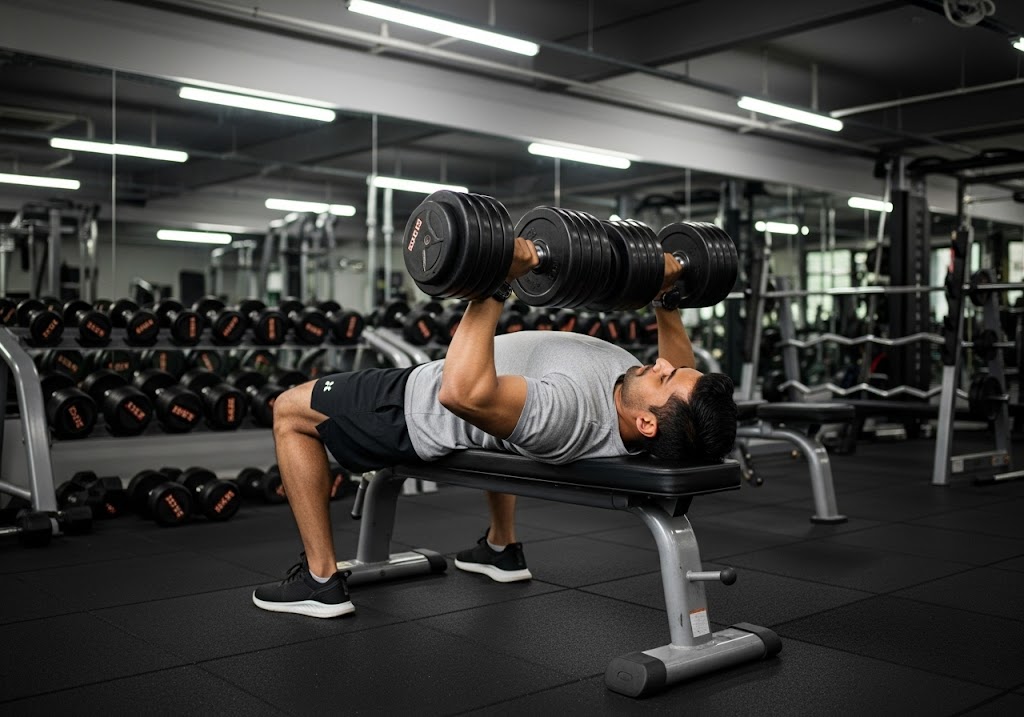
Wondering how much weight you should use for your dumbbell bench press? You’re not alone.
Choosing the right weight can be tricky, but it’s crucial for building strength without risking injury. If you lift too light, you might not see progress. Lift too heavy, and you could hurt yourself or lose proper form. You’ll discover simple tips to find the perfect dumbbell weight for your bench press, so you can boost your gains safely and confidently.
Keep reading to unlock the secret to maximizing your workouts!
Benefits Of Dumbbell Bench Press
The dumbbell bench press is a popular exercise. It strengthens the chest, shoulders, and arms. Many people include it in their workout routines.
This exercise offers many advantages. It helps improve strength and muscle balance. It also supports better flexibility and control.
Muscle Activation
The dumbbell bench press activates various muscles. It targets the chest, shoulders, and triceps. This exercise engages stabilizer muscles too.
Stabilizer muscles help control movements. They make sure the weights move smoothly. This leads to better muscle development.
- Chest muscles (pectorals)
- Shoulder muscles (deltoids)
- Arm muscles (triceps)
- Stabilizer muscles
Improved Range Of Motion
Dumbbells offer more movement freedom. This exercise allows a deeper stretch. It can lead to better flexibility and muscle growth.
Greater motion range helps joints. It reduces injury risk during workouts. Flexibility improves overall performance.
Balanced Strength Development
Dumbbells work each side of the body separately. This helps correct muscle imbalances. It ensures even strength development.
Balanced muscles improve posture. They reduce injury chances. This creates a strong and healthy body.
| Exercise | Benefit |
| Dumbbell Bench Press | Balanced strength |
| Barbell Bench Press | Power focus |

Credit: powerblock.com
Factors Influencing Your Dumbbell Weight
Choosing the right dumbbell weight for bench pressing depends on many things. Picking the correct weight helps you train safely and effectively.
Understanding these factors can guide you to select weights that fit your body and goals.
Body Weight And Strength Level
Your body weight and current strength affect the dumbbell weight you should use. Heavier people often handle heavier weights better.
Strength level varies from person to person. Beginners usually start with lighter weights to avoid injury.
- Light body weight might mean starting with 5-15 pound dumbbells
- Average body weight and strength may start with 15-30 pound dumbbells
- Stronger individuals can lift 30 pounds or more per dumbbell
Training Experience
How long you have been training affects your dumbbell choice. Beginners should focus on form with light weights.
Intermediate and advanced lifters can increase the weight as their muscles adapt and grow stronger.
- New lifters: start light to learn proper technique
- Intermediate lifters: increase weight gradually for progress
- Advanced lifters: use heavier weights to challenge muscles
Fitness Goals
Your goals shape the dumbbell weight you select. Different goals require different training styles and loads.
Choose weights that match whether you want to build strength, muscle size, or endurance.
- Strength: use heavier weights with fewer reps
- Muscle size: moderate weights with medium reps
- Endurance: lighter weights with high reps
Finding Your Starting Weight
Choosing the right dumbbell bench press weight is important for safe and effective workouts. Start with a weight that challenges you but does not cause pain.
This guide helps you find a good starting weight based on your strength and form.
Testing Your One-rep Max
Your one-rep max (1RM) is the heaviest weight you can lift once with good form. Testing it helps find your strength level.
Start with a light warm-up set. Then increase weight gradually until you find the maximum you can lift for one rep.
- Warm up with 50% of your estimated max
- Add weight in small steps
- Rest 3-5 minutes between attempts
- Stop if form breaks or you feel pain
Using Repetition Ranges
Choose a weight that lets you do 8 to 12 reps with good form. This range builds muscle and strength safely.
If you can do more than 12 reps easily, increase the weight. If you cannot reach 8 reps, lower the weight.
- 8-12 reps for muscle growth
- More reps mean weight is too light
- Less reps mean weight is too heavy
- Adjust weight based on how many reps you complete
Adjusting For Form And Safety
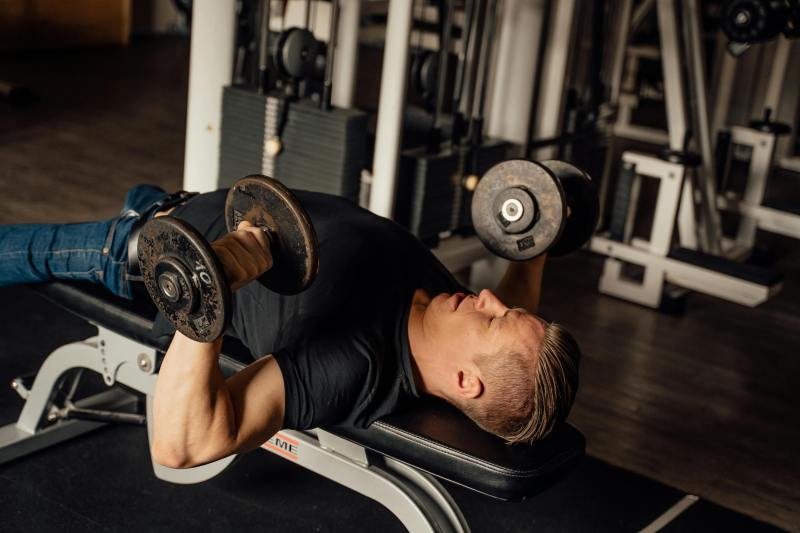
Good form is key to avoid injury. Use a weight that lets you keep control and proper technique.
Lower the weight if you feel strain in your joints or lose control during the lift.
- Keep your back flat on the bench
- Control the dumbbells on the way down and up
- Do not lock elbows at the top
- Stop if you feel sharp pain or discomfort
Credit: www.themanual.com
Progressive Overload Strategies
Progressive overload helps you get stronger with dumbbell bench presses. It means slowly making your muscles work harder over time.
Using smart strategies lets you increase your strength safely and steadily. Here are three ways to apply progressive overload.
Increasing Weight Gradually
Adding more weight little by little helps your muscles grow. Don’t jump to heavy weights too fast. Small steps lower injury risk.
Try to increase dumbbell weight by about 5% each week or every two weeks. This keeps progress steady and safe.
Tracking Reps And Sets
Keep a record of your reps and sets for every workout. This helps you see progress and know when to add weight.
- Write down how many reps you do per set
- Note the number of sets performed
- Increase reps or sets before raising weight
Incorporating Variation
Changing your exercises challenges muscles in new ways. This helps avoid plateaus and keeps progress steady.
Try different angles or dumbbell grips. You can also change rest time or speed of each rep.
- Use incline or decline bench positions
- Switch between neutral and pronated grips
- Adjust rest time between sets
- Change lifting speed during reps
Common Mistakes To Avoid
Knowing how much to dumbbell bench press is important for safety and progress. Many people make mistakes that slow their gains or cause injury.
Understanding common errors helps you train smarter and avoid setbacks in your workout routine.
Lifting Too Heavy Too Soon
Trying to lift heavy weights before building strength can cause injuries. Your muscles and joints need time to adjust to new loads.
Start with lighter dumbbells and increase weight gradually as you get stronger. This helps prevent strains and muscle tears.
- Begin with a weight you can lift 8-12 times comfortably
- Add small weight increments weekly or biweekly
- Focus on controlled movements, not just heavy loads
Neglecting Proper Form
Using bad form reduces workout benefits and increases injury risk. Proper technique keeps your muscles working correctly.
Keep your back flat on the bench and feet firmly on the floor. Lower the dumbbells slowly and push straight up.
- Keep elbows at a 45-degree angle to your body
- Avoid arching your back excessively
- Control the dumbbells during both lifting and lowering
Ignoring Muscle Imbalances
Muscle imbalances happen when one side of your body is stronger than the other. This can cause poor posture and injury.
Work both arms equally and include exercises that target weaker muscles. This keeps your body balanced and stronger overall.
- Use the same dumbbell weight for each arm
- Do extra reps on the weaker side if needed
- Include exercises for your back and shoulders to balance chest work

Credit: www.reddit.com
Sample Dumbbell Bench Press Programs
The dumbbell bench press is a great exercise for building chest strength. Choosing the right program helps you improve safely and steadily. Here are sample routines for beginners, intermediate, and advanced lifters.
Each routine focuses on sets, reps, and weight to match your fitness level. Follow these plans to track progress and avoid injury.
Beginner Routine
Start with light weights to learn the proper form. Do fewer sets and reps to build endurance. Rest well between sets to recover.
- 3 sets of 10 reps
- Use a weight you can lift comfortably
- Rest 60-90 seconds between sets
- Train 2 times per week
Intermediate Routine
Increase weight and volume to build strength. Add more sets and lower reps for muscle growth. Keep rest periods shorter to improve endurance.
- 4 sets of 8 reps
- Choose a weight that feels challenging by the last reps
- Rest 45-60 seconds between sets
- Train 3 times per week
Advanced Routine
Use heavy weights with lower reps to increase power. Add more sets for volume. Include variations to target different chest areas.
- 5-6 sets of 4-6 reps
- Use near-max weight with good form
- Rest 2 minutes between sets
- Train 3-4 times per week
- Include incline and decline dumbbell presses
Signs You Should Adjust Your Weight
Choosing the right dumbbell weight is key for good workouts. Using the wrong weight can slow progress or cause injury.
Watch for signs that tell you it is time to change your dumbbell weight. Adjusting weight helps you build strength safely.
Plateauing Progress
You may stop seeing gains or strength increases. This means your muscles are used to the current weight.
Staying at the same weight for too long causes this plateau. Increasing weight challenges your muscles again.
- Lift the dumbbells with ease
- Finish sets without much effort
- No new muscle growth or strength gain
Experiencing Pain Or Discomfort
Sharp pain or discomfort during the bench press is a warning. It may mean the weight is too heavy or your form is off.
Lower the weight if you feel pain. Using a lighter weight helps prevent injury and lets you focus on good form.
- Pain in shoulders, wrists, or chest
- Strain or sharp feelings when pressing
- Difficulty controlling the dumbbells
Lack Of Muscle Fatigue
Muscle fatigue means your muscles worked hard. If you don’t feel tired after sets, the weight might be too light.
Using a heavier dumbbell helps create muscle fatigue. This is important for building strength and size.
- No muscle tiredness after sets
- Can do many reps without struggle
- Easy to complete all sets
Frequently Asked Questions
How Much Weight Should Beginners Dumbbell Bench Press?
Beginners should start with light dumbbells, typically 10-20 pounds. This helps build strength and ensures proper form. Gradually increase weight as you get comfortable to avoid injury and maximize muscle growth.
How To Determine Ideal Dumbbell Bench Press Weight?
Choose a weight that allows 8-12 reps with good form. It should challenge muscles without causing strain. Adjust weight based on your strength level and fitness goals.
How Often Should I Increase Dumbbell Bench Press Weight?
Increase weight every 1-2 weeks if you complete sets easily. Progressive overload improves strength and muscle gain. Avoid increasing too fast to prevent injury.
What Factors Affect Dumbbell Bench Press Weight Choice?
Your experience, fitness level, goals, and muscle endurance affect weight choice. Beginners use lighter weights; advanced lifters handle heavier dumbbells. Adjust based on personal comfort and progress.
Conclusion
Choosing the right dumbbell bench press weight depends on your strength. Start with lighter weights to learn good form. Gradually increase weight as you feel stronger and more confident. Listen to your body to avoid injury. Consistency in training helps build muscle safely.
Focus on steady progress, not lifting the heaviest weight immediately. Remember, quality beats quantity every time. Keep practicing, and results will follow. Your strength will grow with patience and care. Keep your goals clear and enjoy the process.


