

Choosing the right dumbbell weight can feel confusing. Lift too little, and you won’t see progress.
Lift too much, and you risk injury or burnout. You want to challenge your muscles just enough to get stronger, but not so much that it holds you back. So, how much weight dumbbells should you lift to get the best results?
You’ll discover simple, practical tips to find the perfect weight for your workouts. Keep reading—your strongest, healthiest self is waiting on the other side.
Choosing Dumbbell Weight
Choosing the right dumbbell weight is important for your workout success. It helps ensure you build strength safely and effectively.
Different factors influence how much weight you should lift. Understanding these can guide your decision.
Factors To Consider
Several factors affect the weight you should choose. These include your age, fitness level, and type of exercise.
Think about how often you will train and your workout goals. Consider any past injuries that may affect your lifting.
- Age and physical condition
- Exercise type and frequency
- Past injuries or health issues
Assessing Your Fitness Level
Knowing your fitness level helps choose the right weight. Beginners should start with lighter weights for safety.
Experienced lifters can handle more weight. Fitness assessments or advice from a trainer can guide you.
- Beginner: start with 1-5 kg (2-11 lbs)
- Intermediate: 5-10 kg (11-22 lbs)
- Advanced: 10 kg (22 lbs) and above
Goals And Weight Selection
Your fitness goals influence your dumbbell weight choice. If you aim to build muscle, use heavier weights.
For toning and endurance, lighter weights with more repetitions are better. Match your weight to your goals for best results.
- Muscle building: heavier weights, fewer reps
- Toning: lighter weights, more reps
- Endurance: lightest weights, high reps
Weight Guidelines By Experience
Choosing the right dumbbell weight is important for safe and effective workouts. The best weight depends on your experience level.
This guide helps you pick dumbbell weights based on your fitness experience.
Beginners
Beginners should start with light dumbbells to learn proper form. Using weights that are too heavy can cause injury.
Choose weights that let you do 10 to 15 repetitions with good control.
- Women: 3 to 8 pounds
- Men: 5 to 15 pounds
- Focus on form, not heavy lifting
Intermediate Lifters
Intermediate lifters can increase weight to challenge muscles more. Pick weights that allow 8 to 12 reps with some effort.
This helps build strength while maintaining good form.
- Women: 8 to 15 pounds
- Men: 15 to 30 pounds
- Focus on controlled movements
Advanced Lifters
Advanced lifters use heavier dumbbells to maximize strength and muscle growth. Use weights that let you perform 6 to 10 reps with effort.
Proper warm-up and technique are crucial at this level to avoid injury.
- Women: 15 pounds and up
- Men: 30 pounds and up
- Focus on progressive overload
Types Of Exercises And Weight
Choosing the right dumbbell weight is key for good workouts. The weight depends on the exercise type and your strength.
This guide explains how to pick dumbbell weights for different exercises. It covers upper body, lower body, and full body routines.
Upper Body Workouts
Upper body exercises use dumbbells to build arm, shoulder, and chest strength. Choose weights you can lift with good form.
Start with lighter weights to learn the moves. Increase weight as you get stronger without losing control.
- Biceps curls: Use light to medium weights (5-15 lbs) for 10-12 reps.
- Shoulder press: Medium weights (8-20 lbs) help build shoulder muscles.
- Chest fly: Start with light weights (5-12 lbs) to avoid strain.
Lower Body Workouts
Lower body exercises with dumbbells target legs and glutes. Pick weights that challenge but do not cause pain.
Dumbbells can add resistance to squats, lunges, and deadlifts. Use heavier weights than upper body since legs are stronger.
- Squats: Use medium to heavy weights (15-30 lbs) for 8-12 reps.
- Lunges: Choose moderate weights (10-25 lbs) for balance and strength.
- Deadlifts: Use heavier weights (20-35 lbs) with proper form.
Full Body Routines
Full body exercises use dumbbells to work many muscles at once. Pick weights that suit your overall fitness level.
Start with lighter weights and increase gradually. Focus on smooth movements and steady breathing.
- Thrusters: Combine squat and press with medium weights (10-20 lbs).
- Renegade rows: Use moderate weights (8-15 lbs) to work back and arms.
- Deadlift to curl: Choose medium weights (10-20 lbs) for multiple muscles.

Credit: powerblock.com
Reps, Sets, And Weight Relationship
Choosing the right dumbbell weight depends on your workout goals. The weight, reps, and sets work together to shape your results.
Understanding how these three factors connect helps you lift safely and improve effectively.
Strength Training
Strength training uses heavy weights with fewer reps. This builds your muscle power and force.
Lift dumbbells that feel hard to lift for about 3 to 6 reps per set. Rest well between sets to recover.
- Weight: Heavy enough for 3-6 reps
- Reps: 3 to 6 per set
- Sets: 3 to 5 sets
- Rest: 2 to 3 minutes between sets
Muscle Endurance
Muscle endurance means your muscles work longer without getting tired. Use lighter weights and more reps.
Choose dumbbells that let you do 12 to 20 reps with good form. Keep your rest short to build stamina.
- Weight: Light enough for 12-20 reps
- Reps: 12 to 20 per set
- Sets: 2 to 4 sets
- Rest: 30 to 60 seconds between sets
Hypertrophy (muscle Growth)
Hypertrophy is muscle growth. Use moderate weights and reps to make muscles bigger.
Pick dumbbells that challenge you for 6 to 12 reps. Keep your rest time moderate for best results.
- Weight: Moderate for 6-12 reps
- Reps: 6 to 12 per set
- Sets: 3 to 4 sets
- Rest: 60 to 90 seconds between sets
Signs Of Proper Weight Selection
Choosing the right dumbbell weight is important for safe workouts. It helps you get stronger without hurting yourself.
Knowing the signs of proper weight lets you train well. You can tell if the weight is right by how your body feels.
Muscle Fatigue
You should feel tired in your muscles after a set. This means the weight is challenging your muscles enough.
Muscle fatigue helps your muscles grow stronger. It should happen near the end of your exercise set.
- Muscles feel tired but not painful
- Fatigue appears after 8 to 12 repetitions
- You can finish the set with effort
Maintaining Form
You must keep good form during all reps. Proper form means your body moves the right way.
If the weight is too heavy, your form breaks down. This lowers workout quality and risks injury.
- Back stays straight
- Controlled and smooth movements
- No swinging or jerking motions
- Breathing stays steady
Avoiding Injury
The right weight helps prevent injuries. It stops strain on joints and muscles.
You should feel effort but not sharp pain. If you feel pain, lower the weight.
- No sharp or sudden pain
- Joints feel stable
- Muscles feel tired but safe
- Easy to stop if needed

Credit: originfitness.com
Adjusting Weight Over Time
Choosing the right dumbbell weight is important for safe and effective workouts. As you get stronger, you should adjust the weight you lift.
Changing your dumbbell weight helps you keep improving and avoid injury. It also keeps your workouts challenging and effective.
Progressive Overload
Progressive overload means increasing the weight or reps over time. This helps your muscles grow and get stronger.
You can add small amounts of weight regularly to keep challenging your body. This steady increase helps avoid plateaus in progress.
- Lift heavier weights gradually
- Increase repetitions with the same weight
- Improve workout intensity step by step
Tracking Your Progress
Keep a record of the weight you use and the reps you complete. Tracking helps you see when to adjust your dumbbells.
Write down your workouts in a notebook or an app. This way, you can compare your strength over weeks and months.
- Note weight lifted each session
- Track the number of repetitions
- Record how many sets you complete
When To Increase Weight
Increase dumbbell weight when you can do your reps easily. If the last few reps feel simple, it is time to add weight.
Do not add too much weight at once. Small increases keep your muscles working without risk of injury.
- You finish your reps without much effort
- Your muscles feel ready for more challenge
- You maintain good form during exercises
Tips For Safe Dumbbell Training
Choosing the right dumbbell weight is important to avoid injury. Lifting too heavy can cause muscle strain. Lifting too light may not help you improve strength.
Safe training starts with good habits. Warm up your muscles before lifting. Use proper grip and posture. Allow time for rest and recovery after workouts.
Warm-up Techniques
Warming up helps prepare your muscles for exercise. It increases blood flow and reduces injury risk. Spend 5 to 10 minutes before lifting dumbbells.
- Do light cardio like walking or jogging
- Perform dynamic stretches for arms and shoulders
- Use very light dumbbells for practice lifts
Proper Grip And Posture
Hold dumbbells firmly but not too tight. A good grip helps control the weight and prevent drops. Keep your back straight and core tight when lifting.
Stand or sit with feet shoulder-width apart. Avoid rounding your shoulders or arching your back. Proper posture protects your spine and joints.
- Wrap your thumb around the dumbbell handle
- Keep wrists straight and aligned with forearms
- Engage your core muscles during each lift
Rest And Recovery
Rest days are important to let muscles heal and grow stronger. Avoid training the same muscle group every day. Give at least 48 hours before working it again.
Get enough sleep and drink water. Stretch muscles gently after workouts. Proper recovery reduces soreness and injury risk.
- Rest 1 to 2 days between strength training sessions
- Sleep 7 to 9 hours each night
- Stretch major muscle groups after exercise
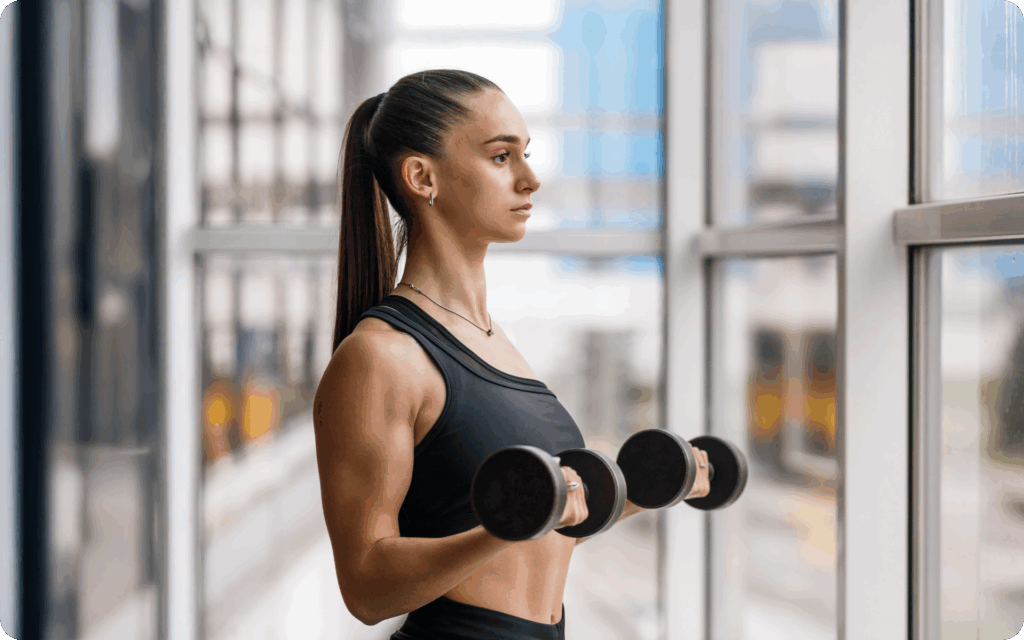
Credit: betterme.world
Frequently Asked Questions
How Do I Choose The Right Dumbbell Weight?
Start with weights that let you complete 8-12 reps with good form. Choose weights challenging but manageable. Increase gradually as strength improves to avoid injury and promote muscle growth.
What Dumbbell Weight Suits Beginners Best?
Beginners should start with 3-5 pound dumbbells for women and 5-10 pounds for men. This range helps build strength safely and learn proper technique before progressing.
How Often Should I Increase Dumbbell Weight?
Increase weight when you can easily complete 12 reps with good form. Typically, increase every 2-3 weeks depending on your progress and workout intensity.
Can Lifting Heavy Dumbbells Cause Injury?
Yes, lifting weights too heavy or with bad form can cause injury. Start light, focus on technique, and progress gradually to stay safe.
Conclusion
Choosing the right dumbbell weight starts with your current strength. Begin with lighter weights to learn good form. Gradually increase weight as your muscles get stronger. Avoid lifting too heavy to prevent injuries. Listen to your body’s signals during workouts.
Consistency matters more than lifting the heaviest dumbbells. Track your progress and adjust weights regularly. Enjoy the process of getting stronger step by step. Your best weight is one that challenges but doesn’t overwhelm you. Keep lifting smart and steady for lasting results.


