

Choosing the right weight dumbbells is one of the most important steps in reaching your fitness goals. If you pick weights that are too heavy, you risk injury or burnout.
If they’re too light, you won’t see the progress you want. So, what weight dumbbells should you use as a male to get the best results? This guide will help you understand how to find the perfect balance for your strength level and workout style.
Keep reading, because the right choice can make all the difference in your fitness journey.
Choosing Dumbbell Weight
Choosing the right dumbbell weight is important for effective workouts. The right weight helps you build strength safely.
Different factors influence the ideal weight for your fitness goals. Let’s explore these factors and recommendations for various fitness levels.
Factors Affecting Weight Selection
Several factors determine the best dumbbell weight for you. These include your fitness level, workout type, and personal strength.
- Your current fitness level
- The type of exercise you’re doing
- Your personal goals and strength
- Body size and muscle mass
Beginner Weight Recommendations
Beginners should start with lighter weights to learn proper form. This helps prevent injuries and builds confidence.
A good starting point is between 5 to 10 pounds. Focus on mastering technique before increasing weight.
Intermediate Weight Guidelines
Intermediate lifters can handle more weight. You should feel challenged but not overwhelmed.
Weights between 12 to 20 pounds are suitable for most intermediate exercises. Adjust based on your progress and comfort.
Advanced Weight Choices
Advanced lifters often use heavy weights. This helps maximize strength gains and muscle growth.
Weights above 20 pounds are common for advanced workouts. Always prioritize safety and proper form.
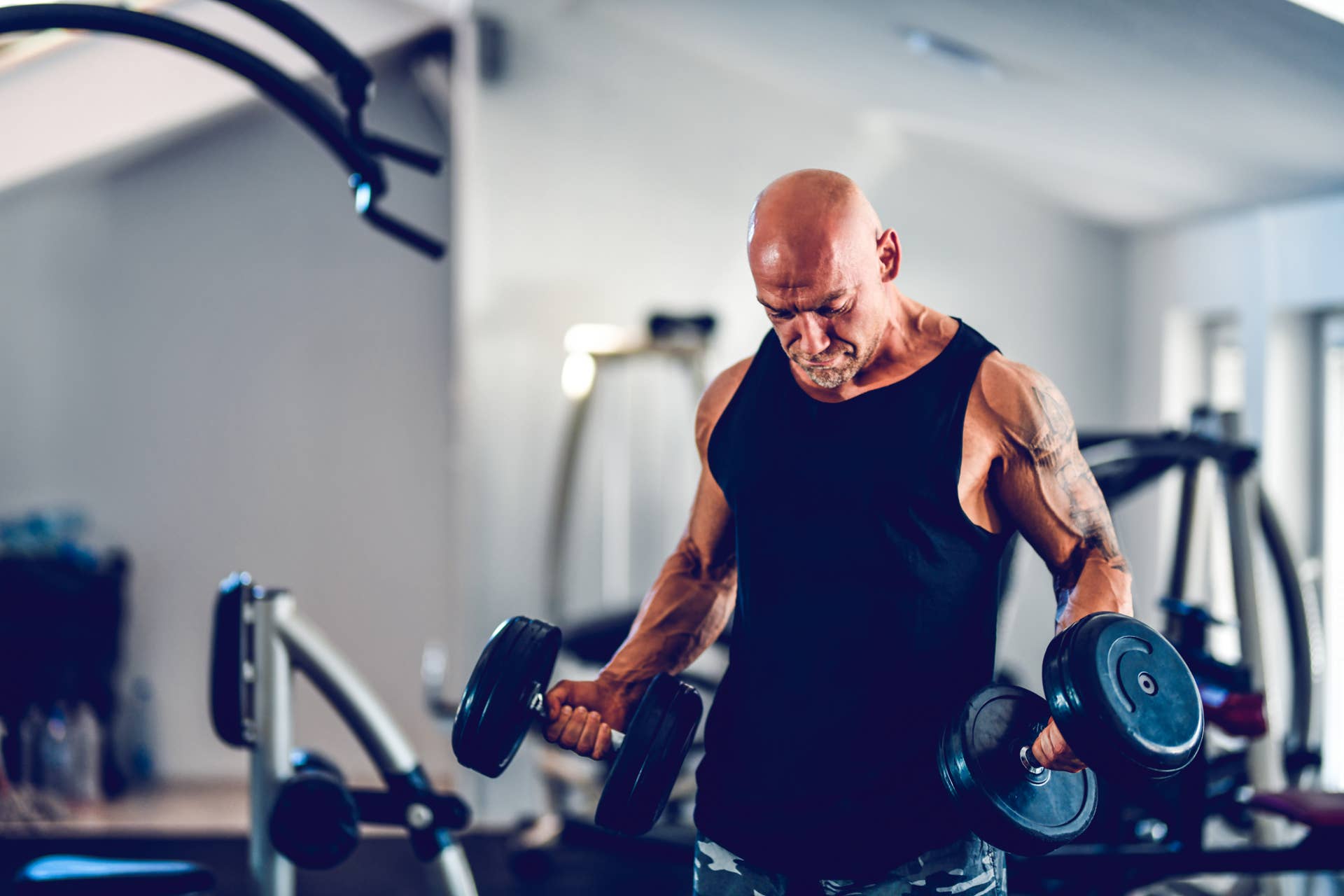
Credit: www.mensfitness.com
Assessing Your Strength Level
Choosing the right dumbbell weight depends on your current strength. It helps prevent injury and improves workout results.
Understanding your strength lets you pick weights that challenge you without causing strain.
Testing Your Current Strength
Test your strength by trying different dumbbell weights. Start light and increase until the weight feels challenging.
You should be able to complete 8 to 12 repetitions with good form. If you can do more, try a heavier weight.
- Pick a weight and do 8 to 12 reps
- Check if you feel muscle fatigue but not pain
- If too easy, increase weight gradually
- If too hard, decrease weight
Tracking Progress Over Time
Keep a record of your weights and reps to see how your strength improves. This helps you adjust your training.
Tracking progress motivates you to increase weights safely and avoid plateaus in your workouts.
- Write down the weight used for each exercise
- Note the number of sets and reps completed
- Review your log weekly or monthly
- Increase weight when reps become easy
Matching Dumbbell Weight To Exercise Type
Choosing the right dumbbell weight depends on the exercise you do. Different exercises need different weights to get the best results.
Using the correct weight helps prevent injury and improves your strength safely. Let’s look at how to pick weights for different exercise types.
Weights For Isolation Exercises
Isolation exercises target one muscle group at a time. These moves need lighter dumbbells to keep control and form.
Pick a weight that lets you do 10 to 15 reps without losing form. You should feel tired by the last rep but still controlled.
- Bicep curls: 8 to 15 pounds
- Tricep extensions: 5 to 12 pounds
- Lateral raises: 3 to 10 pounds
- Front raises: 3 to 10 pounds
Weights For Compound Movements
Compound movements use several muscle groups at once. These exercises allow you to lift heavier weights safely.
Choose a weight that challenges you for 6 to 12 reps. The last reps should be hard but doable with good form.
- Dumbbell bench press: 20 to 50 pounds
- Dumbbell squats: 15 to 50 pounds
- Dumbbell rows: 15 to 40 pounds
- Dumbbell deadlifts: 20 to 60 pounds
Balancing Weight And Repetitions
Choosing the right dumbbell weight is important for good workouts. The weight should match how many repetitions you plan to do.
Using the right balance of weight and reps helps you reach your fitness goals safely and effectively.
Strength Building Range
For building strength, use heavier dumbbells that let you do fewer reps. This challenges your muscles to get stronger.
Pick weights that let you do about 4 to 6 repetitions per set. You should feel tired by the last rep but keep good form.
- Weight: Heavy enough for 4-6 reps
- Repetitions: 4 to 6 per set
- Goal: Increase muscle strength
Muscle Endurance Range
For muscle endurance, use lighter dumbbells that let you do many reps. This helps muscles work longer without getting tired.
Choose weights that allow you to perform 12 to 20 repetitions per set with good control and form.
- Weight: Light enough for 12-20 reps
- Repetitions: 12 to 20 per set
- Goal: Improve muscle stamina
Hypertrophy Range
Hypertrophy means growing muscle size. Use moderate weight that lets you do 8 to 12 reps per set.
Pick a weight that tires your muscles by the last rep but keeps your form steady and safe.
- Weight: Moderate for 8-12 reps
- Repetitions: 8 to 12 per set
- Goal: Build muscle size
Avoiding Common Weight Selection Mistakes
Choosing the right dumbbell weight is important for good workouts. Picking weights that are too heavy or too light can slow progress.
This guide helps men avoid common mistakes when choosing dumbbells. Use the right weight to get stronger safely.
Using Too Heavy Weights
Using weights that are too heavy can cause injuries. It also leads to bad form and less muscle growth.
When weights are too heavy, you might cheat by using other muscles. This reduces the workout’s effectiveness.
- Increases risk of strains and sprains
- Leads to poor exercise technique
- Limits the number of repetitions you can do
- Causes early fatigue and frustration
Using Too Light Weights
Using weights that are too light means your muscles do not get enough challenge. This slows muscle growth and strength gain.
Light weights may feel easy, but they do not help improve fitness much. You need to push your muscles to grow.
- Does not build muscle effectively
- Limits strength improvements
- May cause boredom and loss of motivation
- Wastes workout time without good results

Credit: fitnessbyjaykay.wixsite.com
Progressive Overload With Dumbbells
Progressive overload means making your muscles work harder over time. It helps build strength and muscle using dumbbells.
You start with a weight you can lift comfortably. Then, you slowly increase the weight as you get stronger.
When To Increase Weight
You should increase dumbbell weight when you can do all reps easily. This shows your muscles need a bigger challenge.
If you finish sets with little effort and no muscle fatigue, it is time to add weight.
- You complete all reps with good form
- You feel little muscle tiredness after sets
- You can do extra reps beyond your target
Safe Weight Increment Tips
Increase dumbbell weight in small steps to avoid injury. A small jump helps your muscles adjust safely.
Listen to your body. Stop if you feel sharp pain or discomfort while lifting heavier weights.
- Raise weight by 2 to 5 pounds at a time
- Keep good form even with heavier dumbbells
- Rest enough between workouts for muscle recovery
- Use a spotter if trying much heavier weights
Dumbbell Weight For Different Goals
Choosing the right dumbbell weight depends on your fitness goal. The weight should match what you want to achieve.
This guide explains which dumbbell weights suit building muscle, improving strength, and enhancing endurance.
Building Muscle Mass
For muscle growth, use heavier dumbbells with fewer repetitions. Pick a weight that makes the last reps hard.
Choose weights that let you do 6 to 12 reps per set. This range helps muscles grow well.
- Start with 70-85% of your maximum lifting weight
- Lift heavy enough to feel muscle fatigue by the last rep
- Increase weight gradually as you get stronger
Improving Strength
Use the heaviest dumbbells you can lift safely for low reps. This builds your overall strength.
Pick a weight that allows 1 to 6 reps per set. Rest longer between sets to recover fully.
- Choose 85-95% of your maximum lifting weight
- Focus on proper form to avoid injury
- Lift heavier as your strength improves
Enhancing Endurance
Use lighter dumbbells with more repetitions. This trains your muscles to work longer without getting tired.
Pick a weight that lets you do 15 to 20 reps or more per set. Keep your muscles moving steadily.
- Use 40-60% of your maximum lifting weight
- Perform higher reps for longer sets
- Keep short rests between sets

Credit: www.youtube.com
Additional Tips For Effective Dumbbell Training
Choosing the right dumbbell weight is important for men to build strength safely. Using the right weight helps prevent injury and improves results.
Besides weight, some tips can make your dumbbell workouts more effective. Focus on form, rest, and recovery to get the best results.
Proper Form And Technique
Good form keeps your body safe and makes exercises work better. Always start with a lighter weight to learn the correct moves.
Keep your back straight and control the dumbbells during each lift. Avoid fast or jerky motions to reduce injury risk.
- Stand with feet shoulder-width apart
- Engage your core for stability
- Move weights slowly and smoothly
- Keep your wrists straight during lifts
- Breathe out when lifting, breathe in when lowering
Incorporating Rest And Recovery
Rest days allow your muscles to heal and grow stronger. Avoid training the same muscle groups every day.
Good sleep and proper nutrition help your body recover faster. Listen to your body and take breaks when needed.
- Take at least one rest day per week
- Sleep 7 to 9 hours each night
- Eat protein-rich foods to help muscle repair
- Stretch before and after workouts
- Stay hydrated throughout the day
Frequently Asked Questions
What Dumbbell Weight Is Best For Beginner Males?
Beginner males should start with 5 to 15 pounds dumbbells. This range helps build strength without risking injury. Choose lighter weights for smaller muscle groups and heavier for larger ones. Gradually increase weight as strength improves to avoid plateaus.
How To Choose Dumbbell Weight For Muscle Gain?
Select dumbbells that allow 8 to 12 reps per set with proper form. Weights should challenge muscles but not cause strain. Increase weight once you can easily perform 12 reps. This method promotes effective muscle growth and strength.
What Weight Dumbbells Suit Male Fat Loss Workouts?
For fat loss, use moderate weights, typically 10 to 20 pounds. Focus on higher reps and shorter rest periods. This boosts calorie burn and improves muscle endurance. Combine with cardio for best fat loss results.
Can Men Use Dumbbells Heavier Than 25 Pounds Safely?
Yes, experienced men can use dumbbells over 25 pounds safely. Proper technique and warm-up are essential to prevent injury. Start with manageable weights and progress gradually. Consult a trainer if unsure about form or weight selection.
Conclusion
Choosing the right dumbbell weight helps you train safely and effectively. Start with lighter weights to learn proper form. Gradually increase weight as your strength grows. Focus on control, not just lifting heavy. Consistency matters more than how much you lift.
Find a weight that challenges you but doesn’t cause pain. This approach helps build strength and avoid injury. Keep your workouts simple and steady. Your progress will follow naturally with patience and effort.


