
Are you new to yoga or looking to upgrade your current mat? One key factor to consider is the thickness of your yoga mat.
But why does thickness matter, and how do you choose the right one for your practice? We’ll delve into the average thickness of yoga mats and why it’s crucial for your comfort, balance, and overall experience. You’ll discover how the right thickness can enhance your yoga sessions, making every pose feel just right.
Stick around to find out how the perfect mat thickness can transform your practice, ensuring you enjoy every moment on the mat.
Yoga Mat Thickness Basics
Choosing the right yoga mat thickness helps improve your comfort and balance. The thickness affects how much padding you feel on the floor.
It is important to understand the common thickness sizes and how material and cushioning affect your practice.
Standard Thickness Sizes
Yoga mats come in different thicknesses. The thickness is usually measured in millimeters (mm). Most mats fall into these common ranges:
- Thin mats: 1 to 2 mm – good for travel and better floor feel
- Standard mats: 3 to 5 mm – offer balanced cushioning and stability
- Thick mats: 6 to 8 mm – provide extra padding for sensitive joints
Material Impact On Thickness
The material of a yoga mat can change how thick it feels. Different materials have unique properties that affect cushioning and durability.
| Material | Common Thickness (mm) | Feel and Use |
| PVC | 3 to 5 | Firm, durable, good for all types |
| Natural Rubber | 4 to 6 | Soft, eco-friendly, good grip |
| Foam | 5 to 8 | Soft, cushioned, good for joint support |
| Cork | 3 to 5 | Firm with natural texture |
Thickness And Cushioning
Thicker mats give more cushioning. This helps protect knees and joints during yoga poses. Thin mats offer better ground connection and balance.
- Thick mats (6 mm or more) are ideal for floor exercises and joint support.
- Standard mats (3-5 mm) balance comfort and stability for most practices.
- Thin mats (under 3 mm) improve stability and are easy to carry.
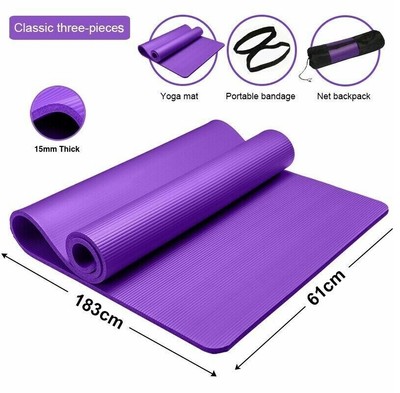
Credit: www.ebay.com
Choosing Thickness By Yoga Style
Yoga mats come in different thicknesses. Each thickness suits certain yoga styles better. Picking the right thickness helps your comfort and balance.
Here we explain which thickness works well for three popular yoga styles. This guide will help you choose the best mat for your practice.
Thin Mats For Hot Yoga
Thin mats are best for hot yoga. They usually measure about 1/16 to 1/8 inch thick. Thin mats keep you close to the floor.
They provide good grip even when you sweat a lot. Thin mats are easy to carry and dry quickly after use.
Medium Thickness For Vinyasa
Medium thickness mats are around 1/4 inch thick. They offer a balance of comfort and stability for Vinyasa yoga.
- Provide enough cushioning for joints
- Support smooth transitions between poses
- Offer decent grip and durability
Thick Mats For Restorative Yoga
Thick mats provide extra padding. They are often 1/2 inch or more in thickness. Restorative yoga needs mats that feel soft and supportive.
| Thickness | Best For |
| 1/16 – 1/8 inch | Hot Yoga |
| 1/4 inch | Vinyasa Yoga |
| 1/2 inch and above | Restorative Yoga |
How Thickness Affects Performance
The thickness of a yoga mat changes how well you do during practice. It affects comfort, balance, and how easy the mat is to carry.
Choosing the right thickness helps you stay steady and protect your joints. It also affects how heavy and portable the mat feels.
Balance And Stability
Thinner mats offer better balance and stability. They keep you closer to the floor, which helps with control during poses.
Thicker mats may feel soft but can make balancing harder. They can feel less stable for standing or balancing moves.
Joint Protection
Thicker mats provide more padding for your knees, wrists, and elbows. This helps reduce pressure and discomfort during poses.
Thin mats offer less cushion and might not protect joints well on hard floors. Choose thicker mats if you have sensitive joints.
- Thin mats: About 1/16 inch (1.5 mm)
- Standard mats: About 1/8 inch (3 mm)
- Thick mats: About 1/4 inch (6 mm) or more
Portability And Weight
Thicker mats weigh more and take up more space. They can be hard to carry to class or when traveling.
Thinner mats are lighter and easier to roll up. They fit well in bags and are good for on-the-go yoga.
Comparing Popular Yoga Mat Thicknesses
Yoga mats come in different thicknesses. The thickness affects comfort and stability. Choosing the right thickness depends on your needs and style.
Here, we compare common thicknesses: 3mm, 5mm, and 8mm or more. This will help you find the best mat for your practice.
3mm Mats
3mm mats are thin and lightweight. They are easy to carry and good for travel. These mats offer good stability on hard floors but less cushioning.
- Best for balance and standing poses
- Easy to roll and pack
- Less padding for sensitive joints
5mm Mats
5mm mats give a balance between comfort and support. They offer more cushion for knees and elbows. Many people use 5mm mats for home yoga sessions.
| Thickness | Comfort | Portability | Best Use |
| 3mm | Low | High | Travel, stability |
| 5mm | Medium | Medium | Home practice |
| 8mm and above | High | Low | Extra cushioning |
8mm And Above Mats
Mats 8mm thick or more provide extra padding. They protect joints well during floor exercises. These mats are heavier and less portable than thinner ones.
Advantages of thick mats include:
- Great for joint protection
- Comfortable for long sessions
- Good on hard or uneven surfaces
Factors Influencing Mat Thickness Choice
Choosing the right thickness for a yoga mat depends on several factors. These factors affect comfort, support, and overall practice experience.
Understanding these factors helps pick a mat that fits your needs and style of yoga.
Body Weight And Comfort
Body weight plays a big role in how thick your yoga mat should be. Heavier people often need thicker mats for better cushioning.
Thicker mats can protect joints like knees and wrists during poses. Lighter people may prefer thinner mats for better balance.
| Body Weight | Recommended Mat Thickness |
| Under 130 lbs (59 kg) | 3-4 mm |
| 130-200 lbs (59-91 kg) | 4-6 mm |
| Over 200 lbs (91 kg) | 6-8 mm or more |
Practice Environment
The surface where you practice affects the mat thickness you need. Hard floors require thicker mats for comfort.
- Hardwood or tile floors: Use a thicker mat (5-8 mm)
- Carpeted floors: A thinner mat (3-4 mm) may be enough
- Outdoor practice: Choose mats that are durable and thicker for uneven ground
Personal Preference
Comfort and style matter in choosing mat thickness. Some yogis like extra padding, while others want more stability.
Here are common preferences:
- Thicker mats (6-8 mm) for gentle, restorative yoga
- Medium thickness (4-6 mm) for most yoga types
- Thin mats (1-3 mm) for travel and hot yoga
Credit: www.forbes.com
Innovations In Yoga Mat Materials
Yoga mats have seen many changes in materials over the years. These changes focus on comfort, durability, and environmental safety.
New materials also affect the thickness of mats, making them better for different yoga styles and needs.
Eco-friendly Options
Many brands now use natural or recycled materials. These mats reduce harm to the earth and offer safe use for people.
- Natural rubber from sustainable sources
- Jute combined with PER (polymer environmental resin)
- Recycled thermoplastic elastomers (TPE)
- Cork harvested without killing trees
Hybrid Thickness Designs
Yoga mats now come in hybrid thicknesses. These designs mix thin and thick layers to balance comfort and stability.
| Thickness Type | Description | Average Thickness (mm) |
| Standard Thickness | Basic mats for all types of yoga | 4-6 mm |
| Hybrid Thickness | Layered mats with soft top and firm base | 5-8 mm |
| Extra Thick Mats | Designed for joint support and comfort | 8-12 mm |
Durability And Maintenance
New materials help mats last longer and stay fresh. Easy cleaning is also a key factor in mat design.
- Materials resist tearing and wear
- Non-absorbent surfaces prevent odor
- Simple cleaning with water and mild soap
- Quick drying to avoid mold growth

Credit: www.amazon.ca
Frequently Asked Questions
What Is The Standard Thickness Of A Yoga Mat?
The standard yoga mat thickness ranges from 1/8 inch to 1/4 inch (3-6 mm). This thickness offers good balance between cushioning and stability for most yoga styles.
How Does Thickness Affect Yoga Mat Comfort?
Thicker mats provide extra cushioning, reducing joint pressure. Thinner mats offer better balance and grip but less padding for sensitive joints.
What Thickness Is Best For Travel Yoga Mats?
Travel yoga mats are typically thinner, around 1/16 inch (1. 5 mm). This makes them lightweight and easy to fold or roll for portability.
Should Beginners Choose Thicker Yoga Mats?
Beginners often prefer thicker mats (1/4 inch) for added comfort and joint support. It helps prevent discomfort during longer practice sessions.
Conclusion
Choosing the right yoga mat thickness matters for comfort and support. Most mats range from 1/16 to 1/4 inch thick. Thinner mats offer more stability but less cushioning. Thicker mats provide extra padding but can feel less stable. Think about your practice style and body needs.
A balanced mat helps prevent discomfort and injury. Now, you know what thickness suits your yoga sessions best. Enjoy your practice with the perfect mat beneath you.


