

Choosing the right dumbbell size can make all the difference in your workout progress. You don’t want weights that are too light, leaving you bored and unchallenged.
But picking ones that are too heavy could lead to injury or frustration. So, how do you find the perfect fit for your strength and goals? Keep reading, because by the end of this article, you’ll know exactly what size dumbbells you should get to boost your fitness journey safely and effectively.

Credit: wersports.com
Choosing Dumbbells By Fitness Level
Picking the right dumbbell weight depends on your fitness level. Using the correct size helps you train safely and effectively.
This guide helps beginners, intermediate, and advanced users find the best dumbbell weight for their workouts.
Beginners: Starting Light
Beginners should start with light dumbbells. This helps build strength without risking injury.
Choose weights that allow you to do 12 to 15 reps with good form. If it feels too hard, go lighter.
- Women: 3 to 8 pounds
- Men: 5 to 10 pounds
- Focus on learning proper technique
Intermediate: Progressing Safely
Intermediate users can increase their dumbbell weight gradually. This helps improve muscle strength.
Pick weights that let you do 8 to 12 reps with some effort but good form. Avoid going too heavy.
- Women: 8 to 15 pounds
- Men: 10 to 25 pounds
- Increase weight as strength improves
Advanced: Challenging Strength
Advanced users need heavier dumbbells to challenge muscles. This supports muscle growth and endurance.
Use weights that allow 6 to 8 reps with good control. Heavier weights require focus on safety and form.
- Women: 15 to 30+ pounds
- Men: 25 to 50+ pounds
- Use proper technique to prevent injury

Credit: graymatterlifting.com
Types Of Dumbbells And Their Sizes
Dumbbells are essential for any home gym. They come in different types and sizes to suit your needs.
Choosing the right dumbbell size depends on your fitness goals. Here, we explore fixed and adjustable dumbbells and weight increments.
Fixed Vs Adjustable Dumbbells
Fixed dumbbells have a set weight. They are easy to use and great for beginners.
Adjustable dumbbells let you change the weight. They save space and are ideal for varied workouts.
- Fixed dumbbells: Best for simple workouts
- Adjustable dumbbells: Offer flexibility and versatility
Weight Increments Explained
Weight increments refer to how much you can increase or decrease the weight. Smaller increments allow for gradual progress.
Fixed dumbbells usually come in 5-pound increments. Adjustable dumbbells may offer 2.5-pound increments for more precise control.
| Fixed Dumbbells | 5-pound increments |
| Adjustable Dumbbells | 2.5-pound increments |
Determining Your Ideal Weight
Choosing the right dumbbell weight is important for safe and effective workouts. The right weight helps you build strength without risking injury.
To find your ideal dumbbell weight, you need to assess your current strength and understand the needs of different exercises.
Assessing Your Current Strength
Start by testing how much weight you can lift comfortably. Use light dumbbells to see how many reps you can do with good form.
If you can do 12 to 15 reps without losing form, the weight is good for building endurance. If you want to build muscle, choose a weight you can lift 6 to 10 times.
- Pick a weight that challenges you but does not cause pain
- Start with lighter weights and increase gradually
- Keep track of how many reps you can do easily
Selecting Weight For Different Exercises
Different exercises need different dumbbell weights. Use lighter weights for small muscles and heavier weights for big muscles.
For example, use lighter dumbbells for shoulder raises and heavier ones for squats or chest presses.
| Exercise | Suggested Dumbbell Weight |
|---|---|
| Bicep Curls | 5-15 lbs |
| Shoulder Raises | 3-8 lbs |
| Chest Press | 15-30 lbs |
| Squats | 20-40 lbs |
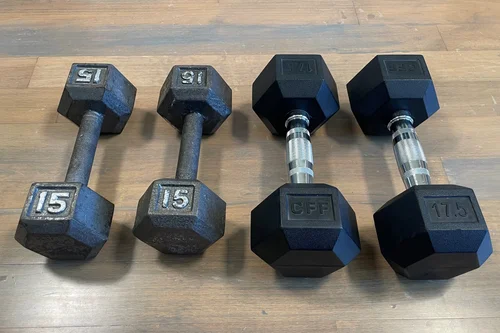
Credit: www.janereactionfitness.com
Tips For Effective Dumbbell Training
Choosing the right dumbbell size matters for safe and strong workouts. Using the correct weight helps you build muscle and avoid injury.
This guide shares tips to train well with dumbbells. Focus on form, avoid mistakes, and track your progress.
Proper Form And Technique
Good form keeps your body safe and helps muscles grow. Always control your movements and avoid swinging the weights.
Start with lighter dumbbells to learn the right moves. Keep your back straight and use smooth, steady motions.
- Hold dumbbells firmly but not too tight
- Keep your core engaged during exercises
- Breathe out when lifting, breathe in when lowering
- Move slowly to avoid jerky actions
Avoiding Common Mistakes
Lifting dumbbells that are too heavy can cause strain and injury. Pick weights that allow you to finish your sets with good form.
Do not rush through exercises. Speeding up lowers effectiveness and may lead to poor posture.
- Do not lock your joints during lifts
- Avoid arching your back excessively
- Do not hold your breath while lifting
- Rest between sets to prevent overuse
Progress Tracking Methods
Tracking your progress helps you see improvements and stay motivated. Write down your weights and reps after each workout.
Adjust your dumbbell size when exercises become easy. Increasing weight slowly keeps your muscles challenged.
- Record the dumbbell weight used
- Note the number of sets and repetitions
- Track how your strength feels over time
- Set small goals to increase weights gradually
Budget And Space Considerations
Choosing the right dumbbell size depends on your budget and available space. Both factors affect your workout setup and options.
It is important to balance cost and storage to find dumbbells that fit your needs well.
Cost Vs Quality
Higher quality dumbbells last longer and feel better during workouts. They often cost more upfront but save money over time.
Lower cost dumbbells may wear out quickly or feel uncomfortable. Think about how often you will use them before buying.
- Metal dumbbells usually cost more but are durable
- Plastic or vinyl dumbbells are cheaper but less durable
- Adjustable dumbbells can save space but cost more
- Buying sets can be cheaper than individual pairs
Storage Solutions
Space is important when choosing dumbbells. Some types take up more room than others.
Good storage keeps your area safe and tidy. It also makes it easy to find the right dumbbell during workouts.
- Use racks to keep dumbbells off the floor
- Adjustable dumbbells save space by combining weights
- Stackable dumbbells help organize small areas
- Choose compact dumbbells if you have limited room
Frequently Asked Questions
What Size Dumbbells Are Best For Beginners?
Beginners should start with 5 to 10-pound dumbbells. This range helps build strength without risking injury. Gradually increase weight as you get comfortable and stronger.
How To Choose Dumbbell Size For Muscle Growth?
Choose heavier dumbbells that challenge your muscles in 8-12 reps. Generally, 15 to 30 pounds work well for muscle growth, depending on your fitness level.
What Dumbbell Size Suits Home Workouts?
For home workouts, adjustable dumbbells from 5 to 25 pounds are ideal. They save space and allow weight adjustments for different exercises.
Can I Use The Same Dumbbells For All Exercises?
No, different exercises may require varied weights. Lighter weights suit smaller muscles, while heavier weights target larger muscle groups effectively.
Conclusion
Choosing the right dumbbell size helps you train safely and well. Start with lighter weights to learn proper form. Increase weight gradually as you get stronger. Think about your goals—strength, tone, or endurance. Adjustable dumbbells can save space and money.
Remember, consistency matters more than heavy weights. Enjoy your workouts and stay patient with progress. Your body will thank you.


