

If you want to build a stronger, more defined upper chest, the incline dumbbell press is one of the best exercises you can add to your routine. But are you sure you’re doing it the right way?
Doing this move incorrectly can limit your results and even lead to injury. You’ll learn step-by-step how to perform the incline dumbbell press with perfect form. By the end, you’ll feel confident pushing your chest gains to the next level.
Ready to transform your workout and see real progress? Let’s dive in!
Benefits Of Incline Dumbbell Press
The incline dumbbell press is a great exercise for your upper body. It helps to build strength and improve muscle definition.
This exercise is popular because it targets several muscle groups. It also helps to improve stability in the shoulders.
Targeted Muscle Groups
The incline dumbbell press mainly works the chest muscles. It focuses on the upper part of the chest, which is often hard to target.
Other muscles also get stronger during this exercise. These include the shoulders and triceps.
- Pectoral muscles (chest)
- Deltoid muscles (shoulders)
- Triceps muscles (arms)
Improved Upper Chest Definition
The incline angle of the bench helps shape your chest. It gives your upper chest a more defined look.
This definition is important for a balanced and strong appearance. Many people aim for this when working on their chest muscles.
Enhanced Shoulder Stability
Shoulder stability is key for many upper body exercises. The incline dumbbell press helps to strengthen shoulder joints.
Strong shoulders can prevent injuries and improve performance in sports. This exercise supports overall shoulder health.
- Improves joint strength
- Supports injury prevention
- Enhances sports performance
Equipment And Setup
The incline dumbbell press is a great exercise for your upper chest. Using the right equipment helps you do it safely.
Setting up your bench and dumbbells correctly makes your workout better and lowers injury risk.
Choosing The Right Dumbbells
Select dumbbells that match your strength level. Start with lighter weights to learn the movement.
Choose dumbbells with a comfortable grip and even weight on both sides.
- Use adjustable or fixed dumbbells
- Pick weights you can lift 8 to 12 times safely
- Avoid dumbbells that are too heavy or slippery
Adjusting The Bench Angle
Set your bench to an incline between 30 and 45 degrees. This angle targets the upper chest well.
A higher angle can shift work to your shoulders. A lower angle targets the chest more.
- Start at 30 degrees for beginners
- Try 45 degrees for more shoulder focus
- Do not go above 60 degrees
Proper Seating Position
Sit with your back flat against the bench. Keep your feet flat on the floor for balance.
Maintain a slight arch in your lower back. Keep your shoulders down and back to avoid strain.
- Position your head, shoulders, and hips against the bench
- Place feet shoulder-width apart on the floor
- Keep elbows under wrists during the press
Step-by-step Form Guide
The incline dumbbell press targets your upper chest and shoulders. Good form helps you lift safely and effectively.
Follow these steps to perform the exercise with correct technique and avoid injury.
Starting Position
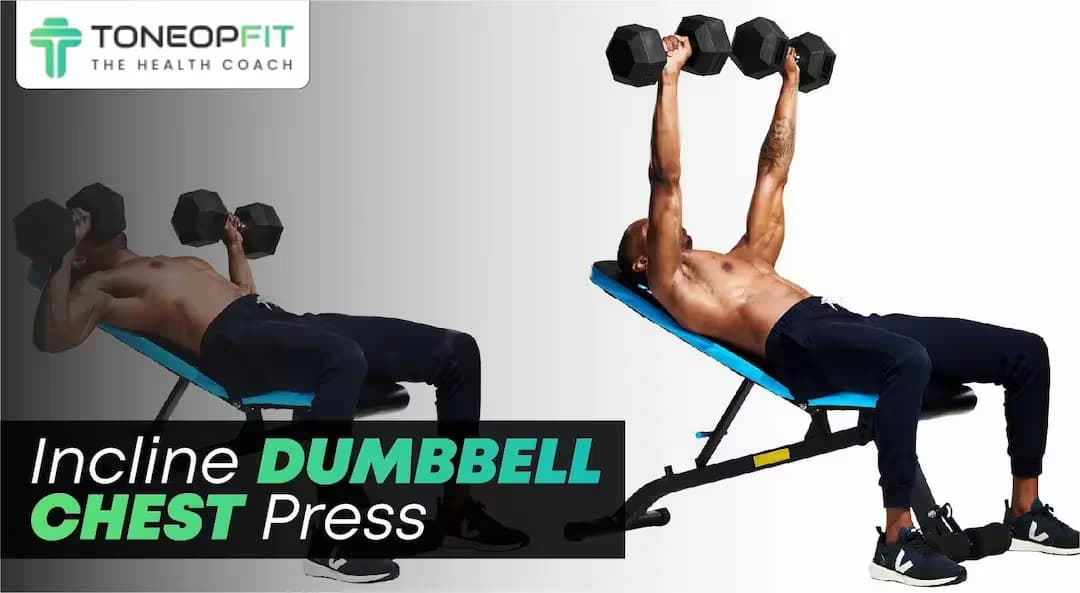
Sit on an incline bench set at about 30 to 45 degrees. Hold a dumbbell in each hand with a firm grip.
Lie back so your back and head rest on the bench. Keep your feet flat on the floor for balance.
- Set bench angle between 30-45 degrees
- Hold dumbbells at shoulder level with palms facing forward
- Keep feet flat and back pressed against the bench
Controlled Movement
Press the dumbbells up until your arms are almost straight. Do not lock your elbows.
Lower the weights slowly to your chest. Keep control to avoid dropping the dumbbells.
- Push dumbbells up smoothly
- Stop just before elbows lock
- Lower weights slowly to chest level
- Maintain steady control throughout
Breathing Technique
Take a deep breath before you press the dumbbells up. Exhale as you push the weights away from your chest.
Inhale as you lower the dumbbells back down. Proper breathing helps maintain stability and strength.
- Inhale deeply before pressing up
- Exhale while pushing dumbbells up
- Inhale when lowering dumbbells down
Common Mistakes To Avoid
Do not let your elbows flare out too much. This can cause shoulder pain. Keep them at about a 45-degree angle.
Avoid arching your back off the bench. Keep your back pressed firmly to protect your spine.
- Elbows flaring out wide
- Arching back off the bench
- Using momentum to lift weights
- Holding breath during the lift

Credit: www.menshealth.com
Training Tips For Better Gains
The incline dumbbell press targets the upper chest muscles effectively. Using the right training tips can help you get better results.
Focus on form, weight, and workout structure to improve strength and muscle size.
Progressive Overload Strategies
Progressive overload means increasing the challenge over time to build muscle. Add weight or reps gradually to push your muscles.
Track your progress and avoid adding too much weight too fast. This lowers injury risk and keeps steady gains.
- Add 2.5 to 5 pounds to each dumbbell every week or two
- Increase reps by 1 or 2 before raising weight
- Slow down the movement to increase muscle tension
- Use proper rest periods to recover fully between sets
Repetition And Set Recommendations
Choose reps and sets based on your goal. For muscle growth, moderate weights with more reps work well.
Use enough sets to tire the muscles but not cause overtraining.
- 3 to 4 sets per session
- 8 to 12 repetitions per set for hypertrophy
- Rest 60 to 90 seconds between sets
- Lower reps (4 to 6) with heavier weight for strength focus
Integrating With Other Chest Exercises
Combine incline dumbbell presses with other chest exercises for balanced development. Use flat and decline presses too.
Include exercises that target different angles and parts of the chest muscle.
- Flat dumbbell or barbell press for mid chest
- Decline press for lower chest
- Chest flyes to stretch and contract muscles
- Push-ups for endurance and muscle activation
Safety And Injury Prevention
The incline dumbbell press is a great exercise for your upper chest. It is important to do it safely to avoid injuries. Paying attention to form and preparation helps protect your muscles and joints.
Using proper techniques and knowing how to manage your body during the exercise will keep you safe. This guide covers warm-up routines, spotting, and handling muscle fatigue.
Warm-up Routines
Warming up prepares your muscles and joints for the incline dumbbell press. It increases blood flow and reduces the risk of injury. Spend at least 5 to 10 minutes warming up before lifting weights.
Start with light cardio or dynamic stretches. Focus on your shoulders, chest, and arms. Then, do a few sets with light dumbbells to practice the movement.
- Light jogging or brisk walking for 5 minutes
- Arm circles and shoulder rolls
- Chest openers and dynamic stretches
- Warm-up sets with light dumbbells
Spotting And Assistance
Having a spotter during the incline dumbbell press helps keep you safe. A spotter can help if you lose control or get tired. They also give you confidence to lift heavier weights.
If you do not have a spotter, use dumbbells that you can control easily. Avoid lifting weights that are too heavy. Always place the dumbbells safely on your legs or the floor after each set.
- Ask someone to watch your form and help if needed
- Communicate with your spotter about when to assist
- Use weights you can manage without help
- Place dumbbells safely between sets
Handling Muscle Fatigue
Muscle fatigue happens when your muscles get tired. Stop if you feel sharp pain or extreme discomfort. Overworking can cause injuries and slow your progress.
Take breaks between sets and rest enough before your next workout. Proper breathing and controlled movements help reduce fatigue. Listen to your body and avoid pushing too hard.
- Stop if you feel pain or sharp discomfort
- Take 60 to 90 seconds rest between sets
- Breathe evenly during each repetition
- Use controlled, smooth movements
- Rest 48 hours before working the same muscles again
Credit: toneopfit.com
Credit: www.rehabhero.ca
Frequently Asked Questions
What Muscles Does The Incline Dumbbell Press Target?
The incline dumbbell press mainly targets the upper chest muscles. It also engages the shoulders and triceps. This exercise helps build strength and improve muscle definition in the upper body.
How Do I Position The Bench For Incline Dumbbell Press?
Set the bench at a 30 to 45-degree angle. This angle effectively targets the upper chest. Avoid angles above 45 degrees to reduce shoulder strain and maximize chest activation.
What Is The Correct Form For Incline Dumbbell Press?
Lie back on the bench with feet flat. Hold dumbbells at chest level with palms facing forward. Press dumbbells upward until arms are extended, then lower slowly. Maintain controlled movement to prevent injury and maximize muscle engagement.
How Many Sets And Reps Are Ideal For Incline Dumbbell Press?
Perform 3 to 4 sets of 8 to 12 reps. This range balances muscle growth and endurance. Adjust weight to maintain good form throughout all reps for best results.
Conclusion
Practicing the incline dumbbell press builds your upper chest well. Focus on form and steady movement to avoid injury. Choose weights that challenge but do not strain you. Regular practice improves strength and muscle shape over time. Remember, patience and consistency bring the best results.
Keep your workouts safe and effective by following these tips. Your chest will grow stronger step by step. Simple and steady progress wins every time.


