

If you want to build strength, improve your posture, and boost your workout routine, learning how to do a sumo deadlift with dumbbells is a game changer. This move targets your legs, glutes, and back in a way that’s both effective and beginner-friendly.
Plus, using dumbbells means you can do it at home or the gym, with less equipment and space needed. Keep reading, and you’ll discover simple steps to master this powerful exercise safely and get the most out of every rep.
Your stronger, fitter self is just a few lifts away!
Credit: fitnessvolt.com
Sumo Deadlift Basics
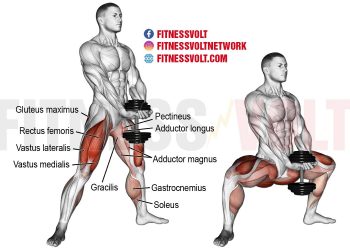
The sumo deadlift is a powerful exercise. It targets multiple muscle groups. This version uses dumbbells instead of a barbell. It’s a great way to build strength and stability.
In a sumo deadlift, your feet are wider apart. Your toes point outwards. This stance engages different muscles compared to the traditional deadlift.
Sumo Deadlift Vs Traditional Deadlift
The sumo deadlift and traditional deadlift differ in stance and muscle engagement. In a traditional deadlift, feet are hip-width apart. In a sumo deadlift, feet are wider.
Sumo deadlifts focus more on inner thighs and hips. Traditional deadlifts emphasize the lower back and hamstrings.
- Sumo: Wider stance, toes out
- Traditional: Narrow stance, feet parallel
- Sumo: Engages inner thighs more
- Traditional: Targets lower back more
Benefits Of Sumo Deadlift
Sumo deadlifts offer several benefits. They improve hip flexibility. They also reduce strain on the lower back.
This exercise enhances balance and coordination. It builds strength in the legs and core.
- Improves hip flexibility
- Reduces lower back strain
- Enhances balance and coordination
- Strengthens legs and core
Why Use Dumbbells
Using dumbbells in a sumo deadlift offers unique advantages. They allow for greater range of motion. Dumbbells help in maintaining balance.
Dumbbells are also more accessible. They require less space and are easy to store. This makes them ideal for home workouts.
- Greater range of motion
- Better balance control
- Space-saving and easy storage
- Ideal for home use

Credit: powerliftingtechnique.com
Preparing For The Sumo Deadlift
The sumo deadlift is a strong exercise that works your legs and back. Using dumbbells helps you do it at home or gym.
Before lifting, you must prepare well. This keeps you safe and makes your workout better.
Choosing The Right Dumbbells
Pick dumbbells that match your strength level. Start light to learn the move safely.
Choose dumbbells with a good grip. This helps you hold them tight during the lift.
- Start with 10-20 pounds if you are a beginner
- Use heavier weights as you get stronger
- Choose dumbbells with textured handles for better grip
Setting Up Your Stance
Stand with feet wider than shoulder-width apart. Point your toes out at about 45 degrees.
Bend your knees and push your hips back. Keep your chest up and back straight before lifting.
- Feet wide with toes turned out
- Knees bent and pushed out
- Back straight and chest up
- Look forward, not down
Warm-up Exercises
Do warm-up exercises to prepare your muscles. This lowers the chance of injury.
Focus on your legs, hips, and lower back with light moves before lifting dumbbells.
- Bodyweight squats for leg warm-up
- Hip circles to loosen hips
- Cat-cow stretch for the back
- Light dumbbell deadlifts with no weight
Step-by-step Sumo Deadlift Technique
The sumo deadlift with dumbbells is a great exercise for your legs and back. It uses a wider stance than a regular deadlift. This helps target different muscles in your lower body.
Follow these steps to do the sumo deadlift safely and correctly. Using dumbbells makes it easier to control the weight. It also helps improve balance and form.
Starting Position
Stand with your feet wider than shoulder-width apart. Point your toes slightly outward. Hold a dumbbell in each hand with your arms straight down between your legs.
Bend at your hips and knees to lower your body. Keep your chest up and back straight. Your arms should hang naturally inside your legs.
- Feet wider than shoulder-width
- Toes pointed slightly outward
- Hold dumbbells with arms straight
- Chest up and back straight
- Bend hips and knees to lower down
Engaging The Core And Back
Tighten your core muscles to protect your spine. Pull your shoulder blades back and down. This keeps your upper back firm during the lift.
Keep your neck in line with your spine. Look slightly ahead to maintain a neutral head position. This helps prevent strain.
- Tighten your core muscles
- Pull shoulder blades back and down
- Keep chest lifted
- Maintain neutral neck and head
Executing The Lift
Push through your heels to stand up straight. Extend your hips and knees at the same time. Keep the dumbbells close to your body as you rise.
Do not let your back round or your hips rise faster than your chest. Stand tall at the top with your hips fully extended. Your shoulders should be back, and chest open.
- Push through heels
- Extend hips and knees together
- Keep dumbbells near your legs
- Avoid rounding your back
- Stand tall with hips fully extended
Lowering The Dumbbells Safely
Bend your hips and knees to lower the dumbbells. Keep your back straight and chest up. Lower the weights slowly to control the movement.
Bring the dumbbells down between your legs. Stop when your thighs are parallel to the floor or slightly below. Reset your position before the next lift.
- Hinge at hips first
- Bend knees while lowering
- Keep back straight
- Lower dumbbells slowly
- Stop at thigh level or lower
Common Mistakes To Avoid
Doing a sumo deadlift with dumbbells can build strong legs and hips. Many people make mistakes that limit their progress.
It is important to learn the right way to avoid injuries and get better results. Here are common mistakes to watch out for.
Incorrect Foot Placement
Placing your feet too close or too wide can cause balance problems. Your toes should point slightly outward.
Feet should be wider than shoulder-width apart to target the right muscles. Wrong foot placement can strain your knees.
- Keep feet wide, about 1.5 times shoulder width
- Point toes out at about 30 degrees
- Do not let knees cave inward
Rounding The Back
Rounding your back puts pressure on your spine and can cause injury. Keep your back straight and chest up during the lift.
Engage your core muscles to support your spine. A flat back helps transfer force safely through your legs and hips.
- Keep your spine neutral, not curved
- Lift with your chest open and shoulders back
- Tighten your core before lifting
Using Arms Instead Of Legs
Many lifters pull with their arms instead of pushing with their legs. The legs and hips should do most of the work.
Focus on driving through your heels and extending your hips. Arms should only hold the dumbbells, not pull them up.
- Push through your heels, not your toes
- Use hips to lift, not arms
- Keep arms straight and relaxed
Tips For Improving Performance
Doing sumo deadlifts with dumbbells helps build strength and muscle. You can improve your performance with some simple tips.
These tips will help you lift safely and get better results over time.
Breathing Techniques
Proper breathing keeps your body stable during the lift. Take a deep breath before you lift the dumbbells.
Hold your breath while lifting to keep your core tight. Breathe out slowly as you lower the weights back down.
- Inhale deeply before lifting
- Hold breath during the lift
- Exhale slowly when lowering
Increasing Weight Gradually
Start with light dumbbells to learn the form. Add weight little by little to avoid injury.
Try to increase your dumbbell weight every week or two. This helps your muscles grow stronger.
- Begin with manageable weight
- Add small increments regularly
- Keep good form with every increase
Incorporating Accessory Exercises
Accessory exercises help improve your sumo deadlift strength. Focus on your legs, hips, and back muscles.
Exercises like goblet squats, hip thrusts, and bent-over rows work well with dumbbell deadlifts.
- Goblet squats for leg strength
- Hip thrusts to build hip power
- Bent-over rows to strengthen back
Sumo Deadlift Variations With Dumbbells
The sumo deadlift is a great exercise for your legs and back. Using dumbbells makes it easy to do at home or in the gym. You can try different versions of the sumo deadlift with dumbbells to target muscles in new ways.
These variations help build strength and improve your form. They also add variety to your workout to keep it interesting.
Single-arm Sumo Deadlift
In the single-arm sumo deadlift, you hold one dumbbell instead of two. This makes your core work harder to keep balance. It also helps fix strength differences between your left and right sides.
Stand with feet wide apart and toes pointing out. Hold one dumbbell between your legs with one hand. Keep your back straight and bend at the hips. Lift the dumbbell by standing up tall.
- Hold one dumbbell with your right hand.
- Keep your left arm free for balance.
- Bend hips and knees to lower the dumbbell.
- Stand up while keeping your back straight.
- Switch arms after completing the set.
Sumo Deadlift With Pause
The sumo deadlift with pause adds a stop during the movement. You pause when the dumbbells are just below your knees. This helps improve your control and strength in that position.
Start in the normal sumo deadlift position. Lower the dumbbells slowly. Pause for a few seconds near your knees. Then finish lifting the dumbbells to standing.
- Lower dumbbells with control.
- Pause for 2-3 seconds just below your knees.
- Hold your position and keep your core tight.
- Stand up slowly after the pause.
- Repeat for desired reps.
Tempo Sumo Deadlift
Tempo sumo deadlifts use slow, timed movements. You control how fast you lower and lift the dumbbells. This builds muscle and improves your form by focusing on each part of the lift.
Try counting the seconds for each phase. For example, lower for 3 seconds, pause 1 second, then lift for 2 seconds. Keep your back straight and core tight the whole time.
- Lower dumbbells slowly (3 seconds).
- Pause at the bottom (1 second).
- Lift dumbbells steadily (2 seconds).
- Keep your posture strong.
- Repeat for the set.
Tracking Progress And Staying Motivated
Doing the sumo deadlift with dumbbells is a great way to build strength. Tracking your progress helps you see improvements over time.
Staying motivated can be hard without clear goals and records. Keeping track of your workouts and celebrating milestones helps you keep going.
Setting Realistic Goals
Set goals that match your current fitness level. Start with small, clear targets to avoid frustration.
Goals should focus on form, weight, or reps. This keeps your progress steady and safe.
- Choose goals you can reach in a few weeks
- Focus on improving technique before adding weight
- Set a goal for the number of reps or sets
- Adjust goals as you improve
Recording Your Workouts
Write down each sumo deadlift session. Note the weight, reps, and how you felt during the workout.
Use a notebook or a fitness app. Tracking helps you see patterns and stay focused.
- Record date and time of each workout
- Track dumbbell weight used
- Count sets and reps completed
- Note any difficulty or improvements
Celebrating Milestones
Recognize your progress by celebrating small wins. This keeps your motivation high.
Milestones can be hitting a new weight or doing more reps. Reward yourself in simple ways to stay positive.
- Celebrate when you lift heavier dumbbells
- Mark when you improve your form
- Reward reaching a new number of reps or sets
- Share achievements with friends or workout partners

Credit: julielohre.com
Frequently Asked Questions
What Muscles Does Sumo Deadlift With Dumbbells Target?
Sumo deadlifts with dumbbells primarily target the glutes, hamstrings, quads, and inner thighs. They also engage the lower back and core muscles for stability. This exercise improves overall leg strength and hip mobility while reducing stress on the lower back compared to conventional deadlifts.
How To Maintain Proper Form In Sumo Deadlift?
Stand with feet wider than shoulder-width, toes pointing out. Hold dumbbells between your legs. Keep your chest up, back straight, and core tight. Push through your heels to lift, extending hips and knees. Lower the dumbbells slowly while maintaining control and posture.
Can Beginners Safely Do Sumo Deadlifts With Dumbbells?
Yes, beginners can safely perform sumo deadlifts using light dumbbells. Focus on mastering the form first. Avoid heavy weights until comfortable with technique. This exercise is beginner-friendly and helps build foundational strength and flexibility without requiring complex equipment.
How Many Sets And Reps Are Ideal For Sumo Deadlifts?
Aim for 3 to 4 sets of 8 to 12 reps for strength and muscle growth. Use a weight that challenges you but allows proper form. Rest 60 to 90 seconds between sets to maintain good technique and avoid fatigue.
Conclusion
Sumo deadlifts with dumbbells build strength and improve posture. Keep your feet wide and grip firm. Focus on slow, steady movements to avoid injury. Regular practice helps tone legs, hips, and back muscles. Start light and increase weight as you get stronger.
Remember to breathe and keep your core tight. This simple exercise fits well in any workout plan. Stay consistent and enjoy the benefits of stronger muscles. Easy to do at home or gym. Give it a try and feel the difference.


