
If you want to build stronger, more defined shoulders, mastering dumbbell shrugs is a must. This simple exercise targets your traps, helping you improve posture and add that powerful upper-body look.
But doing shrugs the right way matters—a lot. If you’re not careful, you might miss out on results or risk injury. Keep reading, and you’ll learn exactly how to do dumbbell shrugs correctly, so every rep counts toward your strength and muscle goals.

Credit: www.youtube.com
Benefits Of Dumbbell Shrugs
Dumbbell shrugs are a simple exercise to strengthen the upper body. They mainly target the shoulder and neck muscles.
Regularly doing dumbbell shrugs can lead to improved posture and appearance. They are easy to perform and require minimal equipment.
Targeting The Trapezius Muscles
The trapezius muscles are large muscles in your back. Dumbbell shrugs help in strengthening these muscles.
Strong trapezius muscles can improve shoulder stability. This helps in performing other exercises with ease.
Improving Posture And Neck Strength
Good posture is important for overall health. Dumbbell shrugs help in aligning the spine properly.
They also strengthen the neck muscles. This reduces the risk of neck pain and injuries.
Enhancing Upper Body Aesthetics
A strong upper body looks attractive. Dumbbell shrugs can help in building well-defined shoulders.
They contribute to a balanced and proportionate upper body. This enhances your overall physical appearance.

Credit: uk.style.yahoo.com
Choosing The Right Dumbbells
Picking the right dumbbells is key for doing shrugs safely and effectively. The right weight helps you build muscle without risk.
This guide will help you choose dumbbells that fit your strength and comfort needs.
Selecting Appropriate Weight
Choose dumbbells that challenge your muscles but do not cause strain. Start light if you are new to shrugs.
Increase weight gradually as your strength improves. Using too heavy dumbbells can lead to poor form.
- Pick a weight you can lift for 10 to 12 reps.
- Feel muscle tension but no sharp pain.
- Use lighter dumbbells to focus on form.
Adjustable Vs Fixed Dumbbells
Adjustable dumbbells let you change weights quickly. They save space and can fit many exercises.
Fixed dumbbells have set weights and are easy to use. They are durable and do not need adjustments.
- Adjustable dumbbells are good for varied workouts.
- Fixed dumbbells offer stability and simple use.
- Choose based on your workout space and budget.
Grip And Comfort Considerations
Comfortable grips help you hold dumbbells securely. Look for non-slip handles to prevent accidents.
Check the size of the handle to fit your hand well. Avoid dumbbells that feel too heavy in your wrist.
- Choose dumbbells with padded or textured grips.
- Test the dumbbell in your hand before buying.
- Comfort reduces fatigue and improves workout quality.
Proper Shrug Technique
Dumbbell shrugs target your upper traps. Using the right form helps avoid injury. It also improves muscle growth.
Focus on controlled movement and posture. This guide explains how to do shrugs with dumbbells safely and effectively.
Starting Position Setup
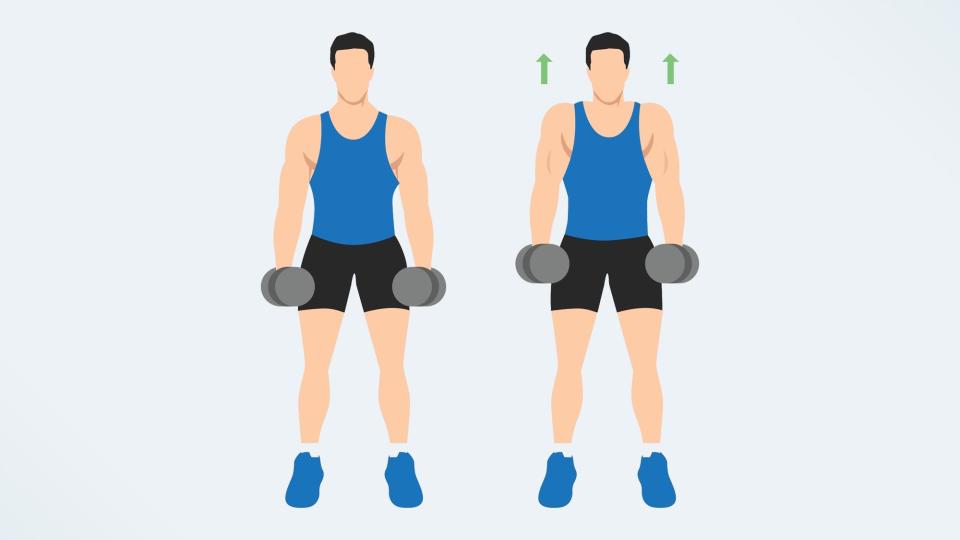
Stand with feet shoulder-width apart. Hold a dumbbell in each hand at your sides. Keep your arms straight but relaxed.
Keep your shoulders back and chest up. Look straight ahead. This setup protects your back and neck during the exercise.
Performing The Shrug Movement
Lift your shoulders straight up toward your ears. Avoid rolling or twisting your shoulders. Hold the top position briefly to feel the contraction.
Lower your shoulders slowly back down. Let the muscles stretch fully before the next shrug. Keep your arms and elbows steady all through the move.
- Raise shoulders straight up
- Do not roll or twist
- Pause at the top
- Lower slowly
- Keep arms steady
Breathing And Tempo Tips
Inhale before you shrug. Exhale as you lift your shoulders. Controlled breathing helps keep your core tight.
Use a steady tempo. Lift for 1-2 seconds. Hold briefly. Lower for 2-3 seconds. Avoid fast or jerky moves.
- Inhale before shrugging
- Exhale while lifting
- Lift slowly in 1-2 seconds
- Hold for 1 second
- Lower slowly in 2-3 seconds
Common Mistakes To Avoid
Shrugs with dumbbells are great for building shoulder strength. Many people make mistakes that reduce results or cause injury.
Knowing what to avoid helps you get stronger safely. Here are common errors to watch for.
Using Momentum Instead Of Muscle
Some lifters swing their body to lift the dumbbells. This uses momentum, not the shoulder muscles.
Relying on momentum can reduce muscle growth and increase injury risk.
- Keep your body still and upright.
- Lift with your traps, not by swinging.
- Use a slow, controlled motion.
Overextending The Neck
Looking up or pushing the neck forward strains it during shrugs. Your neck should stay neutral.
Keep your head aligned with your spine to avoid neck pain and injury.
- Look straight ahead.
- Keep your chin level with the floor.
- Do not tilt or push your head forward.
Neglecting Controlled Movements
Dropping the weights quickly or rushing through reps wastes effort. Control is key for muscle work.
Slow, steady movements keep tension on your traps and reduce injury risk.
- Lift the dumbbells slowly.
- Pause briefly at the top of the shrug.
- Lower the weights with control.
Advanced Shrug Variations
Advanced shrug variations help target your traps more effectively. These moves add challenge and variety to your workouts.
Using dumbbells allows better control and range of motion. Try these three variations to improve your shrug routine.
Behind-the-back Dumbbell Shrugs
Hold a dumbbell in each hand behind your back. Keep your arms straight and your chest up.
Shrug your shoulders upward, focusing on squeezing your traps. Lower the weights slowly to start over.
- Stand with feet shoulder-width apart
- Hold dumbbells behind your hips
- Lift shoulders straight up
- Pause and squeeze traps
- Lower dumbbells slowly
Incline Dumbbell Shrugs
Set an incline bench at about 45 degrees. Lie face down with dumbbells in your hands, arms hanging down.
Shrug your shoulders up toward your ears. This position targets the lower part of your traps.
- Adjust bench to 45 degrees
- Lie chest-down with dumbbells
- Keep arms straight and relaxed
- Shrug shoulders up slowly
- Lower back with control
Single-arm Dumbbell Shrugs
Hold a dumbbell in one hand at your side. Keep your other hand free or resting on your hip.
Shrug one shoulder up toward your ear. Lower it slowly, then switch arms after your set.
- Stand tall with feet shoulder-width
- Hold dumbbell in one hand
- Shrug that shoulder straight up
- Lower slowly to start position
- Repeat on the other side
Incorporating Shrugs Into Workouts
Shrugs with dumbbells are a simple way to build your trapezius muscles. Adding shrugs to your workouts can improve your shoulder strength and posture.
You can do shrugs alone or with other exercises. Planning how often and with what to pair shrugs helps you get better results.
Frequency And Volume Recommendations
Do shrugs two to three times a week. This gives your muscles time to recover and grow.
Start with three sets of 10 to 15 reps. Increase sets or reps as you get stronger.
- Perform 2-3 sessions weekly
- Start with 3 sets per session
- Do 10-15 repetitions per set
- Rest 48 hours between sessions
Pairing With Other Trap Exercises
Combine shrugs with exercises that target the traps from different angles. This helps develop the whole muscle.
Good pairings include upright rows, face pulls, and farmer’s walks. These moves complement shrugs well.
- Upright rows for upper traps
- Face pulls for rear traps and shoulders
- Farmer’s walks for trap endurance
Balancing With Overall Shoulder Training
Balance shrugs with exercises for the entire shoulder area. This prevents muscle imbalances and injury.
Include presses and lateral raises to work the deltoids. Strengthen rotator cuffs with external rotations.
- Overhead presses for front and middle delts
- Lateral raises for side delts
- External rotations for rotator cuffs
Tracking Progress And Results
Tracking your progress helps you see how well dumbbell shrugs improve your traps. It also keeps you motivated and on track with your goals.
Use simple methods to measure strength and muscle growth. This way, you know when to change your workout for better results.
Monitoring Strength Gains
Keep a record of the weight you use for dumbbell shrugs. Note how many reps and sets you complete each workout.
Tracking this helps you see if you can lift heavier weights or do more reps over time. This shows your strength is improving.
- Write down dumbbell weight
- Record number of sets and reps
- Track progress weekly or biweekly
- Compare current performance to past workouts
Measuring Trap Size Growth
Use a tape measure to track the size of your traps. Measure around the upper shoulder and neck area where the traps are.
Take measurements every two to four weeks. This helps you see if your muscles are growing from the dumbbell shrugs.
- Measure both traps in the same spot each time
- Record measurements in a notebook or app
- Use photos to visually track muscle changes
- Be consistent with measurement timing
Adjusting Routine For Continued Gains
Change your dumbbell shrug routine if progress slows. Increase weight, reps, or sets to keep your muscles challenged.
Try different variations or add rest days to improve recovery. Small changes help avoid plateaus and boost trap growth.
- Add 5-10% more weight when reps feel easy
- Increase reps by 1-3 per set gradually
- Change tempo or hold time at the top of the shrug
- Include rest days for muscle recovery
Recovery And Injury Prevention
Doing shrugs with dumbbells works your traps and shoulders. Recovery helps your muscles grow and stay healthy. Injury prevention keeps you safe and strong.
Good recovery and injury prevention stop pain and let you train better next time. Focus on simple habits to protect your body.
Stretching And Mobility Exercises
Stretching loosens tight muscles after dumbbell shrugs. Mobility exercises keep your shoulder joints flexible. This lowers injury risk.
- Neck stretches ease tension in traps
- Shoulder rolls improve joint movement
- Chest stretches open tight muscles
- Arm circles boost shoulder mobility
Rest And Muscle Repair Strategies
Rest gives muscles time to heal after workouts. Sleep is key for muscle repair and growth. Avoid training the same muscles every day.
- Sleep 7 to 9 hours each night
- Take at least one rest day weekly
- Use ice or heat to reduce soreness
- Eat protein to help muscle recovery
Signs Of Overtraining To Watch For
Overtraining can cause pain and slow progress. Watch for signs to avoid injury and burnout. Stop if you feel any warning signs.
- Muscle pain that lasts more than a few days
- Joint soreness or sharp pain during shrugs
- Constant fatigue or low energy
- Loss of strength or poor workout performance
- Difficulty sleeping or restless nights
Credit: tech.yahoo.com
Frequently Asked Questions
How Do I Properly Hold Dumbbells For Shrugs?
Hold the dumbbells at your sides with a neutral grip. Keep your arms straight but not locked. Maintain a firm, relaxed grip throughout the movement for better control and safety.
What Muscles Do Dumbbell Shrugs Target?
Dumbbell shrugs primarily work the upper trapezius muscles. They also engage the levator scapulae and other neck stabilizers. This helps improve posture and shoulder strength.
How Many Reps And Sets Are Ideal For Dumbbell Shrugs?
Perform 3 to 4 sets of 10 to 15 reps for optimal results. Adjust weight to maintain proper form. Rest 30 to 60 seconds between sets.
Can Dumbbell Shrugs Help Reduce Neck Pain?
Yes, strengthening your traps can support neck stability. This may reduce neck pain caused by poor posture or muscle weakness. Always combine with proper stretching.
Conclusion
Dumbbell shrugs build strong traps and improve posture. Hold the weights firmly and lift your shoulders straight up. Keep your movements slow and controlled for best results. Use a weight that feels challenging but safe. Practice regularly to see steady muscle growth.
Remember, good form prevents injury and boosts gains. Simple, effective, and easy to add to any workout. Try these tips to make your shrugs count. Your shoulders will thank you.


