

Are you getting enough electrolytes every day? These tiny minerals play a huge role in keeping your body balanced and energized.
But how many electrolytes should you actually have daily to feel your best? Too little, and you might feel tired or weak. Too much, and it could cause problems too. You’ll discover the right amount of electrolytes your body needs and simple ways to keep your levels just right.
Keep reading to unlock the secret to better health and more energy every day.

Credit: www.menshealth.com
Role Of Electrolytes
Electrolytes are minerals in your body that carry an electric charge. They help your body work properly every day.
These minerals keep your muscles moving, your heart beating, and your nerves sending signals. You need the right amount daily.
Key Electrolyte Types
There are several important electrolytes. Each one has a special role in your body’s health and function.
- Sodium
- Potassium
- Calcium
- Magnesium
- Chloride
- Bicarbonate
Functions In The Body
Sodium helps keep the balance of fluids in your body. It also helps your muscles and nerves work well.
Potassium controls your heart rhythm and muscle contractions. It also helps keep your blood pressure steady.
Calcium builds strong bones and teeth. It also helps your muscles move and your blood to clot when needed.
Magnesium supports muscle and nerve function. It helps your body make energy and keeps your bones strong.
Chloride works with sodium to balance fluids. It also helps keep your stomach acid strong for digestion.
Bicarbonate keeps the pH level in your blood stable. This balance is important for your body’s chemical reactions.
Daily Electrolyte Needs
Electrolytes are minerals that help your body work well. They control fluid balance and muscle function.
You lose electrolytes through sweat, urine, and other body fluids. It is important to replace them daily.
Recommended Intake Levels
Your body needs different amounts of each electrolyte every day. These amounts help keep your organs and muscles healthy.
| Electrolyte | Recommended Daily Intake | Unit |
|---|---|---|
| Sodium | 1,500 | mg |
| Potassium | 2,500 | mg |
| Calcium | 1,000 | mg |
| Magnesium | 400 | mg |
| Chloride | 2,300 | mg |
Factors Influencing Requirements
Different things affect how many electrolytes you need. Age, activity, and health change your needs.
People who exercise or sweat a lot need more electrolytes. Illness and certain medicines can also raise needs.
- Hot weather and heavy sweating increase electrolyte loss
- Children and older adults have different needs
- Pregnant or breastfeeding women need extra electrolytes
- Illnesses like diarrhea cause more electrolyte loss
- Medications can change how your body uses electrolytes
Sources Of Electrolytes
Electrolytes are minerals that help your body work well. They keep your muscles, nerves, and hydration in balance.
You get electrolytes from different foods and drinks. It is important to include these in your daily diet.
Natural Food Options
Many natural foods have important electrolytes like sodium, potassium, calcium, and magnesium. Eating these foods helps keep your body healthy.
- Bananas are high in potassium
- Spinach and kale provide magnesium and calcium
- Oranges and tomatoes offer potassium and sodium
- Nuts and seeds contain magnesium
- Milk and yogurt supply calcium
- Avocados have potassium and magnesium
Electrolyte Drinks And Supplements
Electrolyte drinks are made to quickly replace lost minerals. They are useful during exercise or hot weather.
Supplements come in pills or powders to add electrolytes to your diet. Use them if you do not get enough from food.
- Sports drinks contain sodium, potassium, and sometimes magnesium
- Coconut water is a natural electrolyte drink with potassium and sodium
- Electrolyte powders mix easily with water for quick hydration
- Calcium and magnesium supplements support bone and muscle health
- Choose supplements based on your specific needs and doctor’s advice
Credit: www.amystephensnutrition.com
Signs Of Imbalance
Electrolytes help your body work well. They control muscles, nerves, and fluids. Too few or too many electrolytes can cause problems.
It is important to know the signs of electrolyte imbalance. This helps you keep your body healthy and strong.
Symptoms Of Deficiency
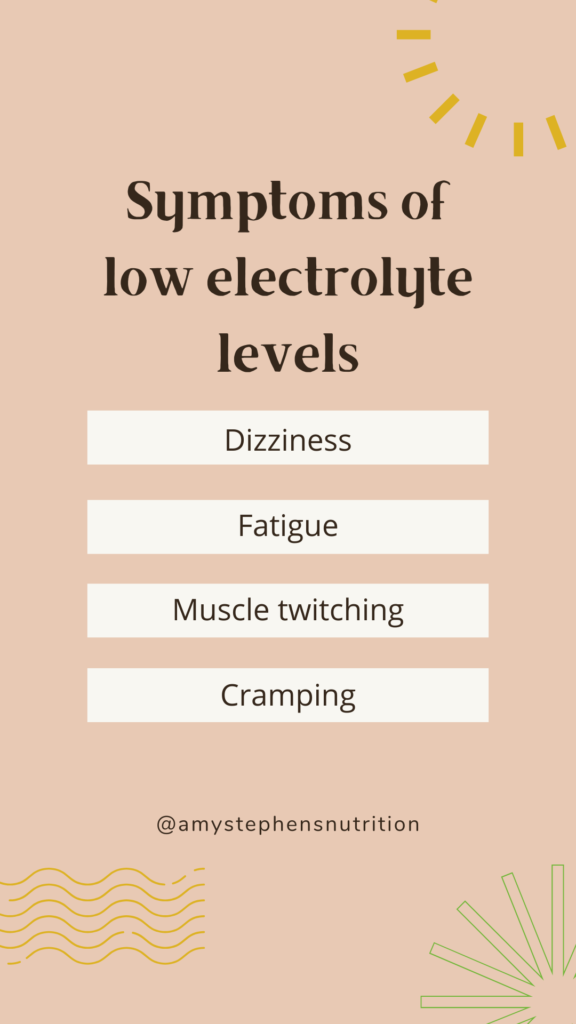
Low electrolytes make your body feel weak. You may feel tired or dizzy. Your muscles might cramp or twitch. Sometimes, your heartbeat can feel strange.
- Muscle cramps or spasms
- Fatigue or weakness
- Dizziness or lightheadedness
- Irregular heartbeat
- Nausea or vomiting
- Confusion or headache
Symptoms Of Excess
Too many electrolytes can also cause problems. You might feel thirsty or have swollen hands and feet. Your heart may beat too fast or too slow. Severe cases can cause seizures or coma.
- Swelling in hands, feet, or ankles
- Excessive thirst
- High or low heart rate
- Muscle weakness
- Confusion or irritability
- Seizures or loss of consciousness
Balancing Electrolyte Levels
Electrolytes are minerals that help your body work properly. They keep your muscles, nerves, and heart working well.
It is important to have the right amount of electrolytes every day. Too much or too little can cause health problems.
Hydration Tips
Drinking enough water helps keep your electrolyte levels balanced. Water helps move electrolytes through your body.
Avoid drinking too much plain water after exercise. This can dilute your electrolytes and cause imbalance.
- Drink water regularly throughout the day
- Use drinks with electrolytes during heavy exercise
- Avoid sugary drinks that may cause dehydration
Dietary Adjustments
Eating foods rich in electrolytes helps maintain the right balance. Key electrolytes include sodium, potassium, calcium, and magnesium.
Choose a variety of foods to get these minerals naturally. This supports your body’s daily needs.
- Bananas and oranges provide potassium
- Leafy greens supply magnesium and calcium
- Salt adds needed sodium in small amounts
- Dairy products are good sources of calcium
Special Considerations
Electrolytes are minerals that help your body work well. They keep your muscles, nerves, and fluids balanced. The amount you need each day can change based on your lifestyle and health.
Some people need more electrolytes than others. This depends on how active they are, their age, and other health factors.
Electrolytes And Exercise
Exercise makes you sweat, which causes you to lose electrolytes. You need to replace these to stay healthy and avoid cramps or fatigue.
People who do intense workouts or exercise in hot weather should drink fluids with electrolytes. This helps keep the right balance in the body.
- Drink water with sodium and potassium after exercise
- Sports drinks can help during long or hard workouts
- Electrolyte needs rise with more sweat loss
Electrolytes For Different Age Groups
Children, adults, and older people have different electrolyte needs. Kids need less because they are smaller. Older adults may need more to avoid dehydration.
Age affects how your body keeps electrolyte balance. Older adults may lose more through urine and sweat.
| Age Group | Key Electrolyte Needs | Notes |
|---|---|---|
| Children | Lower sodium and potassium | Balance electrolytes with regular meals |
| Adults | Standard daily intake | Adjust for activity level and climate |
| Older Adults | May need more potassium and magnesium | Watch for dehydration and kidney health |

Credit: www.wired.com
Frequently Asked Questions
How Many Electrolytes Should I Consume Daily?
Adults typically need about 1,500 to 2,300 mg of sodium daily. Potassium intake should be around 2,500 to 3,000 mg, while magnesium needs range from 310 to 420 mg. Balancing these electrolytes supports hydration, nerve function, and muscle health.
What Are The Best Sources Of Electrolytes?
Electrolytes come from foods like bananas, spinach, yogurt, and nuts. Drinking sports drinks or coconut water also replenishes electrolytes. A varied diet rich in fruits, vegetables, and dairy ensures adequate intake naturally.
Can I Have Too Many Electrolytes In A Day?
Yes, excess electrolytes can cause health issues like high blood pressure or irregular heartbeat. It’s important to consume electrolytes within recommended limits and avoid overuse of supplements unless advised by a doctor.
How Do Electrolytes Affect Hydration Levels?
Electrolytes help balance fluids inside and outside cells. They regulate hydration by controlling water movement and nerve signals. Proper electrolyte levels prevent dehydration and support overall body function, especially during exercise.
Conclusion
Electrolytes keep your body balanced and working well. You need enough daily to stay healthy and active. Drinking water and eating fruits help keep electrolytes in check. Too little or too much can cause problems. Pay attention to your body’s signals.
Simple foods and drinks often provide what you need. Stay consistent, and your energy will improve. Small changes make a big difference. Keep electrolytes in mind for your daily health.


