
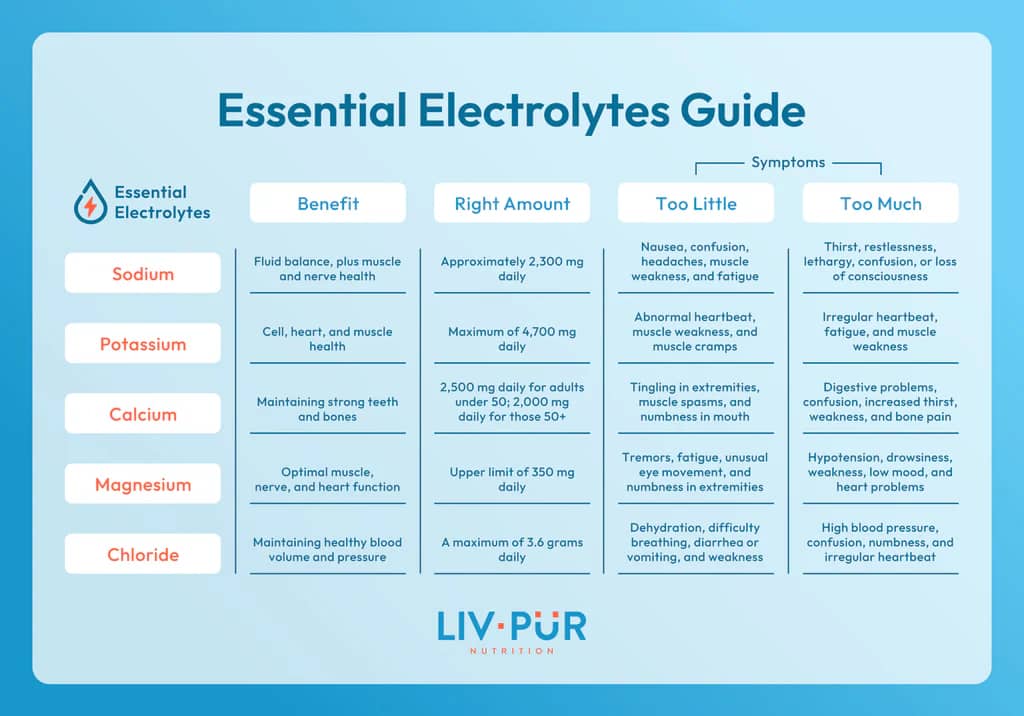
Are you wondering how many electrolytes you really need each day to stay healthy and energized? Electrolytes play a key role in keeping your body balanced, your muscles working, and your hydration on point.
But too little—or too much—can cause problems you don’t want. You’ll discover exactly how much of these essential minerals your body needs daily, why they matter so much, and simple ways to get the right amount. Keep reading to unlock the secret to feeling your best every day!

Credit: simpleendurance.medium.com
Key Electrolytes To Know
Electrolytes are minerals that help your body work well. You need the right amount every day to stay healthy.
These minerals control many important jobs like muscle movement and keeping your heart beating right.
Sodium’s Role
Sodium helps keep the balance of fluids in your body. It also helps your nerves send signals.
Too much sodium can cause high blood pressure. Too little can make you feel weak or dizzy.
Importance Of Potassium
Potassium helps muscles work, including your heart muscle. It also helps keep your blood pressure normal.
Good sources of potassium include bananas, oranges, and potatoes. Eating enough helps you avoid cramps.
Calcium Benefits
Calcium builds strong bones and teeth. It also helps your muscles and nerves work properly.
Milk, cheese, and leafy greens have lots of calcium. It is important for children and older adults.
Magnesium Functions
Magnesium helps your muscles relax after they contract. It supports your immune system and energy production.
Nuts, seeds, and whole grains are good sources of magnesium. It helps keep your heart steady.
Chloride Basics
Chloride works with sodium to keep fluids balanced in your body. It also helps digest food by making stomach acid.
You get chloride from salt and many vegetables. It is important for hydration and digestion.
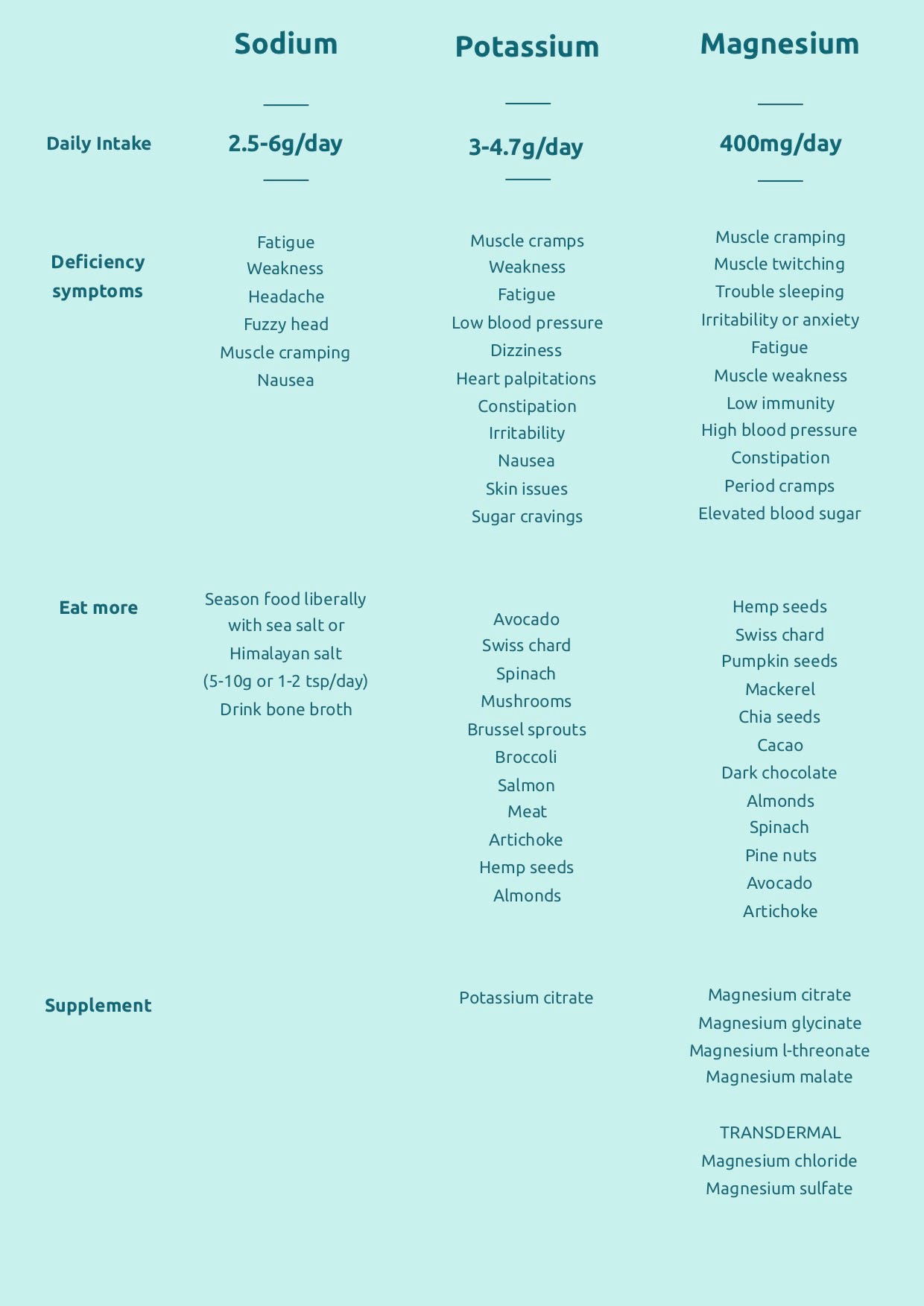
Credit: medium.com
Daily Electrolyte Needs
Electrolytes are minerals that help your body work well. They keep your muscles, nerves, and fluids balanced.
You get electrolytes from food and drinks. It is important to know how much you need each day.
Recommended Intake Levels
Different electrolytes have different daily needs. Here are some common ones and their usual amounts.
| Electrolyte | Recommended Daily Intake |
|---|---|
| Sodium | 1,500 mg to 2,300 mg |
| Potassium | 2,500 mg to 3,400 mg |
| Calcium | 1,000 mg to 1,300 mg |
| Magnesium | 310 mg to 420 mg |
| Chloride | 2,300 mg |
Variations By Age And Gender
Electrolyte needs change based on age and gender. Children and adults need different amounts.
Women may need less sodium but more calcium during some life stages like pregnancy.
| Group | Sodium (mg) | Potassium (mg) | Calcium (mg) |
|---|---|---|---|
| Children (4-8 years) | 1,200 | 3,800 | 1,000 |
| Men (19-50 years) | 1,500-2,300 | 3,400 | 1,000 |
| Women (19-50 years) | 1,500-2,300 | 2,600 | 1,000 |
| Older Adults (51+ years) | 1,500 | 3,400 | 1,200 |
Adjustments For Activity Levels
People who exercise a lot lose more electrolytes through sweat. They need to replace them.
Higher activity means more potassium, sodium, and magnesium are needed to stay balanced.
- Drink electrolyte drinks during long exercise
- Eat fruits and vegetables rich in potassium
- Include nuts and dairy for magnesium and calcium
Signs Of Electrolyte Imbalance
Electrolytes are minerals that help your body work well. They control muscle movement, hydration, and nerve signals.
When electrolytes are too low or too high, your body shows signs. Knowing these signs helps you stay healthy.
Common Symptoms
Electrolyte imbalance causes many symptoms. These can affect your muscles, heart, and brain.
- Muscle cramps or weakness
- Fatigue or tiredness
- Irregular heartbeat
- Confusion or dizziness
- Nausea or vomiting
- Headaches
Risks Of Deficiency
Low electrolytes can cause serious health problems. Deficiency may happen from poor diet or illness.
Some risks include muscle spasms, low blood pressure, and seizures.
- Weak muscles and cramps
- Low blood pressure and dizziness
- Seizures or convulsions
- Irregular heartbeat
- Dehydration
Risks Of Excess
Too many electrolytes can harm your body. Excess levels often come from supplements or kidney problems.
High electrolytes may cause heart issues, confusion, and muscle problems.
- Irregular or fast heartbeat
- Muscle weakness
- Confusion or mental changes
- High blood pressure
- Kidney damage
Sources Of Electrolytes
Electrolytes are minerals that help your body work well. They keep your muscles, nerves, and hydration balanced. You need the right amount every day to stay healthy.
Electrolytes come from many places like food, drinks, and supplements. Knowing these sources helps you get enough daily.
Electrolytes In Foods
Many foods contain important electrolytes like sodium, potassium, calcium, and magnesium. Eating a balanced diet gives you most of what you need.
- Bananas and oranges are rich in potassium.
- Dairy products like milk have calcium.
- Leafy greens such as spinach provide magnesium.
- Table salt is a common source of sodium.
- Nuts and seeds contain magnesium and calcium.
Hydration And Drinks
Fluids help keep electrolyte levels stable. Water is important, but some drinks add extra electrolytes to help balance your body.
- Sports drinks contain sodium and potassium.
- Coconut water has natural potassium and magnesium.
- Fruit juices provide potassium and other minerals.
- Electrolyte-enhanced water offers added minerals.
Supplements And When To Use Them
Supplements can help if you lose many electrolytes or do not get enough from food and drinks. Use them carefully and only when needed.
People who sweat a lot, have certain illnesses, or follow strict diets might need supplements. Always ask a doctor before starting them.
- Electrolyte tablets or powders replace lost minerals.
- Use supplements during intense exercise or heat.
- Avoid taking too many supplements to prevent imbalance.
Electrolytes And Special Conditions
Electrolytes are minerals that help your body work well. They control fluids and muscle function.
Your daily need for electrolytes changes in special conditions. These include exercise, illness, and pregnancy.
Electrolytes For Athletes
Athletes lose electrolytes through sweat during exercise. They need more sodium, potassium, and magnesium.
Replacing electrolytes helps keep energy and avoid cramps. Drinking sports drinks or eating salty snacks can help.
- Sodium: Replenish lost salt to balance fluids
- Potassium: Supports muscle function
- Magnesium: Prevents muscle cramps
- Calcium: Helps with muscle contractions
Electrolyte Needs During Illness
Illnesses with vomiting or diarrhea cause electrolyte loss. This can lead to dehydration and weakness.
Drinking fluids with electrolytes is important to recover. Oral rehydration solutions are often recommended.
- Sodium: Prevents low blood pressure
- Potassium: Maintains heart and muscle health
- Chloride: Supports fluid balance
Electrolytes In Pregnancy
Pregnant women need more electrolytes to support the baby and their own body. Fluid balance is very important.
Proper electrolyte intake helps prevent swelling and muscle cramps common in pregnancy.
- Sodium: Keeps fluids balanced
- Potassium: Helps muscles and nerves
- Calcium: Builds baby’s bones
- Magnesium: Reduces cramps and supports growth

Credit: www.reddit.com
Frequently Asked Questions
How Many Electrolytes Should You Consume Daily?
Adults typically need about 1,000 to 4,700 mg of electrolytes daily. Requirements vary by age, activity, and health. Sodium, potassium, calcium, and magnesium are key electrolytes for balance and hydration.
What Foods Are Rich In Daily Electrolytes?
Bananas, spinach, yogurt, nuts, and avocados are rich in electrolytes. These foods provide potassium, calcium, magnesium, and sodium naturally. Including them daily supports electrolyte balance and overall health.
Can I Get Enough Electrolytes From Water Alone?
Plain water lacks electrolytes. Electrolyte-rich drinks or foods are necessary for replenishment. Especially during exercise or illness, you need electrolyte sources beyond just water.
What Happens If You Consume Too Many Electrolytes?
Excess electrolytes can cause symptoms like nausea, muscle weakness, or irregular heartbeat. Balance is crucial to avoid health risks. Always follow recommended daily intake guidelines for safety.
Conclusion
Electrolytes keep your body balanced and healthy every day. You need different amounts depending on age, activity, and health. Drinking water and eating fruits or vegetables help keep levels steady. Too little or too much can cause problems. Pay attention to your body’s signals and adjust your intake.
Staying mindful helps you feel better and stay active. Balance is key for strong muscles and good energy. Simple choices make a big difference in your health.


