

Choosing the right dumbbell weight can make all the difference in your workout results. You might be wondering, “What weight dumbbell should I use?” Picking a weight that’s too light won’t challenge your muscles, while going too heavy could lead to injury or poor form.
You’ll discover simple tips to find the perfect dumbbell weight tailored just for you. Keep reading, and you’ll be lifting smarter, safer, and seeing better progress in no time.
Choosing The Right Dumbbell Weight
Dumbbells are important for strength training. Picking the right weight helps you get the best results. It’s important to choose wisely to avoid injury.
This guide will help you choose the right dumbbell weight. We’ll consider several factors like your fitness level and exercise goals.
Factors To Consider
Several factors help decide the right dumbbell weight. Your current strength and the type of exercise are key factors.
- Type of exercise you plan to do
- Your physical strength and fitness level
- Any past injuries or limitations
Assessing Your Fitness Level
Knowing your fitness level is important. It helps you pick a weight that is not too heavy or too light.
Start with a lighter weight if you are new to exercise. You can increase the weight as you get stronger.
Exercise Goals And Dumbbell Weight
Your exercise goals decide the weight you should use. Lighter weights are good for toning and endurance.
Heavier weights are better for building muscle strength. Match the weight to your specific fitness goals.
- Light weights for more repetitions
- Heavier weights for fewer repetitions
- Choose based on desired strength or endurance

Credit: www.womenshealthmag.com
Beginners And Dumbbell Weights
Choosing the right dumbbell weight is important for beginners. Using the correct weight helps you exercise safely and build strength.
Picking weights that are too heavy can cause injury. Start with a weight that feels comfortable for you.
Starting Light For Form And Safety
Begin with light dumbbells to focus on correct form. Good form lowers the risk of injury during workouts.
Light weights let you learn the movement before adding more weight. This builds a strong foundation for progress.
- Choose weights you can lift 12 to 15 times without pain
- Focus on smooth and controlled movements
- Stop if you feel sharp pain or discomfort
Progression Strategies
Increase dumbbell weight gradually to build strength. Small increases help your muscles adjust safely.
Track your progress and add weight when exercises feel easier. This keeps your workouts effective.
- Add 2 to 5 pounds once you can do 15 reps easily
- Keep good form even with heavier weights
- Take rest days to let muscles recover
Intermediate And Advanced Lifters
Choosing the right dumbbell weight is key for intermediate and advanced lifters. It helps keep progress steady and muscles growing.
At this level, you need to challenge your muscles more than beginners. This guide explains how to pick the right weight and change your training.
Adjusting Weight For Muscle Growth
To build muscle, pick a dumbbell weight you can lift for 8 to 12 reps. The last reps should feel hard but doable with good form.
If you can do more than 12 reps easily, increase the weight. If you struggle to do 8 reps, lower the weight.
- Use heavier weights for strength and size
- Use lighter weights for endurance and form
- Adjust weight regularly as you get stronger
Incorporating Variety In Training
Changing your dumbbell weights and exercises helps avoid plateaus. It keeps your muscles guessing and growing.
Use different weights and rep ranges to target muscles in new ways. This can lead to better overall strength and shape.
- Mix heavy weights with low reps and light weights with high reps
- Try different exercises using the same weights
- Change your routine every 4 to 6 weeks
Weight Selection For Different Exercises
Choosing the right dumbbell weight is important for good workouts. The weight you pick depends on the exercise you do.
Using the right weight helps build strength and avoid injury. Let’s look at how to pick weights for different exercises.
Upper Body Workouts
For upper body exercises like bicep curls or shoulder presses, start with lighter weights. This helps keep control and good form.
Choose a weight that feels challenging by the last few reps but does not cause strain.
- Bicep curls: 5 to 15 pounds
- Shoulder presses: 8 to 20 pounds
- Tricep extensions: 5 to 15 pounds
Lower Body Workouts
Lower body exercises like squats and lunges use heavier weights than upper body moves. Legs are stronger muscles.
Pick a weight that lets you do 8 to 12 reps with good form and some effort at the end.
- Squats: 15 to 30 pounds
- Lunges: 10 to 25 pounds
- Deadlifts: 20 to 40 pounds
Full Body Movements
Full body exercises like dumbbell thrusters or clean and press need moderate to heavy weights. These moves use many muscles.
Choose a weight that is tough but lets you keep good form through all reps.
- Thrusters: 15 to 30 pounds
- Clean and press: 20 to 35 pounds
- Renegade rows: 10 to 25 pounds
Signs Your Dumbbell Weight Is Right
Choosing the right dumbbell weight is important for safe and effective workouts. The right weight helps you build strength without causing injury.
Look for signs during your exercises that show if the weight fits your fitness level and goals.
Effective Muscle Fatigue
You should feel your muscles working hard by the end of your set. The right weight tires your muscles in about 8 to 12 reps.
If you do too many reps easily, the weight is too light. If you cannot finish 8 reps, it is too heavy.
- Muscles feel tired but not completely exhausted
- Last reps are challenging but doable
- You can maintain control through each rep
Maintaining Proper Form
Good form means doing exercises with the correct body position and movement. The right weight lets you keep this form throughout your set.
If your form breaks down, the weight is too heavy. Poor form reduces workout benefits and can cause pain.
- Keep your back straight during lifts
- Avoid swinging or using momentum
- Control the dumbbells through every move
Avoiding Injury
The right dumbbell weight helps you avoid muscle strains and joint pain. It should never cause sharp or sudden pain.
Start with lighter weights if you feel discomfort. Gradually increase weight as your strength improves.
- Stop if you feel sharp pain
- Use weights that allow smooth, controlled movements
- Rest between sets to prevent overuse injuries
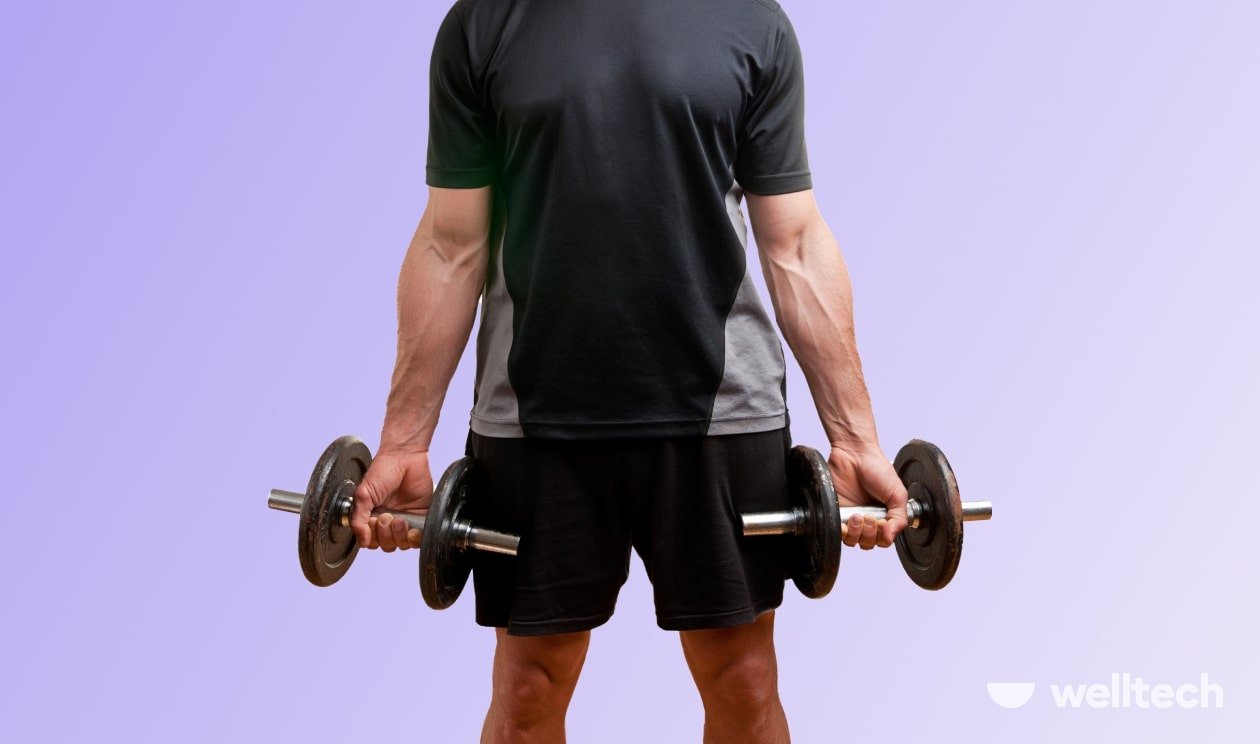
Credit: welltech.com
Tips To Progress Safely
Choosing the right dumbbell weight is important for safe progress. Using weights that are too heavy can cause injury.
Start with a comfortable weight and increase it gradually to build strength safely.
Incremental Weight Increases
Increase your dumbbell weight little by little. Small jumps help your muscles adjust without strain.
Try adding 1 to 2 pounds every week or two, depending on your comfort and strength.
- Start with a weight you can lift 12 times with good form
- Add weight only when you can do 12 reps easily
- Don’t increase weight if you feel pain or discomfort
Tracking Your Performance
Keep a record of your workouts. Write down the weight and reps you complete for each exercise.
Tracking helps you see progress and know when to increase your weights safely.
- Note the dumbbell weight used
- Record how many reps and sets you complete
- Track any changes in how you feel during exercises
Rest And Recovery
Your muscles need time to recover after lifting weights. Rest helps your muscles grow stronger.
Take breaks between workouts and get enough sleep to avoid injury and fatigue.
- Rest at least 48 hours before working the same muscle group
- Sleep 7 to 9 hours each night for recovery
- Use light activity or stretching on rest days
Common Mistakes To Avoid
Choosing the right dumbbell weight is important for safe workouts. Many people make mistakes that can slow progress or cause injury.
Knowing what to avoid helps you use dumbbells correctly and get better results.
Using Too Heavy Weights
Picking weights that are too heavy can lead to poor form. This raises the risk of hurting muscles or joints.
Start with lighter weights and increase slowly. Focus on control and proper movement first.
- Heavy weights can cause muscle strain
- They make it hard to keep good form
- Slow progress because of injury risks
Neglecting Warm-ups
Skipping warm-ups before lifting dumbbells can cause injuries. Your muscles need to be ready for exercise.
Spend at least 5 minutes warming up with light activity or stretching. This helps muscles work better and reduces pain.
- Warm-ups increase blood flow to muscles
- They improve flexibility and joint movement
- Reduce chances of muscle pulls or tears
Ignoring Pain Signals
Pain is your body’s way of saying something is wrong. Ignoring pain when using dumbbells can cause serious damage.
Stop exercising if you feel sharp or sudden pain. Rest and seek advice if the pain continues.
- Sharp pain may mean injury
- Muscle soreness is normal, sharp pain is not
- Ignoring pain can worsen injuries

Credit: originfitness.com
Frequently Asked Questions
How Do I Choose The Right Dumbbell Weight?
Start with a weight that lets you complete 8-12 reps with good form. Choose a weight challenging but not too heavy to avoid injury. Adjust based on your fitness level and exercise type.
What Weight Dumbbell Is Best For Beginners?
Beginners should start with 5-15 pounds. This range helps build strength without overstraining muscles. Gradually increase weight as you gain confidence and muscle endurance.
Can Dumbbell Weight Affect Workout Results?
Yes, using the correct dumbbell weight boosts muscle growth and strength. Too light weights limit progress, while too heavy can cause poor form and injury.
How Often Should I Increase Dumbbell Weight?
Increase dumbbell weight every 2-4 weeks or when exercises feel easy. Progressive overload is key for muscle growth and improving strength.
Conclusion
Choosing the right dumbbell weight helps you train safely and effectively. Start with a weight you can lift with good form. Challenge your muscles without causing pain or strain. Increase weight slowly as you get stronger. Consistency matters more than heavy lifting at first.
Listen to your body and rest when needed. This approach supports steady progress and avoids injury. Keep your workouts balanced and enjoy the process. Small steps bring big results over time. Stay patient and stay strong.


