

Are you looking to build a stronger chest, back, and core with just one simple move? The dumbbell pullover might be the exercise you’ve been missing.
It’s a powerful yet often overlooked move that targets multiple muscles at once, helping you get more out of your workouts. Curious about how it works and why it should be part of your routine? Keep reading to discover what the dumbbell pullover works and how it can transform your fitness game.
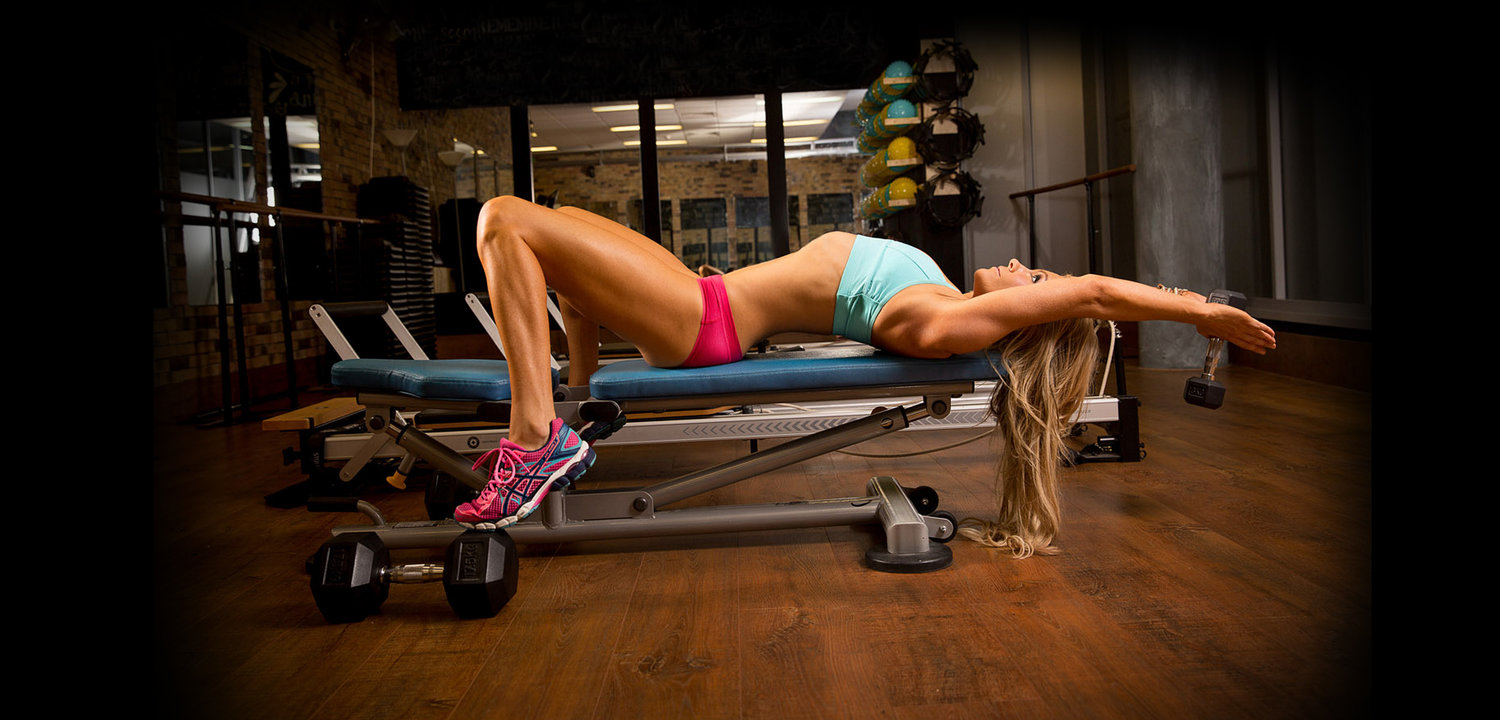
Credit: www.advancedhumanperformance.com
Muscles Targeted By Dumbbell Pullover
The dumbbell pullover is a versatile exercise. It targets multiple muscles in the upper body. Understanding which muscles are engaged can enhance your workout.
Performing this exercise correctly can help you build strength and improve your posture. Let’s explore the primary and secondary muscle groups involved.
Primary Muscle Groups
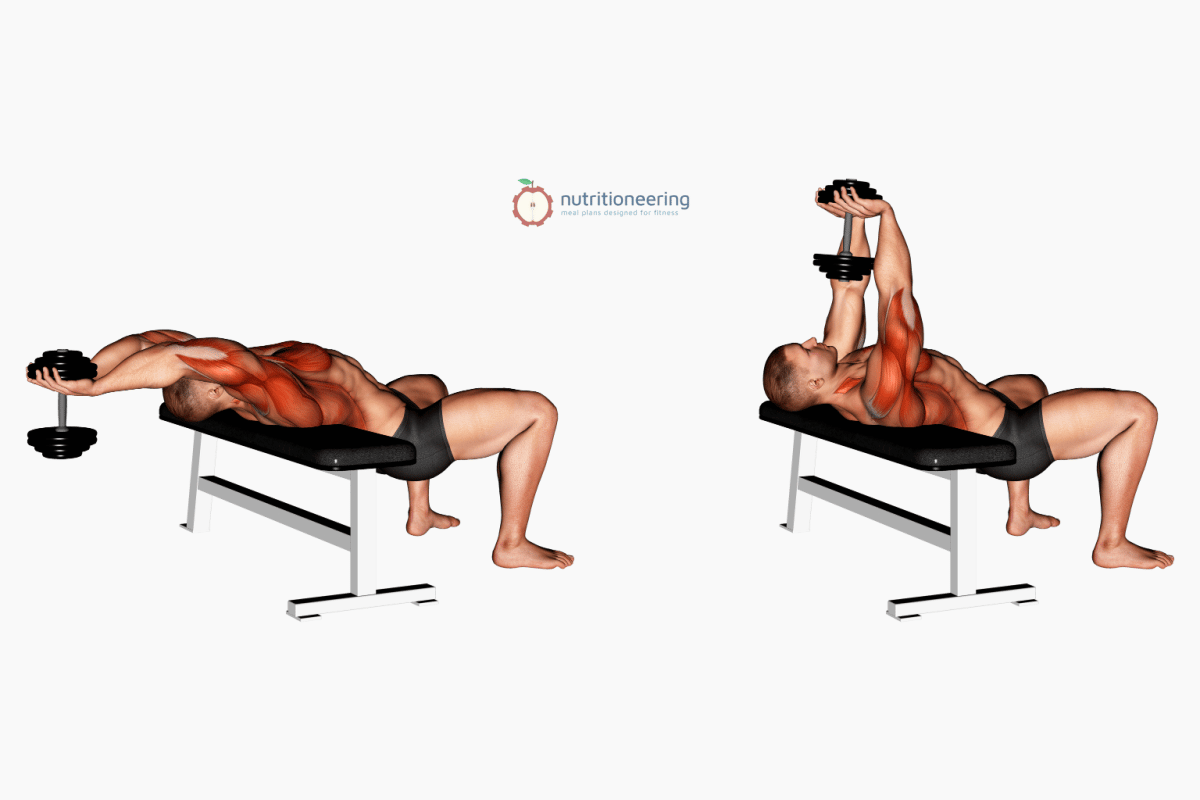
The main muscles worked by the dumbbell pullover are the latissimus dorsi. These are the large muscles in your back. They help with arm movement and stability.
Another primary muscle group is the pectoralis major. This is the chest muscle. It plays a crucial role in shoulder movement.
- Latissimus dorsi: Located in the back
- Pectoralis major: Located in the chest
Secondary Muscle Groups
Secondary muscles involved include the triceps. These are located at the back of the upper arm. They assist in extending the elbow.
The serratus anterior is also engaged. It is located on the side of the chest. This muscle aids in the movement of the shoulder blade.
- Triceps: Found at the back of the upper arm
- Serratus anterior: Located on the side of the chest
Benefits Of Dumbbell Pullover
The dumbbell pullover is a strength exercise that targets multiple muscles. It helps build your chest, back, and shoulders.
This move is simple but effective for improving upper body strength and flexibility.
Improved Chest Development
The dumbbell pullover works the chest muscles, especially the pectoralis major. It stretches and contracts the chest for better growth.
This exercise helps shape the chest by targeting muscle fibers in a unique way compared to presses.
Enhanced Back Strength
The pullover also activates the latissimus dorsi, the large muscles of the back. It helps make your upper back stronger.
Stronger back muscles improve posture and support other lifts like rows and pull-ups.
Increased Shoulder Mobility
This exercise involves a wide range of motion in the shoulder joint. It helps increase flexibility and mobility.
Better shoulder mobility lowers the risk of injuries during other workouts and daily activities.
Proper Dumbbell Pullover Technique
The dumbbell pullover works your chest, back, and core muscles. It helps build upper body strength and improves flexibility.
Using the right technique prevents injury and gets the best results. Focus on controlled movements and good form.
Starting Position
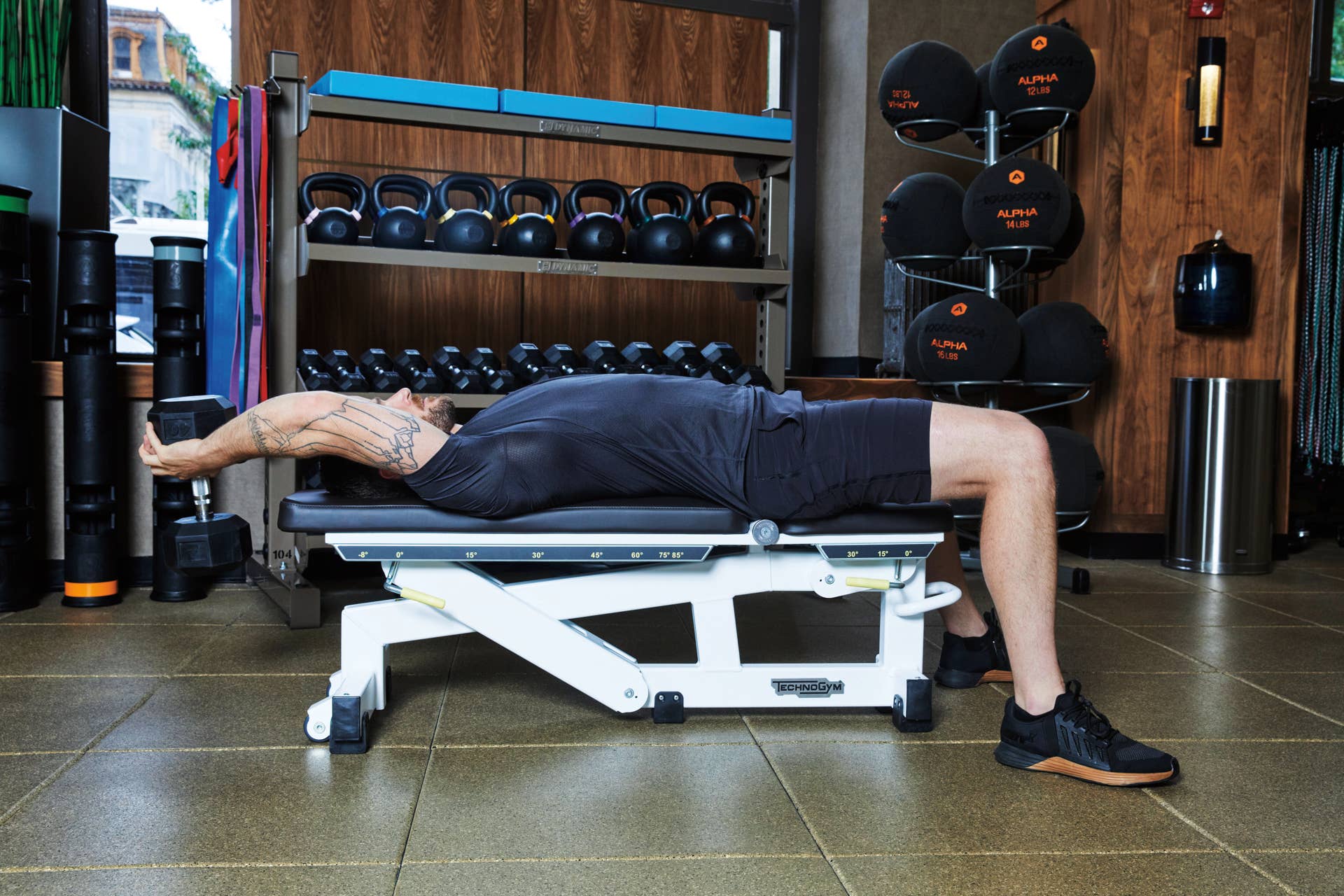
Lie flat on a bench with your feet on the floor. Hold a dumbbell with both hands above your chest.
Keep your arms slightly bent and your back pressed against the bench. This position sets you up for a safe movement.
- Lie on your back on a flat bench
- Hold one dumbbell with both hands over your chest
- Keep your arms slightly bent at the elbows
- Place feet flat on the floor for balance
- Engage your core muscles
Movement Execution
Slowly lower the dumbbell back and over your head. Keep your arms steady and slightly bent as you move.
Lower until you feel a stretch in your chest and lats. Then pull the dumbbell back to the starting position using your chest and back muscles.
- Lower dumbbell slowly behind your head
- Keep arms slightly bent and steady
- Stop when you feel a good stretch
- Pull dumbbell back over your chest
- Use chest and back muscles to control the movement
Common Form Mistakes
Bending your arms too much reduces the exercise’s effectiveness. Avoid letting your lower back arch too much.
Do not use fast or jerky movements. This can cause injury and lowers the workout quality.
- Over-bending elbows during the movement
- Arching lower back off the bench
- Using too heavy dumbbells for control
- Lowering the dumbbell too far back
- Moving too fast or jerking the weight
Credit: www.mensjournal.com
Variations Of Dumbbell Pullover
The dumbbell pullover is a great exercise that works your chest, back, and shoulders. You can try different variations to target muscles in new ways.
Changing your position or grip can make the exercise easier or harder. Let’s look at some popular variations of the dumbbell pullover.
On A Bench
Doing dumbbell pullovers on a bench is the classic way. Lie on your back with your upper back supported on the bench. Your hips stay low, and your feet flat on the floor.
This position allows a greater stretch in your chest and lats. It also helps you use more weight safely.
- Lie on a flat bench with a dumbbell in both hands.
- Keep your arms straight but slightly bent.
- Lower the dumbbell slowly behind your head.
- Raise it back over your chest with control.
On The Floor
You can do dumbbell pullovers lying on the floor. This limits how far you lower the dumbbell because the floor stops you.
This variation is good for beginners or those with shoulder issues. It helps keep your range of motion safe.
- Lie flat on your back on the floor.
- Hold a dumbbell with both hands above your chest.
- Lower the dumbbell slowly until your arms are near the floor.
- Lift it back up over your chest.
Using Different Grips
You can change your grip on the dumbbell to work muscles differently. Most people hold the dumbbell with both hands under one end.
Try using a wider grip or holding the dumbbell by the sides. These grips affect how your chest and back muscles work.
- Standard Grip:Both hands hold one end of the dumbbell.
- Side Grip:Hold the dumbbell by its sides with palms facing each other.
- Wide Grip:Use a wider hand position to stretch your chest more.
Incorporating Dumbbell Pullover In Workouts
The dumbbell pullover is a versatile exercise that targets multiple muscle groups. It mainly works the chest and back muscles, making it a good choice for balanced training.
You can add the dumbbell pullover to different workout routines. It fits well in chest, back, or full-body workouts. This helps improve strength and muscle coordination.
Chest-focused Routines
The dumbbell pullover helps stretch and work the chest muscles deeply. Use it after pressing exercises like bench presses or push-ups for best results.
This exercise also improves the shape and size of the chest by engaging the muscles from a different angle.
- Start with a light to moderate weight dumbbell
- Perform 3 sets of 8-12 repetitions
- Keep your core tight and avoid arching your back
- Use slow, controlled movements for better muscle engagement
Back-focused Routines
The dumbbell pullover also targets the latissimus dorsi muscles in the back. It can help improve back width and strength.
Add this exercise after rows or pull-ups to fully work the back muscles. It helps stretch the upper back as well.
- Use a moderate weight dumbbell to feel the stretch
- Complete 3 sets with 10-15 repetitions
- Focus on squeezing your back muscles during the movement
- Maintain a steady breathing pattern for control
Full-body Workouts
The dumbbell pullover can be part of a full-body workout. It works the chest, back, and core together, making it efficient.
Include it along with squats, lunges, and overhead presses to hit many muscle groups in one session.
- Perform 3 sets of 8-12 repetitions
- Combine with compound lifts for balanced training
- Keep good form to avoid injury
- Rest 30-60 seconds between sets
Credit: www.bodybuildingmealplan.com
Safety Tips And Precautions
The dumbbell pullover is a great exercise for your chest and back. It needs care to avoid injuries. Follow safety tips to protect your body.
Using the right form and weight keeps you safe. Listen to your body to prevent strain.
Avoiding Shoulder Injuries
Shoulders are at risk during dumbbell pullovers. Keep them safe by using controlled movements. Do not lower the dumbbell too far behind your head.
Warm up your shoulders before starting. Stretch gently to increase flexibility and blood flow.
- Keep elbows slightly bent during the movement
- Do not use a heavy dumbbell that strains your shoulders
- Stop if you feel sharp pain in your shoulder
- Use a spotter if trying heavy weights
Managing Weight Progression
Start with light weights to learn the correct form. Increase weight slowly to avoid muscle strain.
Keep track of how much you lift and how your body feels. Do not rush to add more weight if you feel tired or sore.
- Begin with a light dumbbell to practice the movement
- Increase weight in small steps each week
- Rest between sets to recover muscles
- Focus on form, not just heavy weights
Frequently Asked Questions
What Muscles Do Dumbbell Pullovers Target?
Dumbbell pullovers primarily work the chest and lat muscles. They also engage the shoulders, triceps, and core for stability. This exercise improves upper body strength and flexibility, making it versatile for muscle development.
How Do Dumbbell Pullovers Benefit Your Chest?
Dumbbell pullovers stretch and strengthen the chest muscles effectively. They help expand the rib cage and improve muscle definition. This exercise supports better posture and enhances breathing capacity by opening up the chest area.
Can Dumbbell Pullovers Improve Back Strength?
Yes, dumbbell pullovers activate the latissimus dorsi muscles in the back. They contribute to better upper back strength and muscle tone. Incorporating pullovers can enhance overall back stability and support other pulling movements.
Are Dumbbell Pullovers Good For Core Engagement?
Dumbbell pullovers require core stabilization to maintain proper form. This engages the abdominal and lower back muscles. Regular practice improves core strength, balance, and coordination, benefiting overall functional fitness.
Conclusion
The dumbbell pullover works many muscles at once. It helps build your chest, back, and shoulders. This exercise also improves breathing and core strength. You can do it with just one dumbbell. It fits well in most workout routines. Try it slowly and with good form.
Small steps lead to strong results. Keep practicing and enjoy stronger muscles soon.


