

If you want stronger, more defined shoulders, dumbbell shrugs might be your go-to exercise. But do you know exactly which muscles dumbbell shrugs work?
Understanding this can help you target the right areas and get the most out of your workout. You’ll discover the key muscles involved, how they benefit your posture and strength, and tips to maximize your results. Keep reading to unlock the full potential of your dumbbell shrugs and take your training to the next level.
Primary Muscles Targeted
Dumbbell shrugs are effective for building strong shoulders. They mainly target the trapezius muscles.
These muscles are crucial for shoulder movement and posture. Let’s explore their role and focus.
Trapezius Muscle Role
The trapezius muscle spans your upper back and neck. It helps lift your shoulders and supports neck movement.
It also stabilizes your shoulders during different activities. Strong traps improve your overall upper body strength.
- Supports neck and head movements
- Aids in lifting and rotating shoulders
- Maintains good posture
Upper Traps Focus
The upper traps are the top part of the trapezius. They are the primary focus during dumbbell shrugs.
These muscles lift the shoulders and are key in shrugging exercises. Engaging them correctly enhances muscle growth.
- Lift shoulders upwards
- Essential for shrugging motions
- Contributes to a strong, defined neck and upper back

Credit: uk.style.yahoo.com
Secondary Muscles Engaged
Dumbbell shrugs mainly work your upper trapezius muscles. They also engage other muscles that help move your shoulder blades.
These secondary muscles assist in lifting and stabilizing the shoulders during the movement.
Levator Scapulae Contribution
The levator scapulae muscle helps raise your shoulder blades. It sits at the side of your neck.
During dumbbell shrugs, this muscle contracts to lift the scapula. It works with the trapezius to make the movement smooth.
- Located at the back and side of the neck
- Raises the shoulder blade upward
- Supports neck movement and stability
Rhomboids Activation
The rhomboid muscles connect your spine to the shoulder blades. They pull the shoulder blades toward the spine.
When you do dumbbell shrugs, the rhomboids work to stabilize the shoulder blades. They keep your shoulders steady during the lift.
- Located between the spine and shoulder blades
- Retracts and stabilizes shoulder blades
- Helps maintain good posture
Muscle Anatomy Basics
Dumbbell shrugs mainly work muscles in the upper back and neck area. These muscles help lift and stabilize the shoulders.
Understanding the muscle anatomy helps you see how dumbbell shrugs improve strength and posture.
Trapezius Muscle Structure
The trapezius is a large triangular muscle on your upper back. It connects your neck, shoulders, and spine.
This muscle has three parts: upper, middle, and lower traps. Dumbbell shrugs mainly target the upper trapezius.
- Upper trapezius:lifts the shoulders and supports neck movement
- Middle trapezius:pulls shoulder blades together
- Lower trapezius:helps lower the shoulder blades
Shoulder Girdle Muscles
The shoulder girdle includes muscles that connect the arm to the torso. These muscles help move and stabilize the shoulder.
Dumbbell shrugs mainly work muscles that raise the shoulder blades. These muscles keep your shoulders strong and steady.
- Levator scapulae:lifts the shoulder blade
- Rhomboids:pull the shoulder blades toward the spine
- Trapezius (upper part):assists in shrugging the shoulders
Credit: www.bodybuildingmealplan.com
Benefits Of Dumbbell Shrugs
Dumbbell shrugs are a simple exercise that targets specific muscles. They mainly work the trapezius muscles located in your upper back and neck.
This exercise helps improve strength and stability in your upper body. It is easy to do with dumbbells and can fit into any workout routine.
Improved Posture
Dumbbell shrugs strengthen the muscles that support your shoulders and neck. Stronger muscles help keep your shoulders back and your spine aligned.
Better posture reduces strain on your back and neck. It can also help prevent slouching during daily activities.
Neck And Shoulder Strength
This exercise targets the trapezius muscles, which run from your neck to your shoulders. Strong trapezius muscles improve your ability to lift and carry objects.
Building neck and shoulder strength also lowers the risk of injuries in these areas.
Enhanced Upper Body Stability
Dumbbell shrugs help stabilize the upper back and shoulder region. This stability supports better control during other exercises and daily tasks.
Strong upper body stability improves balance and reduces muscle fatigue.
Common Mistakes To Avoid
Dumbbell shrugs target your upper trapezius muscles. These muscles help lift your shoulders.
Doing shrugs wrong can cause injury or reduce results. Avoid common mistakes to work muscles well.
Using Excessive Weight
Using too much weight makes you lose control. It also causes poor form and can hurt your neck.
Start with a weight you can lift with good form. Focus on squeezing your traps, not lifting heavy.
- Lift moderate weights to keep control
- Increase weight slowly over time
- Stop if you feel pain in neck or shoulders
Incorrect Shoulder Movement
Many people roll their shoulders forward or backward during shrugs. This can strain muscles and joints.
Keep your shoulders moving straight up and down. Avoid circular or twisting motions to protect your joints.
- Lift shoulders straight up toward ears
- Lower shoulders slowly without rotating
- Keep arms and wrists relaxed
Neglecting Full Range Of Motion
Shrugging with a small motion limits muscle work. Using full range helps build stronger traps.
Raise your shoulders as high as you can. Lower them fully to stretch the muscles between reps.
- Lift shoulders fully up
- Hold the top position briefly
- Lower shoulders fully down
Tips For Maximum Muscle Activation
Dumbbell shrugs mainly work the trapezius muscles. These muscles help lift your shoulders. To get the best results, you must use the right technique. Small changes can make a big difference.
Focus on proper grip, controlled speed, and breathing. These tips help your muscles work harder. This guide explains how to use each tip for better muscle activation.
Proper Grip And Form
Hold the dumbbells firmly at your sides. Keep your arms straight but not locked. Stand tall with your chest up and shoulders back. This position targets the trapezius muscles well.
Avoid rolling your shoulders or bending your elbows. Keep the movement simple by only lifting your shoulders. Good form stops other muscles from taking the work.
- Grip dumbbells with palms facing your body
- Keep arms straight but relaxed
- Stand tall with your chest out
- Lift shoulders straight up, no rolling
Controlled Movement Speed
Move your shoulders up slowly and lower them down even slower. Fast movements reduce muscle work and increase injury risk. Control helps muscles stay tense longer.
Use a steady pace to feel your traps working. Try lifting your shoulders for two seconds and lowering for three seconds. Keep this rhythm for every rep.
- Lift shoulders slowly, about 2 seconds
- Lower shoulders even slower, about 3 seconds
- Keep the movement smooth and steady
- Avoid using momentum to lift
Breathing Techniques
Breathe out as you lift your shoulders. This helps you use more force. Breathe in when you lower your shoulders. Proper breathing supports muscle strength and focus.
Try not to hold your breath during the exercise. Holding breath can raise blood pressure and reduce oxygen flow. Regular breathing keeps your body calm and muscles ready.
- Exhale when lifting shoulders
- Inhale when lowering shoulders
- Keep breathing steady and even
- Do not hold your breath
Dumbbell Shrugs Variations
Dumbbell shrugs mainly work the trapezius muscles in your upper back. These muscles help lift your shoulders and support neck movement.
There are different ways to do dumbbell shrugs. Each variation targets the muscles slightly differently and adds variety to your workout.
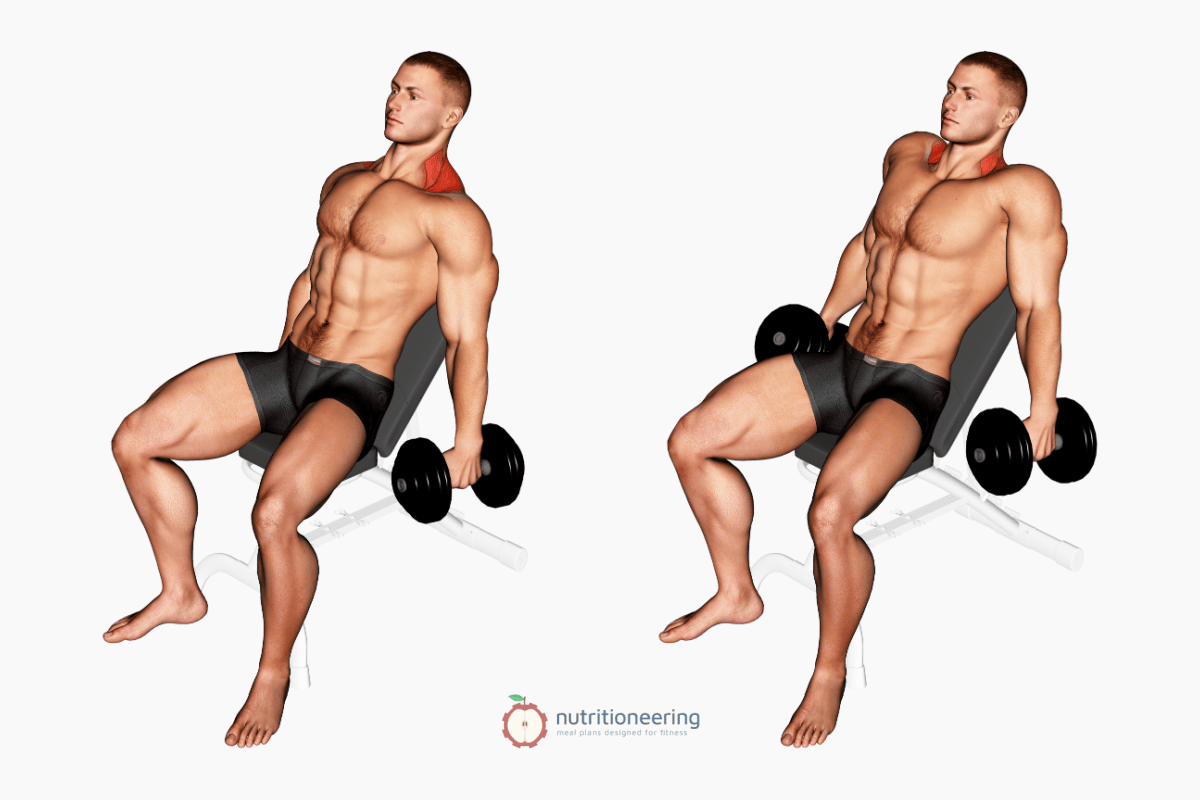
Seated Shrugs
Seated shrugs keep your body stable while you lift the dumbbells. Sitting down reduces momentum and focuses the work on your traps.
This variation helps improve posture and control. It is good for beginners or anyone wanting to target the trapezius muscles more precisely.
Behind-the-back Shrugs
Behind-the-back shrugs involve holding dumbbells behind your hips. This position stretches the traps differently and hits the lower parts.
This variation challenges your grip and shoulder stability. It also improves the range of motion in your traps.
Smith Machine Shrugs
Smith machine shrugs use a guided barbell instead of dumbbells. The machine helps keep the bar path straight for better form.
This variation allows heavier weights and adds safety. It works the upper traps with less need for balance.

Credit: www.bodybuildingmealplan.com
Frequently Asked Questions
What Primary Muscles Do Dumbbell Shrugs Target?
Dumbbell shrugs primarily target the upper trapezius muscles. These muscles support shoulder and neck movement. Shrugs help build strength and size in this area effectively.
Do Dumbbell Shrugs Work Other Muscles Besides Traps?
Yes, they also engage the levator scapulae and rhomboids. These muscles assist in lifting and stabilizing the shoulder blades during shrugs.
How Do Dumbbell Shrugs Benefit Posture?
Dumbbell shrugs strengthen the upper traps, improving shoulder alignment. Strong traps help maintain an upright posture and reduce neck strain.
Can Dumbbell Shrugs Prevent Neck Pain?
Strengthening the traps with shrugs supports neck stability. This can help reduce neck pain caused by weak or imbalanced muscles.
Conclusion
Dumbbell shrugs mainly work your upper trapezius muscles. These muscles help lift your shoulders and support your neck. Strong traps improve your posture and reduce neck pain. You also engage smaller muscles around your shoulders during the exercise. Shrugs are simple but effective for building upper back strength.
Try adding them to your workout routine for balanced muscle development. Keep your form correct to avoid injury. Small steps lead to better strength and muscle tone over time.


