

If you want to build a stronger, more defined back, you’ve probably heard about the dumbbell row. But do you know exactly what muscles it targets?
Understanding which muscles the dumbbell row works can help you get better results and avoid injury. You’ll discover how this simple exercise shapes your body and why it should be a key part of your workout. Keep reading to unlock the full potential of your training and take your strength to the next level.
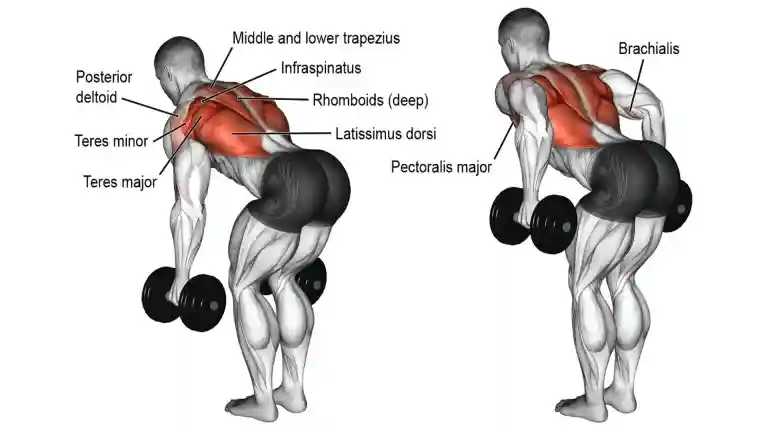
Credit: medium.com
Primary Muscles Worked
The dumbbell row is a popular exercise for strengthening the back. It targets several key muscles, making it a favorite for building upper body strength.
Understanding which muscles are activated can help improve your workout efficiency. Let’s explore the primary muscles worked by the dumbbell row.
Latissimus Dorsi Activation
The latissimus dorsi, or lats, are the largest muscles in the back. They play a major role in pulling movements. The dumbbell row effectively activates these muscles, helping to build a wider back.
Strong lats contribute to better posture and enhanced athletic performance. Engaging them properly during exercises ensures balanced muscle development.
- Located on the sides of the back
- Help in shoulder adduction and extension
- Important for pulling exercises
Rhomboid Engagement
The rhomboid muscles connect the spine to the shoulder blades. Dumbbell rows activate these muscles, enhancing scapular retraction. This engagement is crucial for maintaining upper back strength.
Rhomboids contribute to better posture by pulling the shoulder blades together. Strengthening them can reduce the risk of shoulder injuries.
- Located between the spine and shoulder blades
- Aid in scapular retraction
- Support shoulder stability
Trapezius Involvement
The trapezius muscle extends from the neck to the middle of the back. It is divided into upper, middle, and lower sections. The dumbbell row targets the middle trapezius, promoting upper back strength.
A strong trapezius supports the neck and shoulders. It also plays a role in head and neck movements. Balanced training of all trapezius sections is important for overall back health.
- Supports shoulder and neck movements
- Divided into upper, middle, and lower sections
- Essential for posture and back strength
Secondary Muscle Groups
The dumbbell row mainly targets the back muscles. It also works several secondary muscle groups. These muscles help with the movement and add strength.
Understanding these secondary muscles can improve your form and results. They play key roles during the exercise.
Biceps Role
The biceps help pull the dumbbell towards your body. They bend your elbow during the row motion. This action assists the larger back muscles.
Strong biceps make the row easier and more effective. They also reduce strain on your back.
Rear Deltoid Contribution
The rear deltoids are the muscles on the back of your shoulders. They help lift and move your arms backward during the row. This adds power and control.
Working the rear deltoids improves shoulder stability. It also helps balance the muscles around your shoulder joint.
Core Stabilizers
Your core muscles keep your body steady during the dumbbell row. They stop your torso from twisting or tipping. This helps you stay balanced.
Strong core stabilizers protect your spine. They make sure your form stays correct throughout the exercise.
Benefits For Back Strength
The dumbbell row targets many muscles in your back. It helps build strength in your upper and middle back.
Strong back muscles improve your overall body strength and daily activities.
Improving Posture
Dumbbell rows work the muscles that keep your spine straight. This helps you stand and sit taller.
Better posture reduces back pain and prevents slouching.
- Strengthens upper back muscles
- Supports spine alignment
- Reduces forward shoulder rounding
Enhancing Pulling Power
Dumbbell rows build the muscles used for pulling movements. This increases your strength in exercises like pull-ups.
Improved pulling power helps in sports and daily tasks that need strong arms and back.
- Targets latissimus dorsi and rhomboids
- Boosts arm and shoulder strength
- Improves grip and lifting ability
Injury Prevention
Strong back muscles protect your spine from injury. Dumbbell rows help balance muscle strength.
This balance lowers the risk of strains and back pain during activities.
- Supports spinal stability
- Prevents muscle imbalances
- Reduces risk of back injuries
Proper Dumbbell Row Form
The dumbbell row is a great exercise for your back muscles. It helps build strength and improve posture.
Using the right form keeps you safe and makes the exercise more effective. Let’s look at how to do it properly.
Starting Position
Stand with your feet shoulder-width apart. Hold a dumbbell in one hand and bend your knees slightly.
Bend forward at the hips, keeping your back straight. Let your arm with the dumbbell hang down fully extended.
- Feet shoulder-width apart
- Slight bend in knees
- Back flat and straight
- Arm holding dumbbell fully extended
Rowing Motion
Pull the dumbbell up toward your waist. Keep your elbow close to your body as you lift.
Pause briefly at the top, squeezing your back muscles. Then lower the dumbbell slowly back to the start.
- Pull dumbbell to your waist
- Keep elbow close to your body
- Squeeze back muscles at the top
- Lower dumbbell slowly
Common Mistakes
Many people round their back or use momentum to lift the dumbbell. These errors reduce the exercise’s benefits.
Avoid twisting your torso or lifting your shoulder. Keep your movements controlled and steady.
- Do not round your back
- Avoid swinging or jerking
- Keep torso still without twisting
- Do not lift your shoulder up
Variations To Target Muscles Differently
The dumbbell row is a great exercise for building back strength. You can change the way you do it to work muscles in different ways.
These variations help focus on specific muscles or improve balance and stability. Try them to get a full back workout.
Single-arm Row
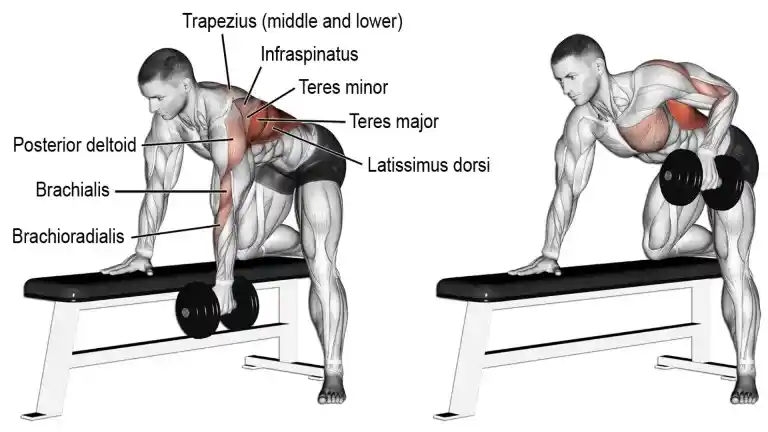
The single-arm row works one side of your back at a time. It helps fix muscle imbalances and improves control.
Use a bench for support and pull the dumbbell toward your waist. This targets the lats and rhomboids more deeply.
- Focus on pulling with your back, not your arm
- Keep your torso steady and avoid twisting
- Control the dumbbell on the way down
Renegade Row
The renegade row adds a plank position to the row. It works your back and challenges your core muscles.
Start in a push-up position holding dumbbells. Row one dumbbell while balancing on the other arm and feet.
- Keep your hips level to avoid twisting
- This variation builds upper back and core strength
- Use lighter weights to maintain form
Chest-supported Row
The chest-supported row uses a bench to support your chest. This reduces lower back strain and focuses on back muscles.
Lie face down on an incline bench. Pull the dumbbells up to your sides to target the middle back and traps.
- Keep your chest pressed against the bench
- Use slow, controlled movements
- This helps isolate the back muscles better

Credit: medium.com
Credit: medium.com
Frequently Asked Questions
What Muscles Does The Dumbbell Row Target?
The dumbbell row primarily targets the latissimus dorsi, rhomboids, and trapezius muscles. It also engages the biceps and rear shoulders for a strong upper back workout.
How Does Dumbbell Row Improve Back Strength?
Dumbbell rows strengthen the upper and middle back muscles, improving posture and stability. This enhances pulling power and reduces injury risk during other exercises.
Can Dumbbell Rows Help With Posture Correction?
Yes, dumbbell rows strengthen the upper back muscles that support the spine. Improved muscle balance helps reduce slouching and promotes better posture.
Are Dumbbell Rows Good For Building Muscle Mass?
Dumbbell rows effectively build muscle mass in the back and arms. Progressive overload with proper form maximizes hypertrophy and overall upper body strength.
Conclusion
The dumbbell row works many muscles in your back and arms. It mainly targets the latissimus dorsi and rhomboids. Your biceps and shoulders also get a good workout. This exercise helps improve posture and build strength. Using proper form keeps you safe and effective.
Try adding dumbbell rows to your routine for better back strength. Small steps lead to big results. Keep practicing and feel the difference.


