

If you want to build a stronger chest, shoulders, and arms, learning how to bench with dumbbells is a game-changer. Unlike a barbell, dumbbells give you more freedom to move and help you work your muscles evenly.
But if you’re not sure where to start or how to do it right, you could miss out on the full benefits—or worse, risk injury. This guide will show you simple steps to master the dumbbell bench press, so you can boost your strength and see real results faster than you think.
Ready to take your workouts to the next level? Let’s dive in.
Credit: powerblock.com
Benefits Of Dumbbell Bench Press
The dumbbell bench press is a popular exercise. It strengthens your chest muscles. This exercise also targets other muscle groups. Using dumbbells has specific benefits.
Many people prefer dumbbells over a barbell. This is because they offer more flexibility. Let’s explore the benefits of using dumbbells for the bench press.
Improved Muscle Balance
Using dumbbells helps balance your muscles. Each arm works independently. This means both sides of your body get equal work. It reduces muscle imbalances.
When one side is weaker, dumbbells highlight this. You can then focus on strengthening that side. This improves overall symmetry and balance.
Increased Range Of Motion
Dumbbells offer a greater range of motion. This means your muscles work over a larger distance. A bigger range helps build more muscle and flexibility.
With a barbell, your motion is limited. Dumbbells let you lower the weights further. This leads to better muscle development.
Enhanced Stabilizer Muscle Activation
Dumbbells activate stabilizer muscles. These are smaller muscles that help control movement. They work hard to keep the weights steady.
Using dumbbells requires more balance and control. This engages stabilizers like the shoulders and core. Over time, this improves your stability and strength.
- Strengthens core muscles
- Improves shoulder stability
- Increases overall strength
Choosing The Right Dumbbells
Bench pressing with dumbbells needs the right weight and type. Choosing the right dumbbells makes your workout safe and effective.
Picking dumbbells depends on your strength and fitness goals. It is important to know what options are available.
Selecting Appropriate Weight
Start with a weight that feels comfortable to lift. You should control the dumbbells through the full movement.
If the weight is too light, you will not build strength. If it is too heavy, you risk injury.
- Choose a weight you can lift 8 to 12 times
- Increase weight gradually as you get stronger
- Focus on form, not just heavy weights
Types Of Dumbbells
There are many dumbbell types to choose from. Each type has benefits for your workout space and budget.
- Fixed dumbbells: set weight, easy to use
- Adjustable dumbbells: change weight with plates
- Selectorized dumbbells: quick weight changes with a dial
Fixed dumbbells are good for home gyms with space. Adjustable types save space and money.
Considerations For Beginners
Beginners should start with lighter weights to learn proper form. Avoid picking weights that cause strain or pain.
It helps to have a spotter or trainer to guide your first sessions. This support keeps you safe and confident.
- Start light and focus on technique
- Increase weight slowly over weeks
- Rest between sets to avoid fatigue
- Use weights you can control steadily
Proper Bench Setup
Setting up your bench correctly is key for a safe and effective dumbbell bench press. Good setup helps you lift better and avoid injuries.
This guide explains how to position your bench, feet, back, and shoulders for the best dumbbell bench press form.
Bench Height And Positioning
Choose a bench height that lets your feet stay flat on the floor. Your thighs should be roughly parallel to the ground.
Place the bench so your eyes are just under the dumbbells at the start. This helps you lift straight up without strain.
- Bench height around 16-18 inches works for most people
- Adjust height if your feet can’t reach the floor flat
- Position your body so the dumbbells start above your chest
Foot Placement
Keep your feet flat on the floor for stability. Avoid letting your feet lift or slide during the lift.
Place feet shoulder-width apart or slightly wider. This stance helps balance your body and support the movement.
- Flat feet prevent slipping
- Feet shoulder-width apart maintain balance
- Firm foot placement helps drive power upward
Back And Shoulder Alignment
Arch your upper back slightly to keep your chest lifted. This helps target your chest muscles better.
Keep your shoulders down and back. Avoid letting them roll forward to protect your joints.
- Maintain a small arch in the upper back
- Keep shoulder blades squeezed together
- Do not lift your lower back off the bench
Step-by-step Dumbbell Bench Press Form
The dumbbell bench press is a great exercise for building chest strength. Using dumbbells lets your arms move freely.
Follow these steps to keep good form and avoid injury during the exercise.
Starting Position
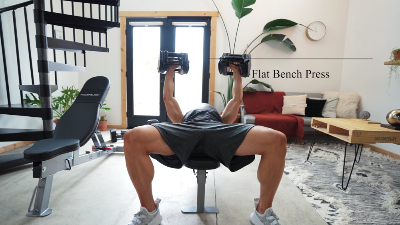
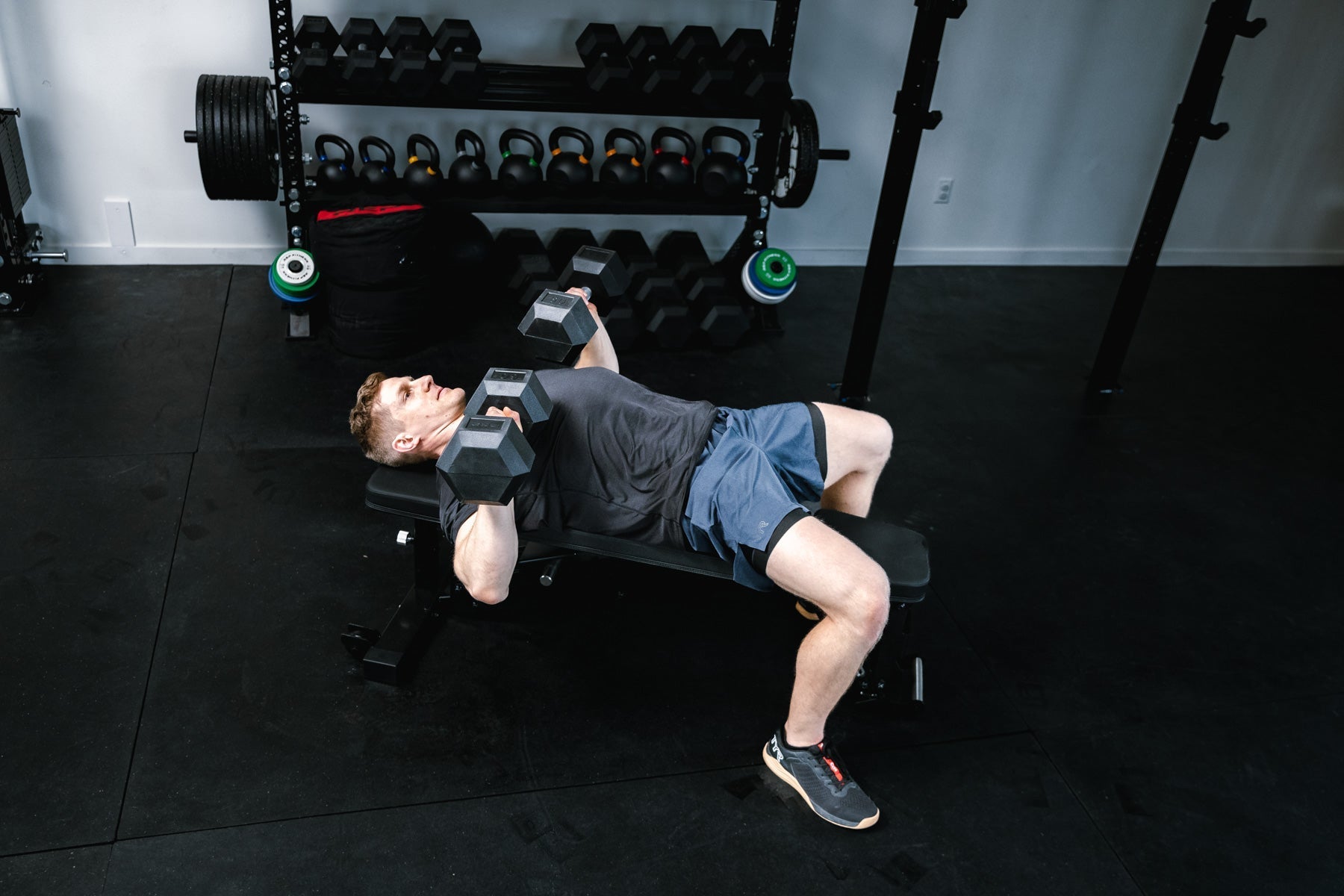
Lie back on a flat bench with a dumbbell in each hand. Keep your feet flat on the floor and your back pressed to the bench.
Hold the dumbbells above your chest with your arms straight and palms facing forward. Keep your wrists firm but not locked.
Lowering The Dumbbells
Slowly lower the dumbbells to the sides of your chest. Keep your elbows at about a 45-degree angle from your body.
Do not let the dumbbells touch your chest. Control the movement and stop just before contact.
Pressing Up
Push the dumbbells upward by straightening your arms. Use your chest muscles to lift, not just your arms.
Keep the dumbbells close but do not let them bump together at the top. Return to the starting position smoothly.
Breathing Technique
Inhale deeply as you lower the dumbbells to your chest. This helps keep your body stable during the movement.
Exhale as you press the dumbbells back up. This supports your effort and helps keep your core tight.
Common Form Mistakes To Avoid
Using dumbbells for bench pressing is great for strength. But poor form can cause injury and reduce results.
Watch your form closely. Avoid these common mistakes to get the most from your workout.
Flared Elbows
Flared elbows happen when you push your arms out wide during the press. This puts extra stress on your shoulders.
Keep your elbows at about a 45-degree angle to your body. This protects your joints and targets your chest better.
- Avoid locking elbows straight out to the sides
- Keep elbows slightly tucked close to the torso
- Focus on controlled, steady movement
Arching The Back Excessively
A small arch in your lower back is natural. Too much arching can hurt your spine and reduce workout safety.
Keep your back flat on the bench or with a slight natural curve. Tighten your core to keep your spine stable.
- Do not raise your chest too high
- Keep your shoulders and hips pressed to the bench
- Engage your core muscles throughout the lift
Uneven Dumbbell Movement
Uneven movement means one arm moves differently than the other. This causes muscle imbalances and possible injury.
Move both dumbbells at the same speed and distance. Focus on controlling each arm equally during the press.
- Start with lighter weights if needed
- Use a mirror or video to check your form
- Pause briefly at the top to reset control
Training Tips For Strength Gains
Using dumbbells for bench press helps build chest and arm strength. It also improves muscle balance and stability. This guide shares tips to increase strength safely and effectively.
Follow these tips to get stronger with dumbbell bench press. Focus on correct form and steady progress for best results.
Progressive Overload Strategies
Progressive overload means increasing the challenge over time. This helps muscles grow stronger and bigger. You can add weight, reps, or sets to your dumbbell bench press.
Try to push a little harder each week. Increase the dumbbell weight slowly. If you cannot add weight, add one or two extra reps instead.
- Add 2.5 to 5 pounds to dumbbells every 1-2 weeks
- Increase reps by 1-2 each session if weight stays the same
- Do more sets once reps reach 12 per set
Repetition And Set Recommendations
For strength gains, use heavy weights with fewer reps. Aim for 3 to 6 reps per set. Perform 3 to 5 sets with rest in between.
Rest for 1.5 to 3 minutes between sets. This helps your muscles recover for the next effort. Use a weight that makes the last rep hard but safe.
- 3 to 6 reps per set for strength
- 3 to 5 sets per workout
- Rest 90 to 180 seconds between sets
Incorporating Dumbbell Bench Press Into Routine
Add dumbbell bench press to your upper body or chest workout days. It works well with push exercises like push-ups and shoulder presses.
Start your session with dumbbell bench press to use your full strength. Follow with lighter or bodyweight exercises to finish your workout.
- Include dumbbell bench press 2 to 3 times per week
- Combine with other push exercises for balance
- Allow 48 hours rest between sessions
Safety Tips And Injury Prevention
Bench pressing with dumbbells is a great exercise for building chest strength. It is important to stay safe and avoid injuries while doing it.
Proper safety steps help you get the best results without harm. Focus on good form and listen to your body.
Using A Spotter
A spotter helps keep you safe during your dumbbell bench press. They can assist if the weights get too heavy or if you lose control.
Make sure your spotter knows how to help and stays alert throughout your set.
- Have a spotter hold the dumbbells as you start and finish.
- Ask the spotter to help lift the dumbbells if you struggle.
- Communicate clearly with your spotter before and during the exercise.
- Never lift very heavy dumbbells alone without help.
Warm-up Exercises
Warming up prepares your muscles and joints for the workout. It reduces the chance of injury and improves your performance.
Spend 5 to 10 minutes warming up before starting the bench press with dumbbells.
- Do light cardio like walking or jogging in place.
- Perform arm circles to loosen shoulder joints.
- Use light dumbbells for warm-up sets before heavy lifting.
- Stretch your chest and arms gently to increase flexibility.
Recognizing Fatigue
Fatigue can cause poor form and increase injury risk. Know when your muscles are too tired to continue safely.
Stop or rest if you feel sharp pain, shaking, or loss of control.
- Watch for muscle shaking or trembling during sets.
- Notice if your arms or shoulders feel weak or numb.
- Stop if you cannot control the dumbbells smoothly.
- Take breaks between sets to recover strength.

Credit: dumbbellsdirect.com
Credit: ca.repfitness.com
Frequently Asked Questions
How Do I Start Bench Pressing With Dumbbells?
Begin with light dumbbells to master form and control. Lie flat on a bench, hold dumbbells above chest, and press upwards. Focus on smooth, controlled movements and gradually increase weight as strength improves.
What Muscles Do Dumbbell Bench Presses Target?
Dumbbell bench presses primarily work the chest muscles. They also engage the shoulders and triceps for stability and pressing power. This makes it a great compound exercise for upper body strength.
How Many Reps And Sets Are Ideal For Beginners?
Start with 3 sets of 8-12 reps using manageable weights. This range builds strength and muscle endurance safely. Rest 60-90 seconds between sets to allow recovery.
Can Dumbbell Bench Presses Improve Muscle Balance?
Yes, dumbbells require each arm to work independently. This helps correct strength imbalances and improves overall muscle coordination. It also enhances joint stability compared to barbells.
Conclusion
Dumbbell benching builds strength and tones your chest well. It allows more freedom of movement than a barbell. Start with light weights to learn proper form. Keep your back flat and feet steady on the floor. Breathe steadily and control each lift and lower.
Practice regularly to see steady progress over time. This simple exercise fits easily into any workout routine. Stay patient and consistent to gain the best results. Your muscles will thank you for the effort. Keep pushing, and enjoy your fitness journey.


